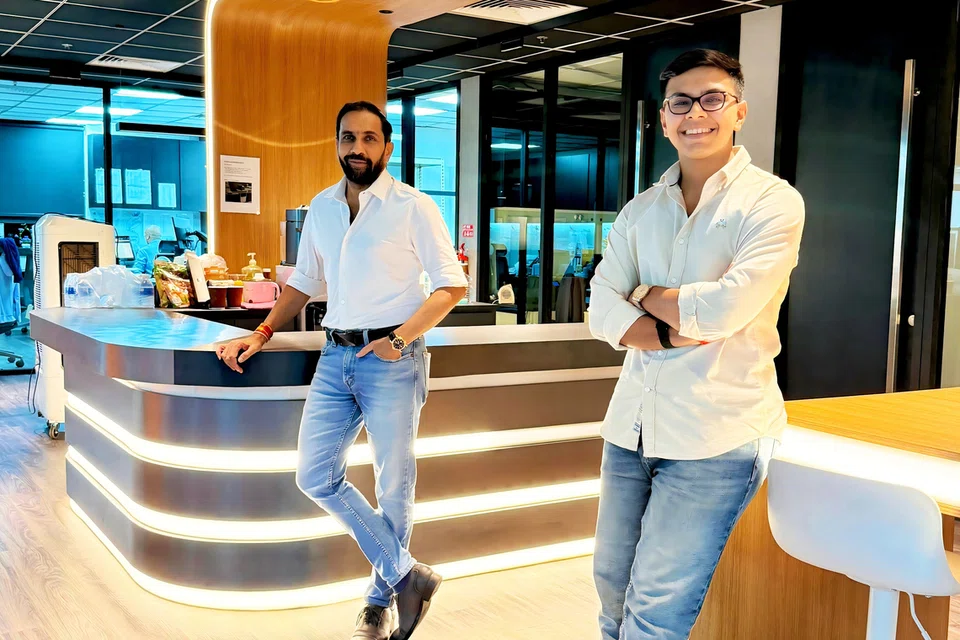
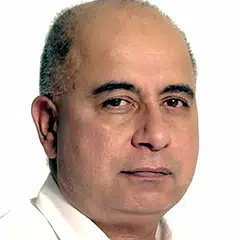
Mr Rajesh Bafna arrived in Singapore in 2000 to establish his own accounting practice.
Six years later, he had saved $160,000 and made his first property purchase. One property led to another and today, the 27 commercial properties the 55-year-old owns are valued at S$70 million. In keeping with his accounting background, he candidly revealed that his outstanding property loans are about S$35 million.
Mr Rajesh tells tabla!: “My property journey began in September 2006 with the purchase of a 1,216 sq ft, three-bedroom apartment at City Square Residences in Farrer Park for S$807,600.” He moved in when the Temporary Occupation Permit was issued in early 2009. Nine months later, he sold it for $1.35 million, making a 67 per cent gain.
The strategy: Sell one property, buy two
Mr Rajesh returned to City Square in February 2010, purchasing a larger, 1,518 sq ft four-bedroom apartment for $1.544 million. Around the same time, he acquired a three-bedroom unit at Cube 8, a freehold condominium on Thomson Road, for S$1.67 million.
His strategy then was to buy two properties every time he sold one, and by 2011, he had accumulated 11 condominium units.
But the residential property market was changing.
Following the introduction of property cooling measures in December 2011, including additional buyer’s stamp duty (ABSD) for foreign purchasers, Mr Rajesh concluded that residential properties no longer offered the margins he was seeking.
He gradually sold these off and turned his attention to strata-titled commercial properties in Eon Shenton, The Bencoolen, Sim Lim Square, Sim Lim Tower, Textile Centre and Parklane Shopping Mall. He now also focuses on larger commercial properties with redevelopment potential.
Representing Setupuram Hotels & Resorts, he signed with the Indian Hotels Company Limited in September 2026 to develop a Taj Resort on a 70-acre site in Rameswaram, Tamil Nadu. Meanwhile, Setupuram will also develop a township of about 4,000 plots.
Advice to Readers
For Singaporeans and Permanent Residents considering their first property purchase, Mr Rajesh recommends patience since policies may be adjusted as market conditions evolve.
For those buying a home to live in, he advises choosing a property they genuinely like. Distinctive features such as a sea view or proximity to schools may push up the purchase price, but if conditions don’t change, they could also influence the resale price.
Despite the significant increase in residential property prices in recent years, Mr Rajesh is confident there won’t be a crash.
He says: “Prices will not move significantly because the government has a slew of tools and policies to check any disruption that exceeds expectations.”
He points to the introduction of ABSD (Additional Buyer’s Stamp Duty) and new rules that reduce the voting threshold for en-bloc sales from 80 per cent to 70 per cent for developments between 40 and 59 years old, and to 65 per cent for those aged 60 years and older.
What investors should consider for commercial property
Investment purchases, however, require a different mindset.
He says: “If you’re buying it as an investment, you should not get emotional over the features. Just be concerned about the entry and exit pricing.”
For foreign nationals and locals with additional funds to invest, Mr Rajesh recommends considering commercial properties priced between S$500,000 and S$2 million.
Buyers could qualify for bank financing of up to 70 per cent, while capital appreciation could allow them to sell at a profit after four or five years. Meanwhile, there would be rental income.
Beyond property
Mr Rajesh is from Bhinmal in Rajasthan and takes pride in the fact that the town has produced several prominent developers in Mumbai.
He also recently acquired Tian Ma, which operates 20 value-for-money retail outlets.
His 25-year-old son, Devang, manages the business while learning the ropes of property investment from his father. He is also a regular volunteer at the community centre.
A Bachelor’s graduate of Babson College in the United States, Mr Devang founded Tixme – an online event-ticketing platform in 2024.
Neither father nor son allows feng shui or vastu shastra to influence their investment and business decisions.
Mr Rajesh’s first property purchase provides an amusing illustration.
The apartment he bought was numbered #14-14, and his agent warned him that having two “unlucky” fours in the address might turn off Chinese buyers when it’s time to sell.
Mr Rajesh reveals: “I liked the number, and in the end I sold it to a Bangladeshi buyer. It turned out to be very profitable for me. Isn’t that good feng shui after all?”