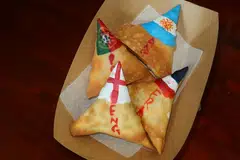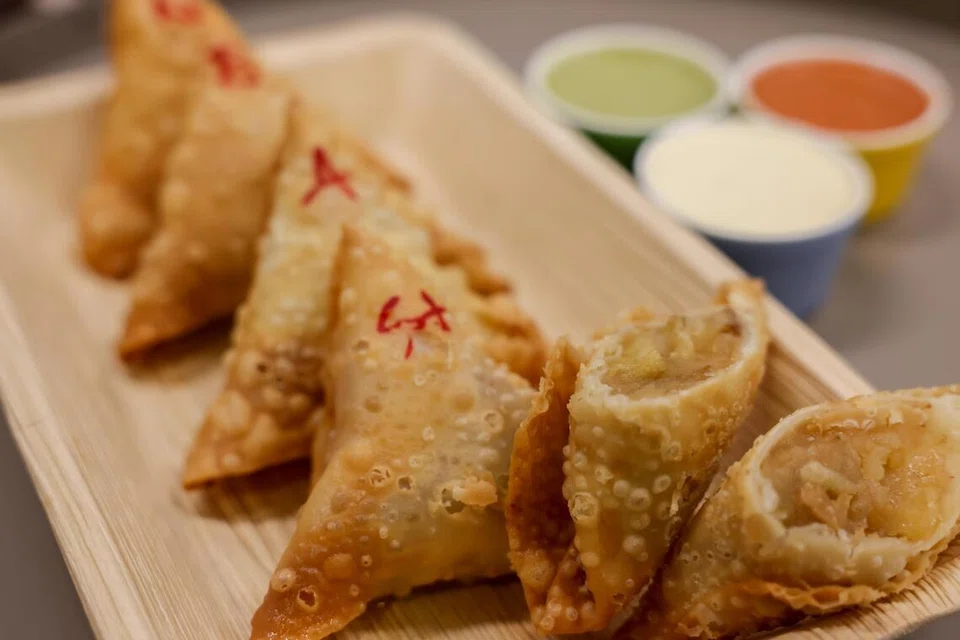

Before home-based businesses became ubiquitous in Singapore, Mdm Noorul Ayn ran a solo enterprise where she sold samosas based on her mother’s heirloom recipes.
Her early customers were mostly colleagues of her second daughter, who works as a process engineer in the semiconductor industry.
As praise for the 66-year-old’s thin-crust samosas spread through word of mouth, orders poured in. To meet the increased demand, she founded the House of Samosas in 2015.
This manifested in the form of a quaint only-takeaway stall located at Saint George’s Road. There, Mdm Noorul was able to scale up her operations from small batches of about 20 samosas per order to selling around 250 samosas a day.
With no previous experience in the food and beverage (F&B) industry, her family members – husband and three daughters – stepped in to assist in whichever way they could. This proved vital in late 2019 due to the onset of the Covid-19 pandemic.
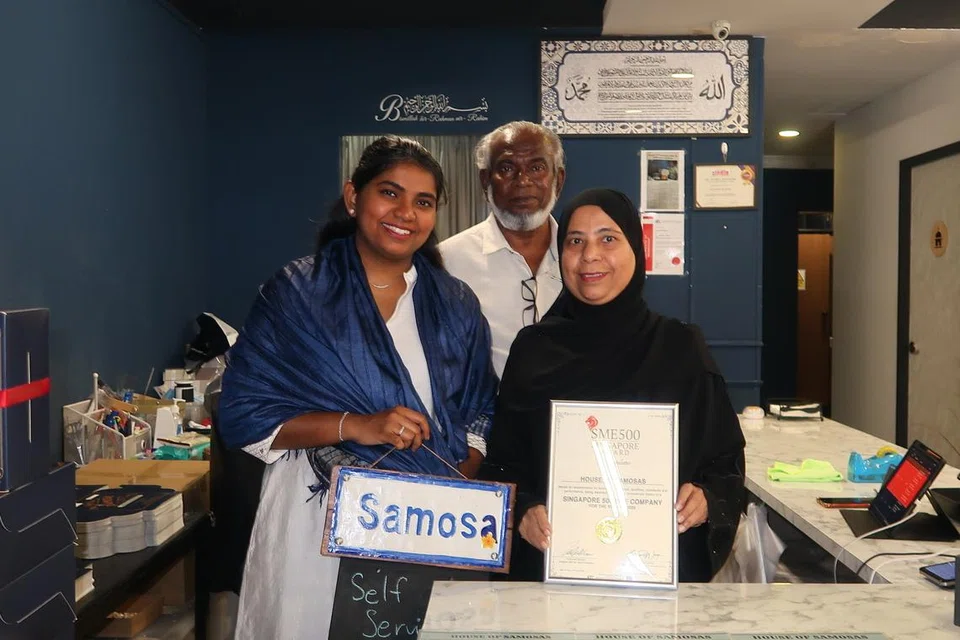
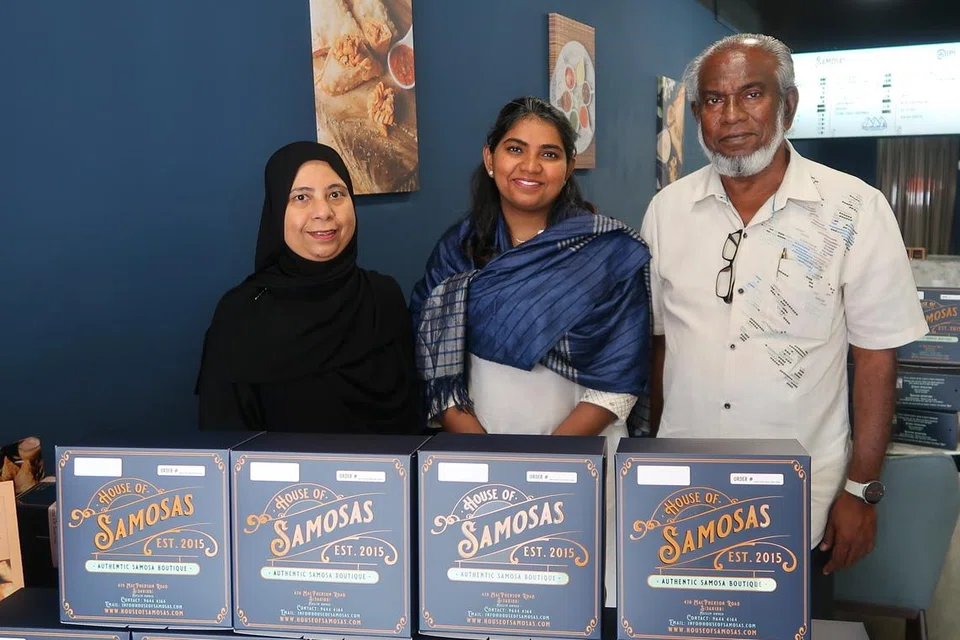
The youngest daughter, Ms Najeera Roseni, 32, left her role as a research assistant at the National University of Singapore to focus on the family business full-time as its manager; while her father, Mr Haja Nizamuddeen, 67, assumed the role of owner.
“There were no walk-ins as all the shops were under shutdown. And my parents didn’t know how to leverage social media platforms and digitalise our business so that people could order online. That’s when I entered the picture,” Ms Najeera said.
She created an Instagram page for the business, where seasonal menu items and promotions are announced. She also used a low-cost website builder to design and develop House of Samosas’ very first website.
“It helped to get orders in, but there were a lot of flaws. Sometimes the postal code wouldn’t show up or items would suddenly be shown as out of stock,” Ms Najeera recalled. “We had to invest in a proper website.”
In a bid to incentivise companies to go digital, the Government had released many grants and schemes, which was smartly utilised by Ms Najeera to offset about 90 per cent of the new website costs.
The family also invested a couple of thousand dollars into the takeaway stall, and a lot more of their own funds when the business relocated to its cosy cafe and event space at 470 Macpherson Road in 2022.
“It took us quite a while to recuperate. We had to learn everything from scratch when we shifted from the takeaway model to a cafe setup,” Ms Najeera said.
After all the trials and tribulations, House of Samosas now receives nearly 80 per cent of its orders online with corporate clients making up a large share – and churns over 2,000 samosas a day.
“This shop is a contribution of everybody in my family,” Ms Najeera said. “From my brother-in-law to my nieces, my sisters, my mum and dad, even my husband who I met as a customer.”
Their commitment to sound business practices, continual improvement and long-term sustainable growth rightfully earned them the SME 500 Award in May 2026.
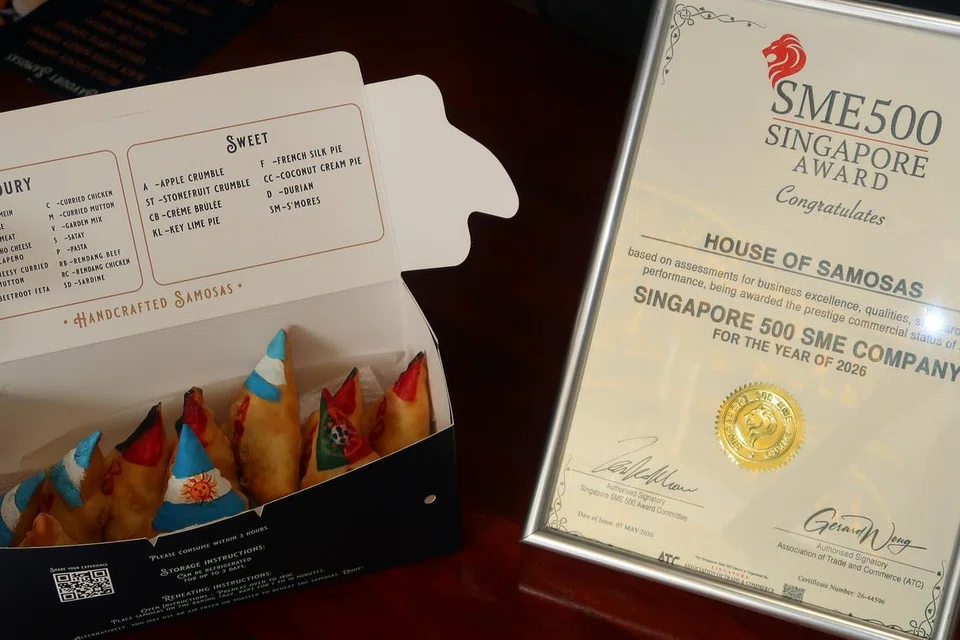
A nationwide recognition initiative administered by the Association of Trade and Commerce (ATC), the award allows recipients access to ATC’s extensive business network and capability development programmes.
“We are planning to automate a lot of our processes in future, and they (ATC) have contacts that can help with this,” Ms Najeera said. “You get to talk to a lot of people and get insights from their experiences.
“If you want to expand and go into franchising, there’s a lot of legal paperwork to be done. They (ATC) have people who can give legal advice or who are already experienced in this sector,” she added.
“House of Samosas was conferred the Singapore SME 500 Award for 2026 after meeting the assessment criteria applicable to its category at the time of evaluation,” a spokesperson for ATC told tabla!
Applicants are independently assessed against a structured evaluation framework covering key areas including business performance, governance and compliance, market standing, operational capabilities and the enterprise’s ability to achieve sustainable growth and scale.