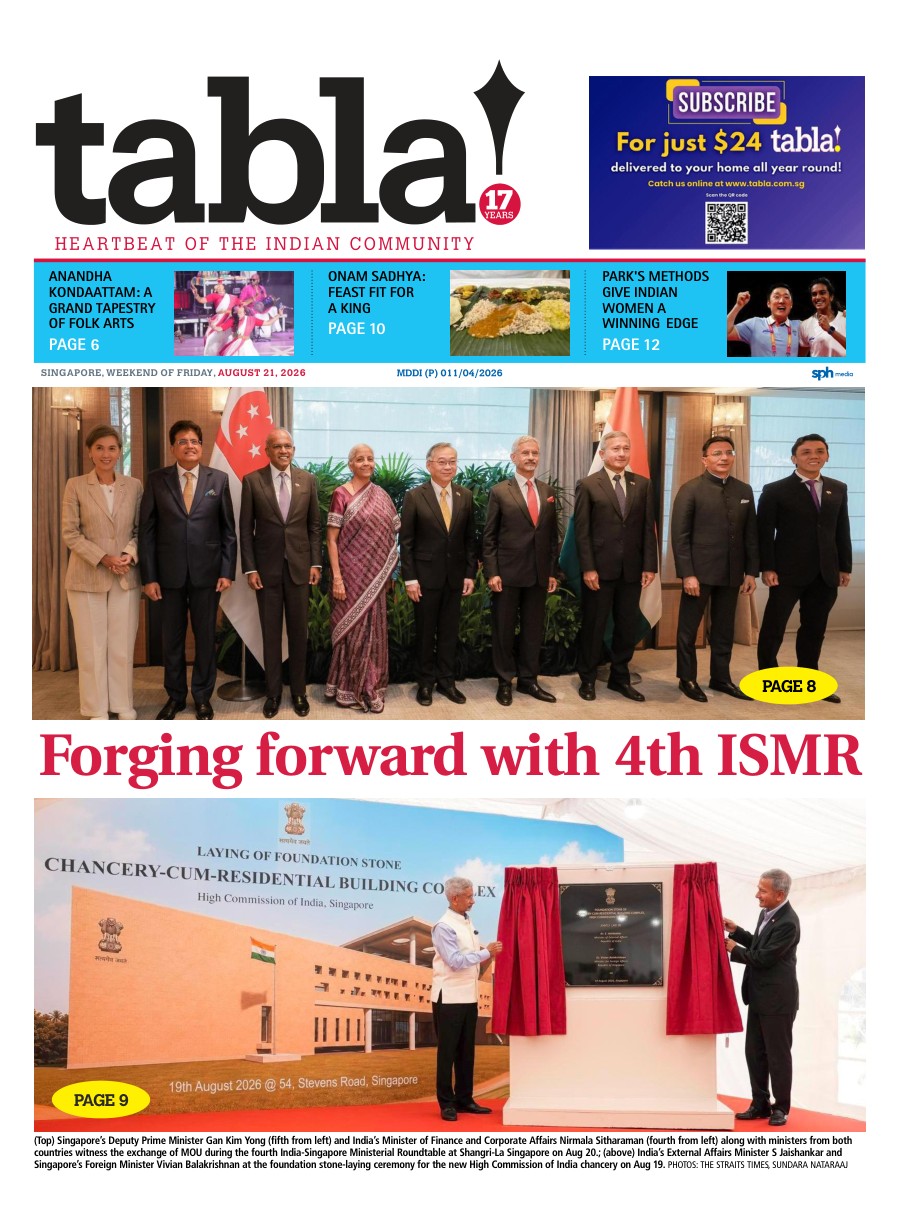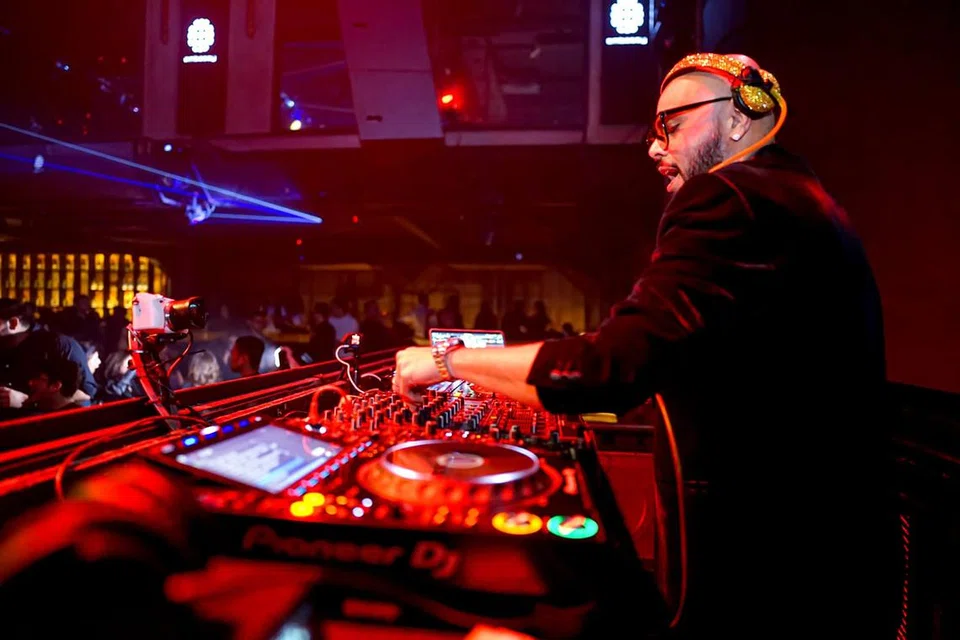


Behind every packed dance floor in Singapore’s nightlife scene is a DJ who has spent years honing their ability to read a room. The industry they helped shape, however, looks markedly different today than it did in the early 2000s.
Singapore’s nightlife revenue has more than halved over the past decade, falling from S$674.7 million in 2015 to S$284.7 million in 2022, according to the Singapore Department of Statistics. In 2024, Food and Beverage (F&B) business closures hit 3,047 – the highest figure in ten years.
The causes are structural: rising rents, alcohol duties that haven’t budged, and a generation that is simply going out less. The shift has spawned alternatives – sober party collective Beans&Beats drew over 5,000 people to a coffee-fuelled event at Funan mall in 2024 – but those crowds aren’t buying bottles in clubs on a Friday night.
DJs as a result are victims of this shift in trend. Four Indian DJs who have built flourishing careers here – Fazid Ali, Joshua Pillai, Milan Kumar, and Jasmin Patel – offer a ground-level account of what this looks like from behind the decks.
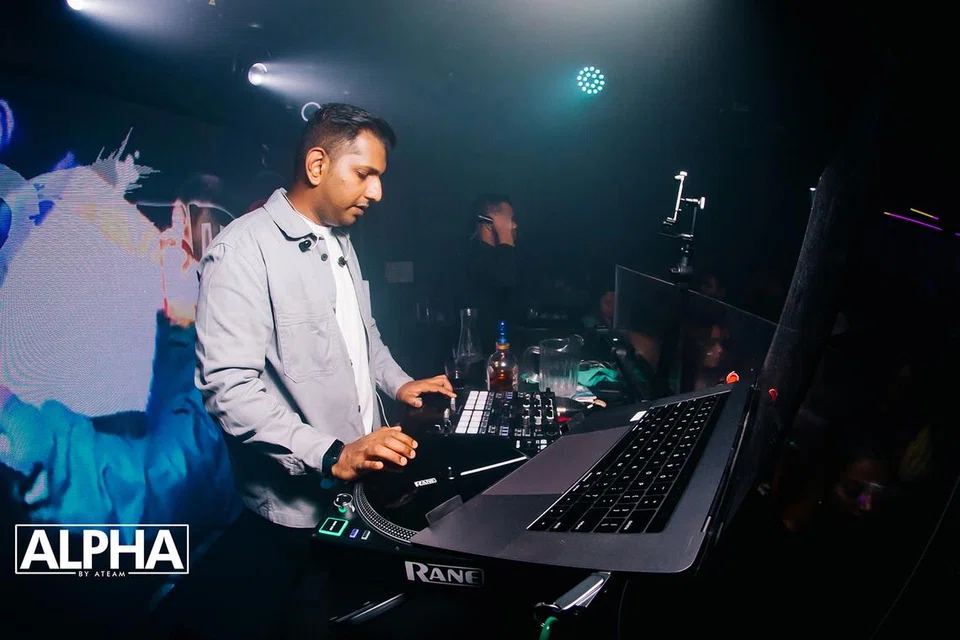
The most telling observation across all four is that the occasional club-goer has replaced the habitual one, a trend compounded by the pandemic’s lasting damage to the industry. Fazid Ali, 30, a mainstay at Tamil club Alpha located at Robinson Road, said that these days, people only club when an occasion calls for it.
It was not always this way. Mr Milan, 41, who brings two decades of experience to his reading of the industry recalls a more expansive era. “The late 2000s into the 2010s was an incredibly exciting period. Nightlife was booming, genres were evolving rapidly, and there was a real sense of experimentation. You had a big club culture, open-format rooms, underground scenes and live entertainment all growing together.”
That convergence is harder to find today. Since clubs cannot manufacture occasions, they market aggressively – for instance, Alpha runs a five-person social media team that Mr Fazid credits as the primary reason the venue has survived where some others have not.
Even so, they cannot fill a room on a slow Tuesday in the way they once could simply by being open. One of the casualties was Magic Carpet, a Bollywood live lounge that shuttered its operations in 2023, at which Mr Milan was a resident DJ for a decade.
The financial squeeze is felt across the industry. Venues are grappling with rising operating costs while contending with customers who are increasingly reluctant to pay S$300 for a bottle.
Yet DJ rates, Mr Fazid said, have remained largely stagnant for almost a decade, save for a handful of exceptions. “The change is still not here yet, where clients and club owners understand that the cost of living is going up,” he said.
Mr Joshua, 44, who like Mr Milan has been in the business for over two decades now, grew up surrounded by music was drawn early by the power of a DJ to move a room emotionally. His father ran an entertainment school company, which gave him access but not immunity from concern, as his family worried about the industry’s darker edges. He entered the scene without a degree, learning by doing, and worked his way up through major venues.
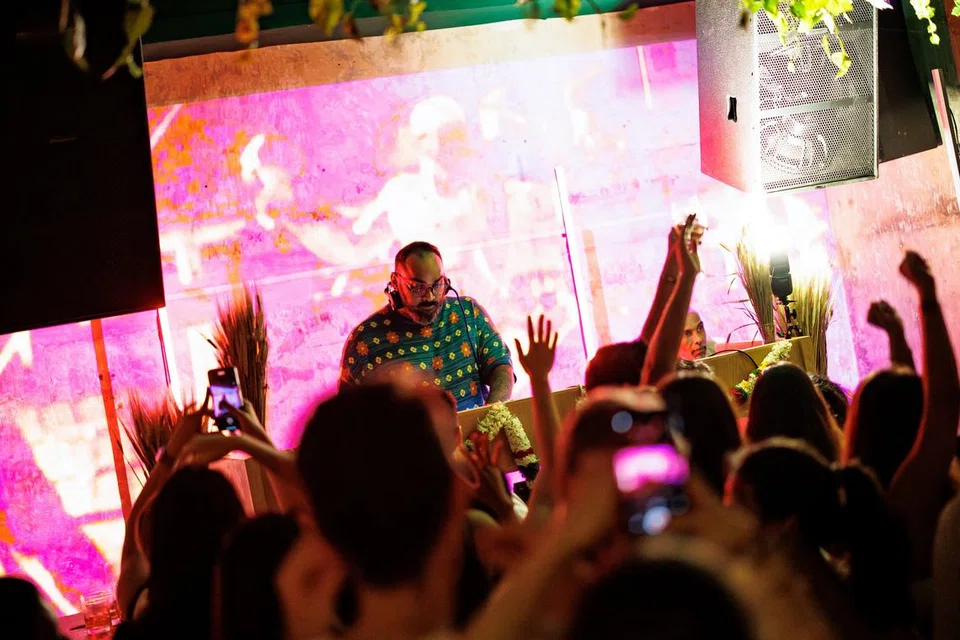
His residencies include renowned venues such as Fashion Bar by Fashion TV, Aurum by Clinic, QBAR, Hacienda, CÉ LA VI. He also regular fixture at local pop-up parties like Groove Top, Kampong Boogie, and Manifest.
He pushed back slightly on the narrative that club culture has simply diminished.
“People are still showing up, but spending has changed. That’s the difference. People are pre-drinking more or being more health conscious,” he said, the former referring to the culture of consuming cheaper drinks before hitting the club to avoid a fat cheque at the end of the night.
Mr Joshua also pointed to a structural challenge: an oversupply of venues relative to the size of Singapore’s market. As of April this year, there are 74 licensed clubs and 642 bars on this island nation.
“The population of Singapore cannot sustain it,” he said, estimating that filling multiple clubs simultaneously on a Friday or Saturday would require a consistent pool of tens of thousands of willing patrons – a number that doesn’t exist week after week.
Mr Milan traced a deeper cultural shift. Nightlife was once community-driven, where music discovery was part of why people showed up. Now the experience is, in his words, “digital, visual, and content-driven.”
The consequences are felt in the booth: Mr Fazid acknowledged flatly that a mediocre DJ with a strong Instagram presence will outbook a skilled one without it – and that a single photo of a sparse crowd can empty a room the following weekend.
This, Mr Milan feels, is because today’s crowds consume music very differently compared to older generations, as attention spans are shorter, trends move faster, and social media heavily influences music taste.
Raised in a household where music ranged from Sanskrit meditation chants to Enya, Bollywood, J-rock and early electronic artists, Jasmin Umesh Patel, 33, – who performs under the moniker DJ Jaz – spent the formative years of her career, which officially started in 2016, streaming and connecting with fans online, and sees that as a template for survival through the pandemic.
“One of the many ways to have a sustainable career as a DJ, thanks to Covid, is to build a following online and stream on platforms like Twitch or TikTok,” she said. But that comes with a catch, she noted: social media platforms make it easy to curate one’s image, and because everything can be curated, much of what gets posted has little to do with music or deejaying at all. That, she said, blurs the line between expectation and reality.
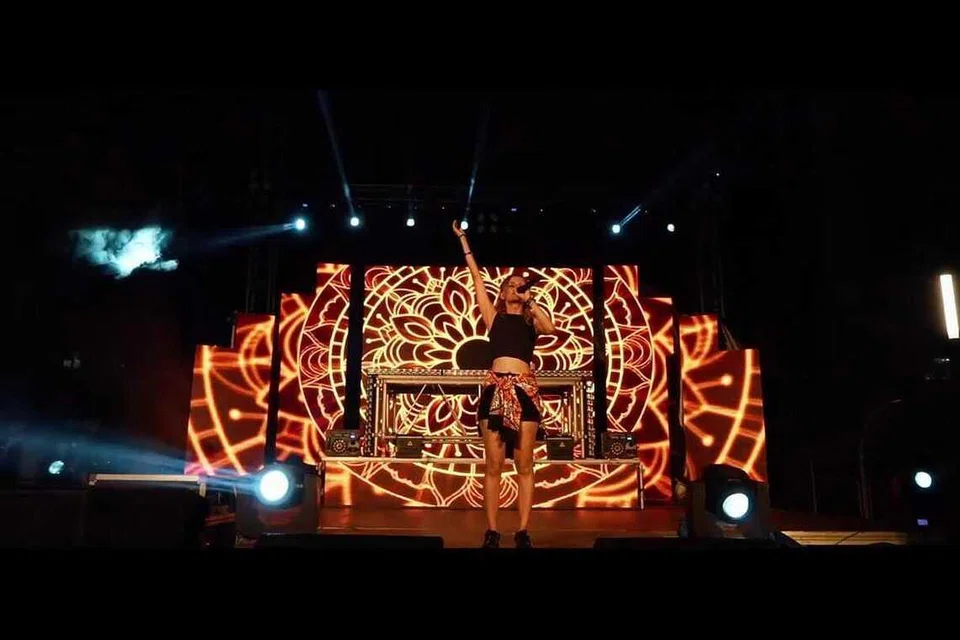
That gap between image and substance is why what happens on the actual dance floor matters so much to Ms Jasmin, more so as she regularly deejays at Silent Disco Asia’s events at Marina Bay Sands. Her masters in art pedagogy gave the practice a name. “Crowd reading actually has a psychological framework,” she said. In practice, she watches for physical cues, such as people moving in sync with the beat. “It’s a very primal, subconscious response. Once your audience is in sync, you’re good,” she said.
Adapting to changes
Adapting also means expanding. Alongside deejaying, Ms Jasmin also teaches private piano and produces her own music through which she “feel(s) nourished because I’m not relying on just one stream of income and I’m giving back to the next generation in some way,” she said. It’s also, in her telling, a cycle that feeds back into her performances as she’s able to show up to her events with more energy to give.
Mr Joshua has turned a more personal reinvention into professional strategy – after years of performing under the anglicised name Joshua P to avoid discrimination in bookings, he reclaimed his Indian name.
“Authenticity is a key for being relevant right now, more than the music itself,” he said, pointing to DJslike Jyoti and Yung Singh – artists he opened for, who have built global followings by wearing their culture unapologetically.