
On the morning of May 27 this year, Singapore lost a living link to a golden era – a man who had worn the national jersey on the hockey pitch and carried a service revolver through the back alleys of a city for its protection.
Dolak Singh Raipur passed away after a long illness. He was 78.
He lived many lives in one: national athlete, Criminal Investigation Department (CID) detective, granduncle who did magic tricks at family gatherings, raconteur who could hold a circle of ten people spellbound.
Born in 1947 into a Singapore still unmade after the war, his family deep in poverty, he channelled himself early into two of the most demanding arenas a young man could enter in 1960s Singapore – competitive sport and law enforcement.
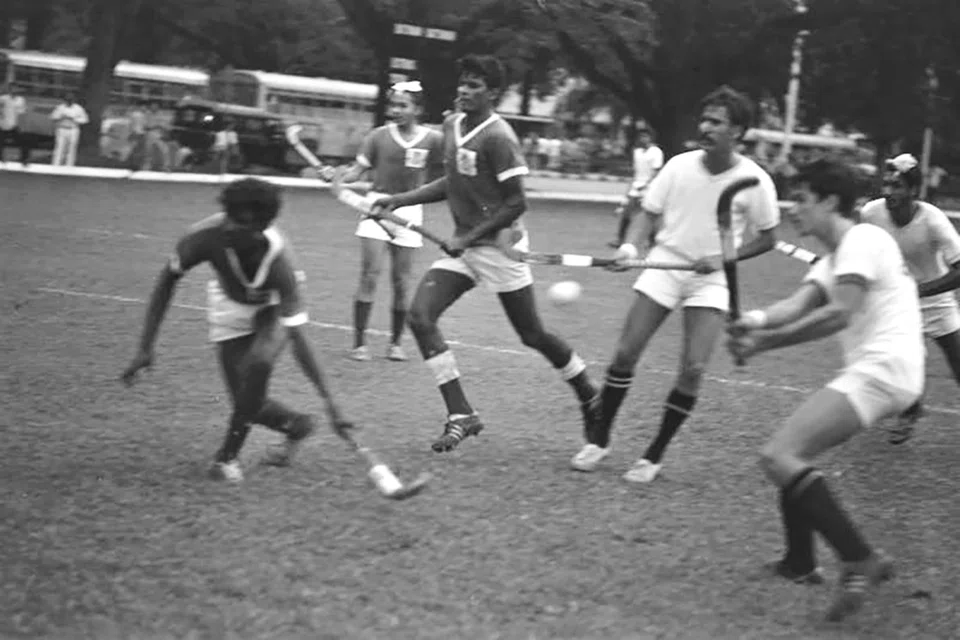
To anyone who followed the Singapore hockey scene in the 1970s, his name needs little introduction. Mr Dolak came up through the Indian Association before representing the Police team in the Singapore Hockey Association (SHA) Division One league, but it was the national jersey that mattered most.
On National Day in 1971, he took the turf at Jalan Besar Stadium against the Indian national team – multiple Olympic champions, among the strongest sides in the world at the time.
“He played in the left wing position and dazzled with his slick dribbling and scintillating runs,” said former Singapore national hockey captain and coach, H.S.Loombha.
“He used a rather unique dummy move over the ball with his hockey stick to get past many a stupefied opponent and send crosses into the ‘D’. Many of us remember that particular skill,” recalled Chamkaur Singh, a former police teammate and close friend, with another friend, Mr Ajit Singh, a former SAF officer saying “he would practice until he mastered the left wing position.”
The following year, he was selected for the national squad for the Razak Cup and the 1973 SEAP Games under Olympian coach Balkrishan Singh. Police duties eventually forced him to step away in the mid-1970s, though Singapore beat Malaysia 1–0 in a campaign he had helped shape.
“He was very humble, skilful and disciplined on and off the field. We all shared the same jersey for Singapore, same passion and many proud moments. It was really great to play alongside him,” Mr Loombha added.
Mr Chamkaur, whose friendship with Mr Dolak extended from the pitch to retirement golf rounds, added, “I think Dolak would want to be remembered for being a gentleman sportsman. That was exactly what he was. Never one to argue with umpires or offend opponents with unfair or overly aggressive tackles. Always had a smile for everyone.”
But sport was only part of Mr Dolak’s story.
He joined the police in 1966, initially in the British-run Army Depot Police as an auxiliary officer, and was soon posted to the CID, working on organised crime, secret societies and eventually gambling suppression – placing him squarely against the illegal syndicates that plagued Singapore’s early decades.
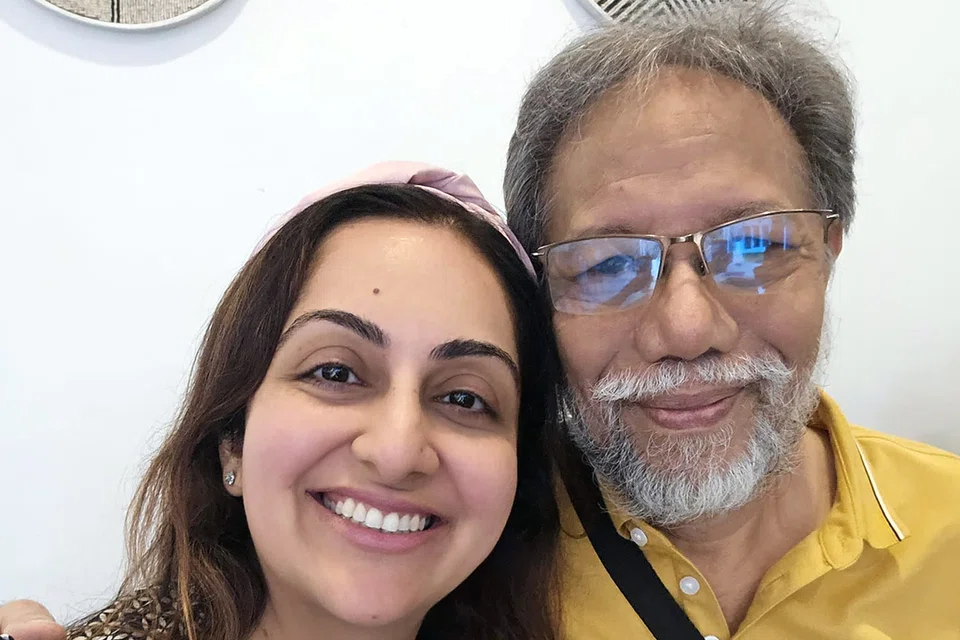
His nephew, Malminderjit Singh, spent stretches of his childhood in Mr Dolak’s home. “I have distinct memories of him being called in the middle of the night and having to go for raids. He had to keep his service revolver at home, and he would holster his pistol under his trousers and be gone for twelve, thirteen, fourteen hours before coming back.”
Among the defining cases of his career was the Gold Bars triple murder, where a group of 10 men killed businessman Ngo Cheng Poh and his employees, Leong Chin Woo and Ang Boon Chai, over 120 gold bars. The case was also linked to the pursuit of the Hock brothers, two of Singapore’s most wanted men in the 1970s. Mr Dolak was part of the encounter team that brought the case to a close, and was even shot in the line of duty during the operation.
Away from all of it, he was the antithesis of the job.
“He’s the life of the party,” said Mr Malminderjit. “Every function, every event, he would have at least a circle of ten people around him listening to his stories.” His children called Mr Dolak Magic Dada – the one who always arrived with tricks.
He was also deeply spiritual – a Sikh by heritage who maintained a lifelong connection to gurbani (spiritual writings) and the gurdwara, and alongside his wife, an active participant in Singapore’s Sai Baba movement.
“He never failed to put a smile on anyone’s face. I try to be lighthearted wherever possible. He was also very committed to the idea of Singapore. My desire to contribute to the community and nation, I think he played an important role in shaping that view,” Mr Malminderjit said about what he wishes to emulate in his uncle.
In his later years, Mr Dolak worked with security firm G4S before joining Temasek Polytechnic’s Security Industry Institute to train a new generation of security professionals.
Cancer came gradually, then all at once. After years of chemotherapy, he chose in March 2026 to stop treatment and passed peacefully in his sleep weeks later.
“We are heartened by the fact that he didn’t have to go through much pain during his last few days and hours,” Mr Malminderjit said. “That is something we take heart from.”
At a gurdwara gathering after his passing, former teammates and police colleagues remembered a man who had given himself fully to every role. Mr Loombha’s farewell message read, “Thank you for the sweet memories, our dear Dolak.”