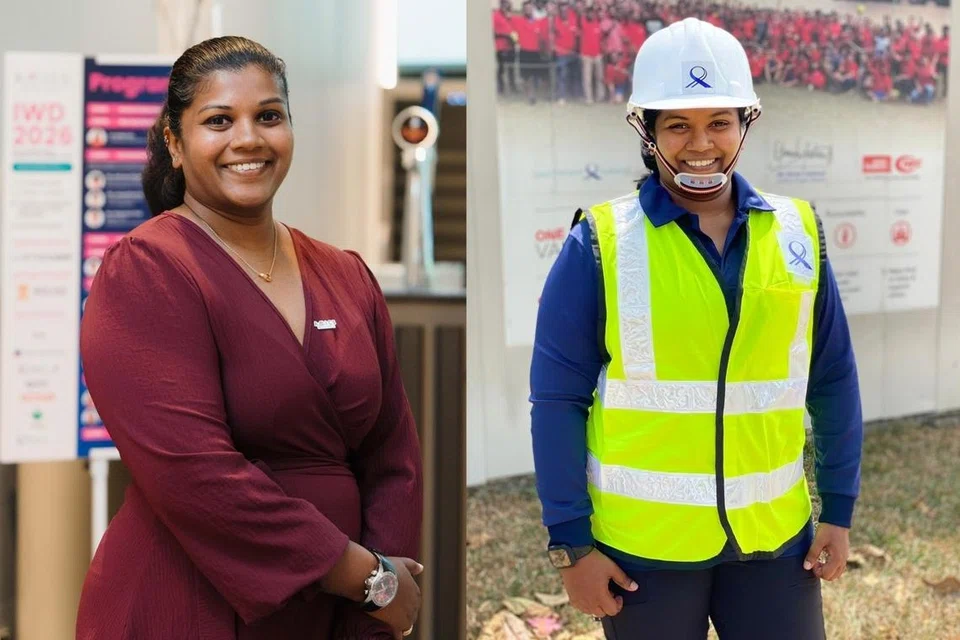

Long gone are the days when working at a construction site was perceived as unclean and unsafe for women. A notable proponent of this shift within the industry is Ms Vimalatulasi Vetrivel, a principal project manager at the Land Transport Authority (LTA).
One look at the 40-year-old mother of two reveals a capable professional whose confidence and aptitude are matched only by the scale of the infrastructure projects she manages, such as the construction of train stations on the Cross Island Line (CRL).
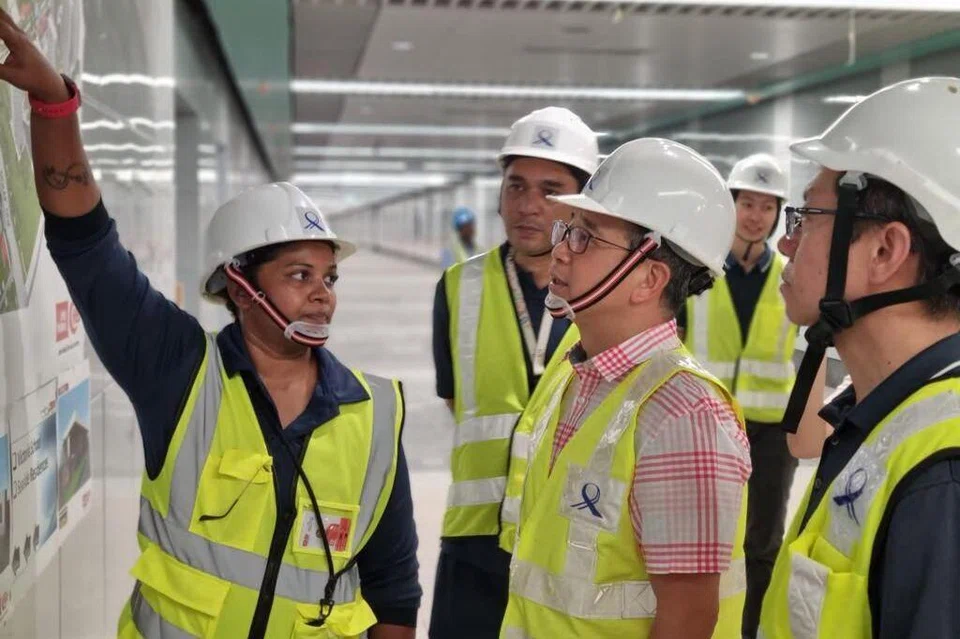
According to LTA’s website, the CRL will be the longest fully underground line at more than 50 kilometres long. Ms Vimala’s role involves liaising with the contractors, consultants, stakeholders, and the public to ensure the station is operational by the stipulated deadline.
When asked if she has ever faced any gender-specific challenges working on-site or in the male-dominated built environment sector, Ms Vimala said: “Honestly, I get nothing but respect.”
Her notion that respect begets respect is exemplified during her site visits. “Quite a number of the workers are from India and Bangladesh. I will ask them how they’re doing, how their family is. Sometimes I will speak in Tamil, which makes them so happy,” Ms Vimala added.
She builds rapport with the workers on both a personal level and on an organisational level. As project manager, Ms Vimala will enquire if there are enough sheltered spaces for the workers to take respite in, or if they have access to drinking water and proper toilet facilities.
“When I start to ask all these questions, they know that you genuinely care about them. And in return, they will go the extra mile,” Ms Vimala observed.
Her journey into the built environment was unplanned. “Since young, I wanted to be a police officer,” she quipped. That ambition took a backseat after she sat for N Levels and O Levels exams. She secured enough points to qualify for a polytechnic seat and considered studying information technology (IT) due to the IT boom in the early 2000s.
Then her cousin changed her perspective and nudged her towards Ngee Ann Polytechnic’s less competitive Civil and Environmental Engineering diploma programme. “As I progressed through the modules, I found out that I was doing quite well,” Ms Vimala recalled.
She eventually completed her bachelor’s degree in civil engineering from Nanyang Technological University (NTU) in 2008, the same year of the Global Financial Crisis.
Worried about her future, she came across the LTA booth at an NTU career fair.
“They showed us the Singapore map, which detailed the upcoming MRT lines. The project management aspect of the job really intrigued me, so I sent them my resume immediately after the fair ended,” Ms Vimala said.
And the rest is history. Except 13 years later, when LTA offered the veteran project manager an opportunity to pursue a master’s degree in infrastructure management and digitalisation from the National University of Singapore, which she took.
“I’m blessed with the bosses I have, who tested me on my performance and how I deal with the various stakeholders. It’s all about your capability and credibility,” Ms Vimala noted.
Ms Goh Yi Xuan, 26, a civil project engineer, and Ms Wu Junlan, 37, an executive engineer, are part of Ms Vimala’s current team at LTA.
“People have the misconception that you have to be aggressive or strong-headed to be a leader, which are characteristics that are more common in men,” Ms Goh said, adding that “it doesn’t mean women can’t have all the traits needed to be a good leader, because I see it in Vimala. She is firm, but she is also compassionate and helps us with our growth too.”

Likewise, Ms Wu acknowledged that she used to be more reserved at her past workplaces. “Under Vimala, I feel like I can open up more and truly be myself,” she said.
To ensure more women in the built environment have similar success stories, Ms Vimala and three other notable women in the industry came together to establish the Association of Women in Construction Singapore (AWiCS) in 2019.
As one of the four founding members, Ms Vimala said: “The selfish part of me wants to see more women in the built environment sector.” She also hopes the association will help reshape the perception of the construction industry as more than just concrete, steel and mud.

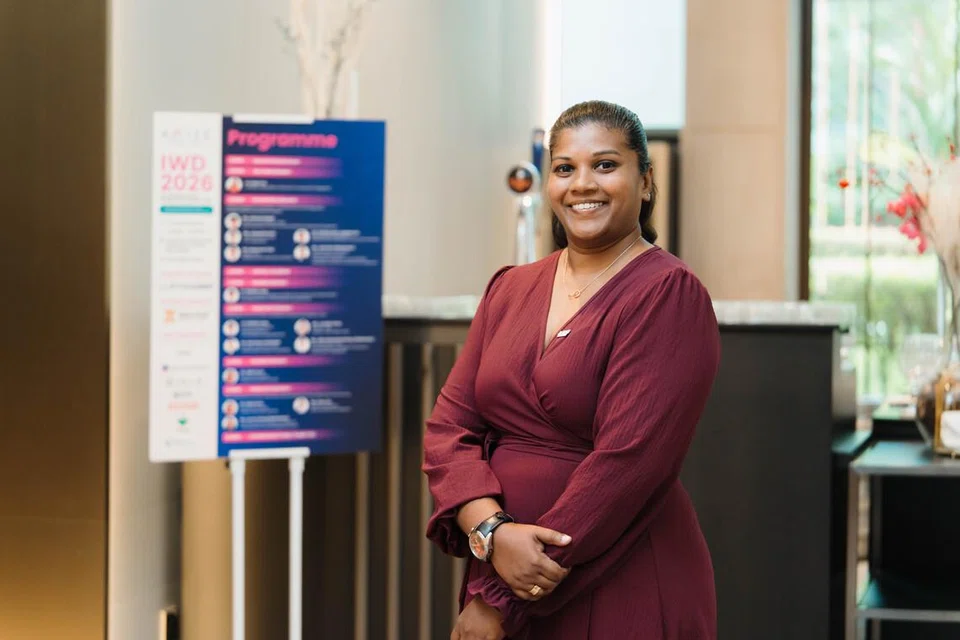
One such effort is the AWiCS 5th International Women’s Day summit, which was held at the Paradox Singapore hotel in Clarke Quay. The event was attended by around 300 delegates, which included women in built-related professions such as engineers, project managers, architects, interior designers, and more.
“More than just numbers, the presence reflects something deeper, a collective belief, that the built industry is evolving, and that women are not just part of that change, but are leading it,” said AWiCS president and engineer Emily Tan.
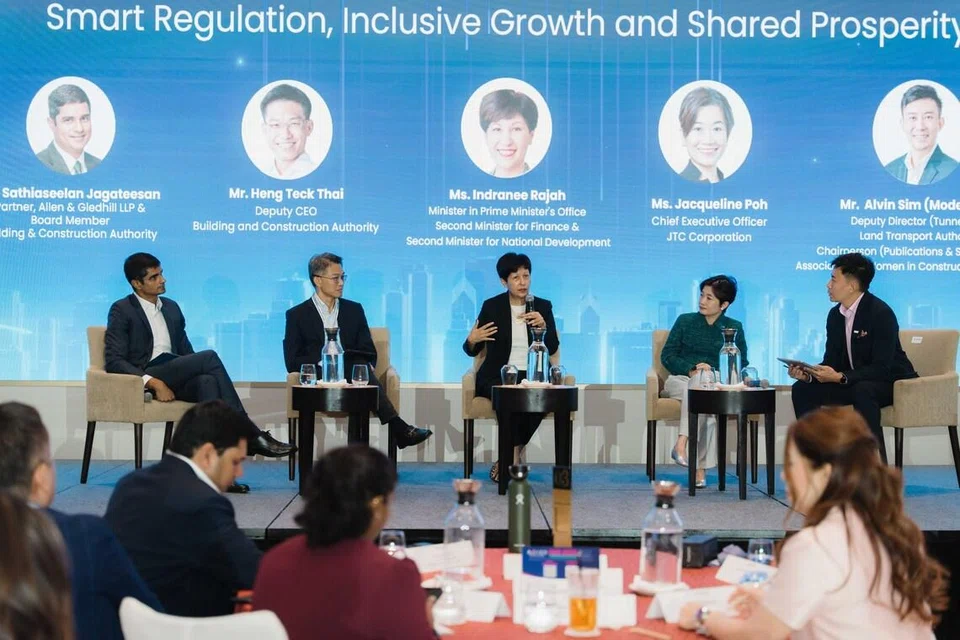
Minister in the Prime Minister’s Office, and Second Minister for Finance and National Development, Indranee Rajah, was the summit’s Guest of Honour. She participated in a panel discussion on “Keeping Singapore Pro-Business in a Volatile World”.
“The best strategic advantage is the fact that because we (Singapore) are small, it’s actually in our DNA to always be trying to think ahead, and always be trying to figure out how to overcome challenges,” Ms Indranee said.