Clay is among the most responsive of artistic materials, yielding readily to touch while retaining the marks of every choice an artist makes.
In contemporary practice, it is used in varied ways, from careful explorations of form and texture to more experimental or narrative-driven work. Each piece reflects not just technique, but the individual sensibilities and concerns of the artist behind it.
For Indian-born artist Aninda Varma, clay sits at the intersection of her fine-art training and her lifelong love for textiles. Raised across India and constantly surrounded by fabrics, she learned to read texture the way others read words.
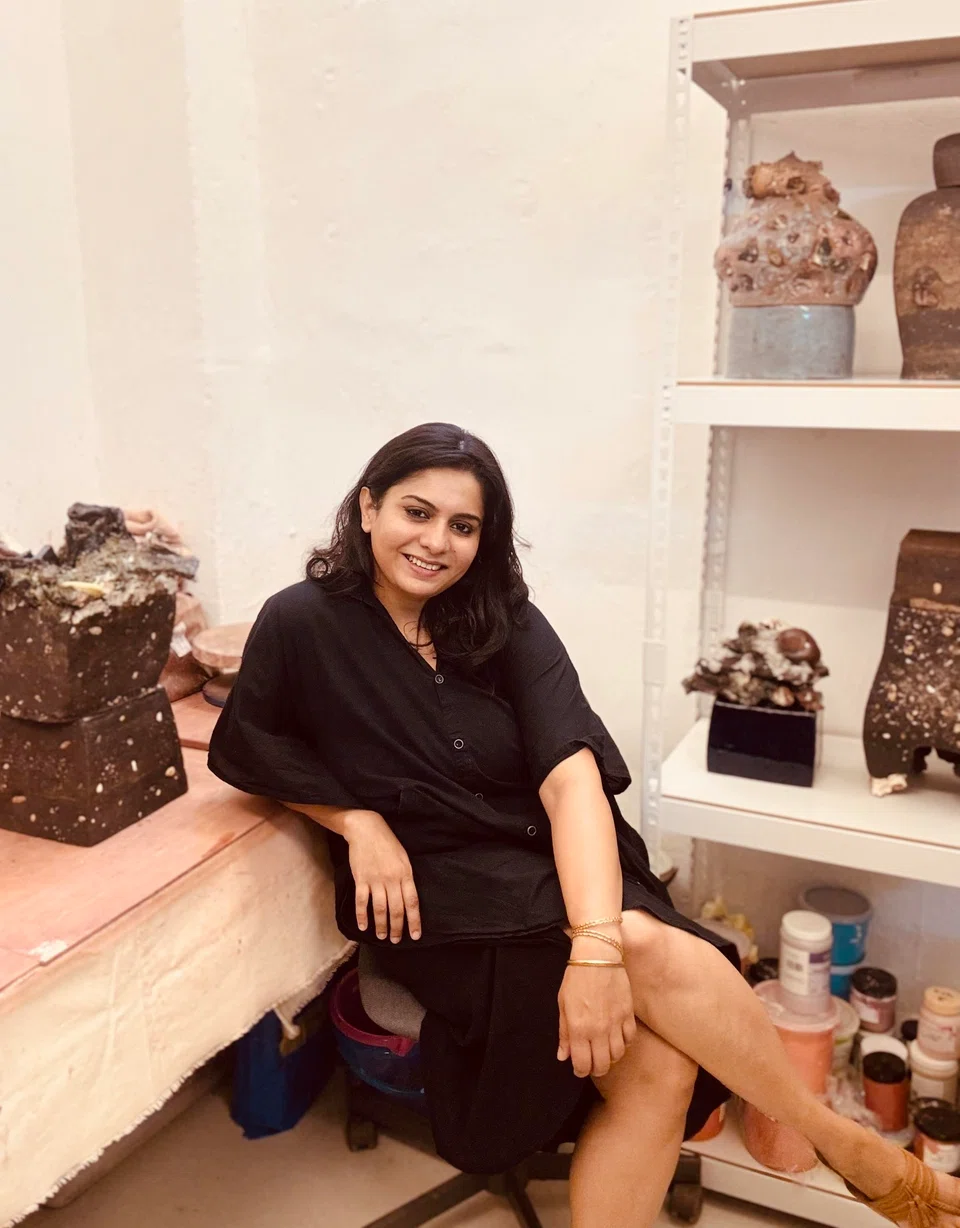
“My mother was very into fabrics, so naturally I was very drawn to silks and handlooms as well,” the 40-year-old said.
She first got into clay during the pandemic, with no intention beyond simple exploration. Very quickly, she realised she did not want to just make pristine objects “kept behind a glass box”.
“A lot of my work is about experimentation. It’s not just about what looks beautiful on a shelf,” Ms Aninda said. Today, she moves fluidly between clay and textile, sometimes literally weaving the two together.
She had stitched saree scraps into a tall clay form for her recent work. “A used textile has so much history. Has someone worn it? Was it ceremonial? Where has it travelled?”
Singapore has added new textures to Ms Aninda’s material vocabulary: stones, rubble, and construction debris. One work began after she spotted stone fragments near a worksite while dropping her daughter off at school. “I thought that it looked interesting. So I picked up the stones and mud and actually used them in my work.”
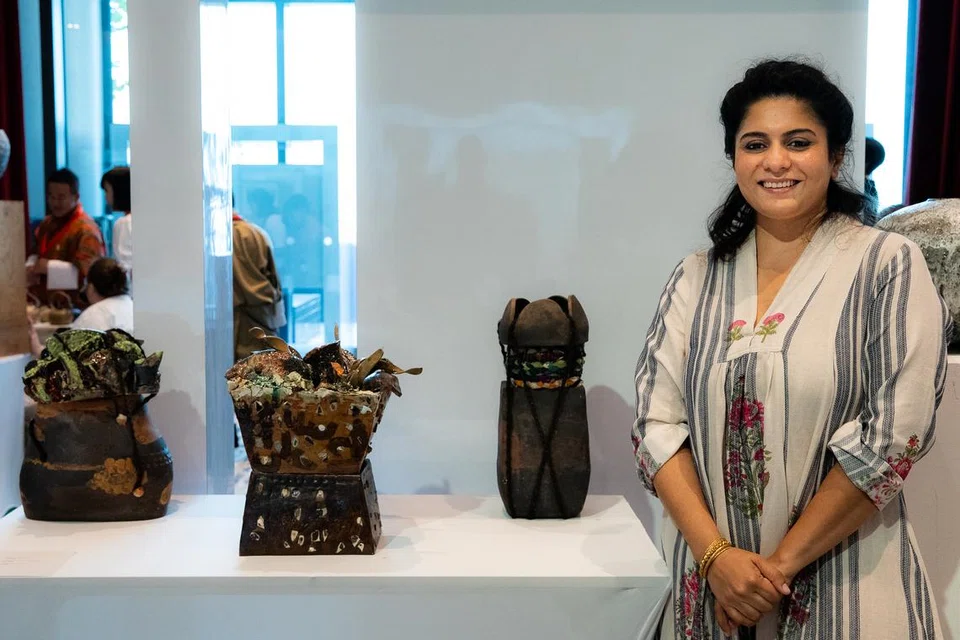
Planning may take months, but the making is quick, almost instinctive, Ms Aninda added. “It’s all about memories,” she said. “In my work, I hope to portray everything that I’ve seen and experienced growing up.”
Reinventing a life in clay
If Ms Aninda’s practice is shaped by layered memory, Ms Pooja Bhusari’s journey is defined by reinvention. A computer engineer for 15 years, she first touched clay because a friend dared her to try making pottery – a joke that ended up redirecting her life.
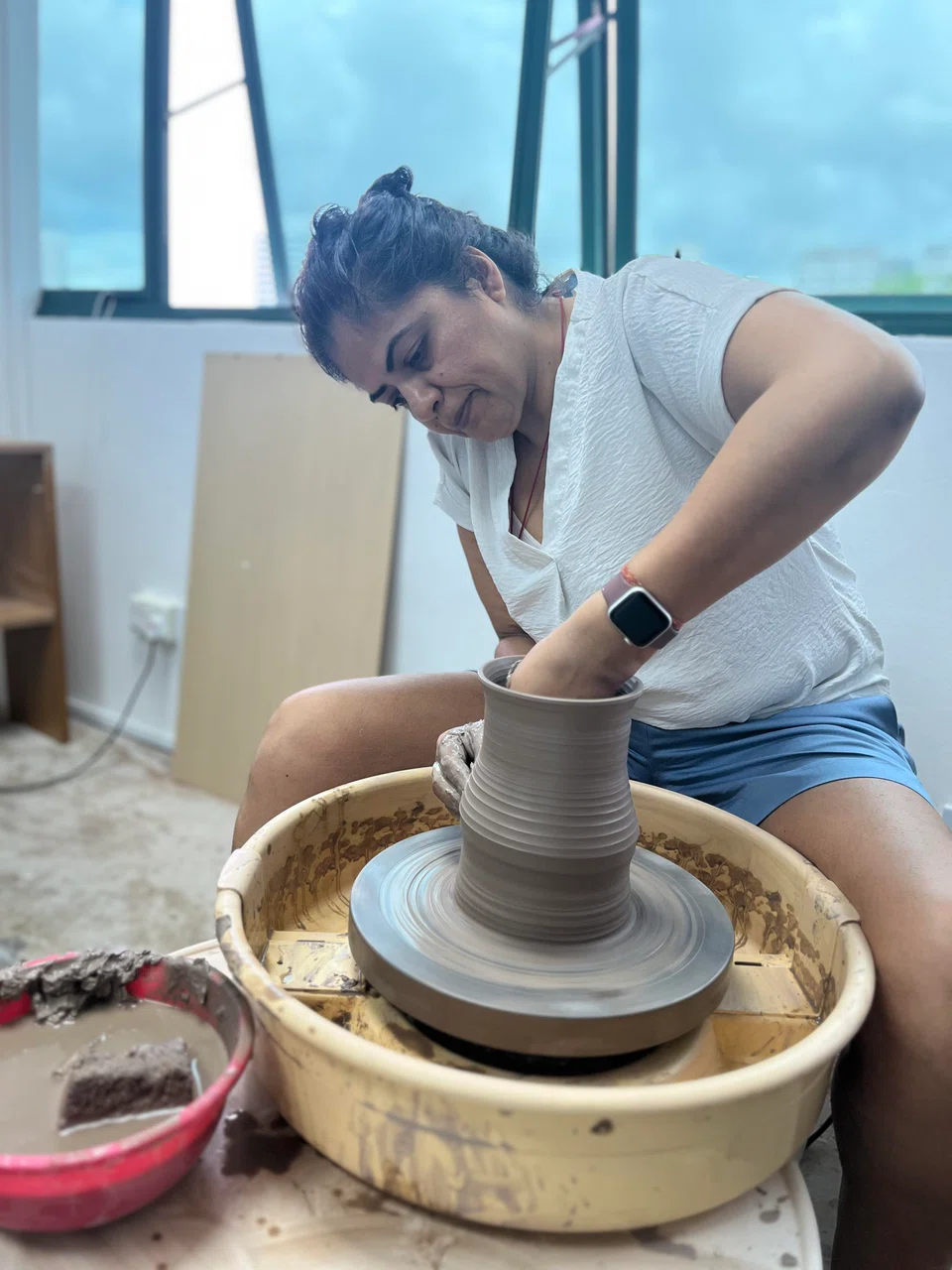
“I wanted to keep my hands busy, so I agreed to go to a workshop back in India,” the 49-year-old recalled. “And then I got so hooked on it. It was almost like an addiction.”
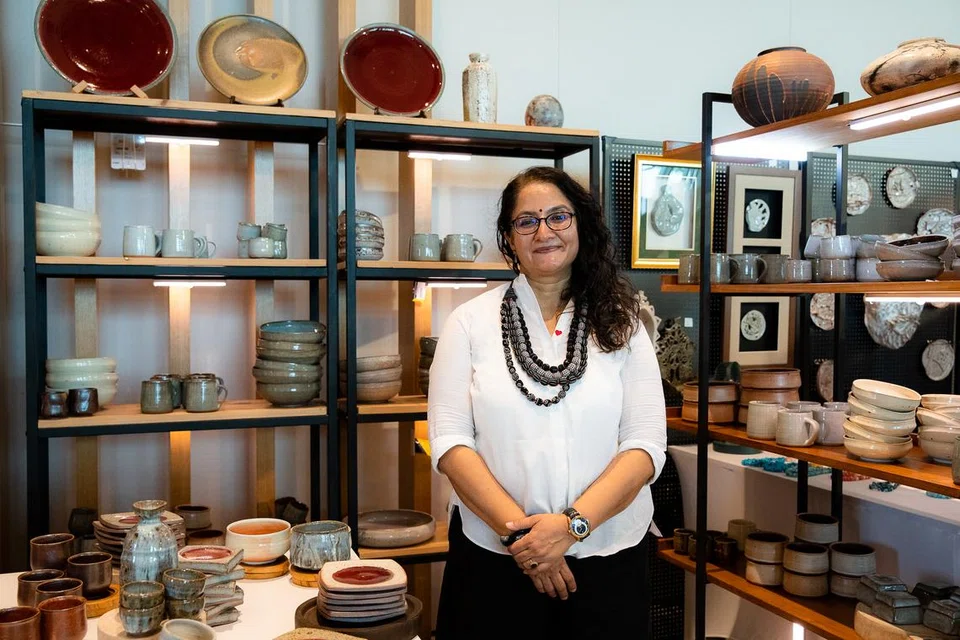
Within months, she had bought a second-hand wheel, quit engineering, and plunged fully into clay. She now runs ‘Klay Kathaa Ceramics’ studio here in Singapore, offering classes, corporate workshops, and a growing portfolio of personal work.
Ms Pooja’s signature work is the ceramic elephant, sculpted directly on the wheel. Some of her other pieces often resemble miniature worlds: small corners with books, pots or birds, echoing her childhood.
Living in Singapore has expanded her artistic vocabulary. “People here really understand clay and how much effort it takes. I love the respect for art here,” she said.
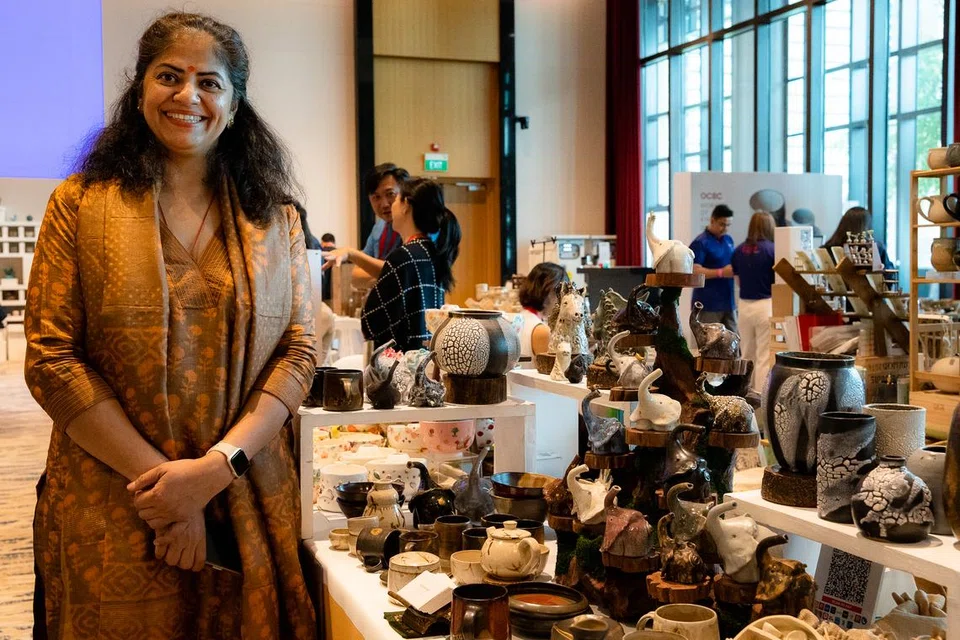
Her path has been anything but linear, from running a studio in Mumbai to shutting it down during the pandemic, relocating, and rebuilding from scratch. Running her Singapore studio now feels like hard-won freedom.
“There’s no turning back,” she added. “Every day feels like a holiday because I love what I’m doing.”
Two decades with clay
For Ms Shweta Patel, clay has been a steady companion throughout her 20 years in Singapore. “As soon as I came to Singapore, I started doing pottery,” she noted. “It’s been a long and fulfilling journey.”
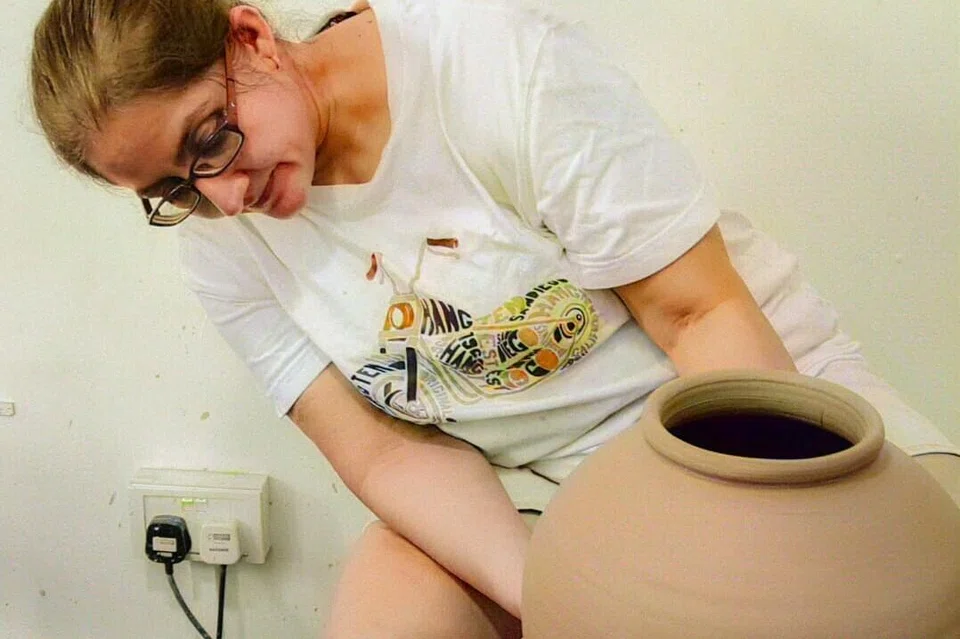
The 49-year-old’s fascination began in India after watching a documentary on village potters. “It was interesting to see how an unshapely lump of clay becomes an object of beauty. I knew that if I ever got the chance, I had to try,” she said.
That chance arrived in 2006 at Sam Mui Kuang Pottery, where she trained under Singaporean master potters Mr Chua Soo Khim and Mr Lim Kim Hui. Today, Ms Shweta runs ‘Wheel of Clay’ at Redhill and teaches wheel-throwing, focusing on simpler, more robust forms that foreground surface and firing.
A hallmark of her practice is glaze research. She formulates all her glazes, from Nuka (made with rice-husk ash) to experimental blends using cow manure or incense ash from temples.
Her heritage threads through her recent ‘Bindi’ series, which features a red dot at the centre of the pieces. The motif reflects her influences from Singapore, Japan, India, and the painter S.H. Raza.
Though pottery has grown in popularity, Ms Shweta emphasised community over competition. “I’ve learned the most from friends,” she said. “The pie is small. I hope we all work together to make it bigger.”