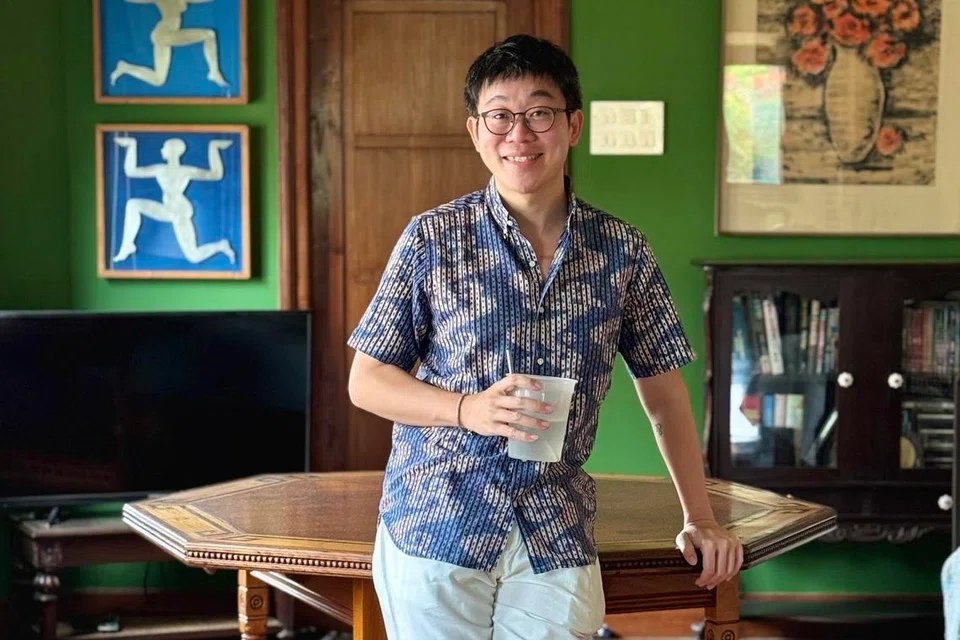


Two men worked in opposite corners of the same traffic bottleneck in Mumbai’s Bandra Kurla Complex, the glass-and-concrete business district Mr Wong Ren Jie – then a Singapore Tourism Board (STB) marketer – described as the city’s most boring neighbourhood.
They sold loose cigarettes and packaged paan (betel leaf) to office workers on smoke breaks – a familiar, technically illegal fixture of the junction that was largely ignored by authorities. That changed on the morning a state chief minister’s motorcade was due to pass through. Police swept the intersection clean, including the two vendors and their carts.
Mr Wong noticed their absence on his way to work. However, by the time he returned from a meeting that afternoon, both men were back at their usual corners but unaccompanied by their carts.
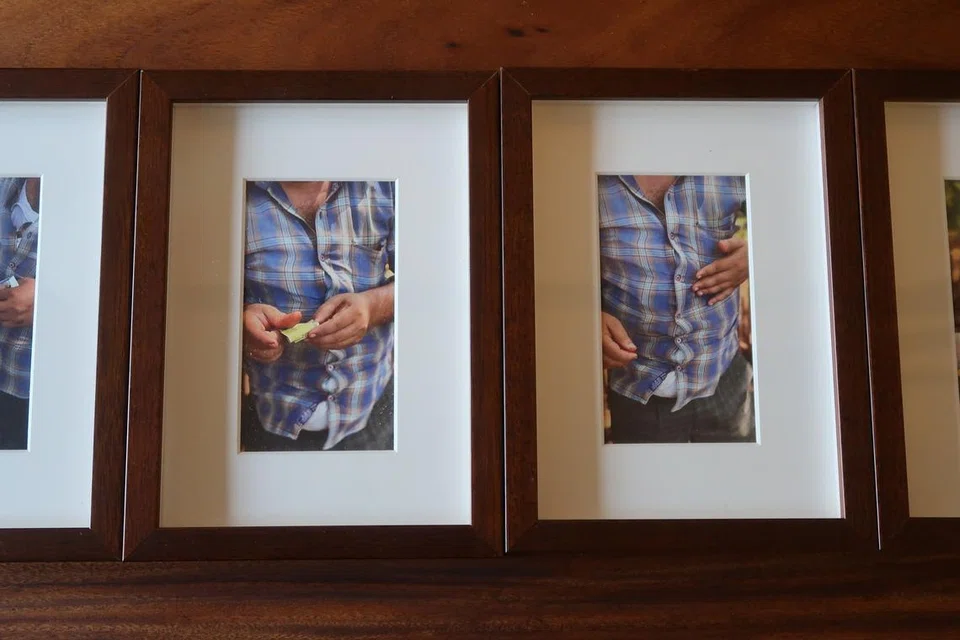
It was only as Mr Wong walked past them that he noticed an odd bulge beneath one vendor’s shirt while he attended to the group of customers hovering around him. Turns out, he had hidden his entire inventory beneath his clothing and was serving customers entirely from memory, reaching into the precise folds of fabric to retrieve each requested brand of cigarette.
In Mr Wong’s telling, this episode came to encapsulate what he had learnt in the three and a half years he was stationed in Mumbai, tasked with selling the polished, postcard version of Singapore.
“It really epitomises the idea that where there’s money and a living to be made, there’s someone in India who’s thought about it and is willing to hustle,” he said.
India was not the 35-year-old’s first stop on the job as a marketer. After postings in Myanmar and the US, he figured India, considering the sheer momentum of its growth over the past decade, would make for an exciting new venture.
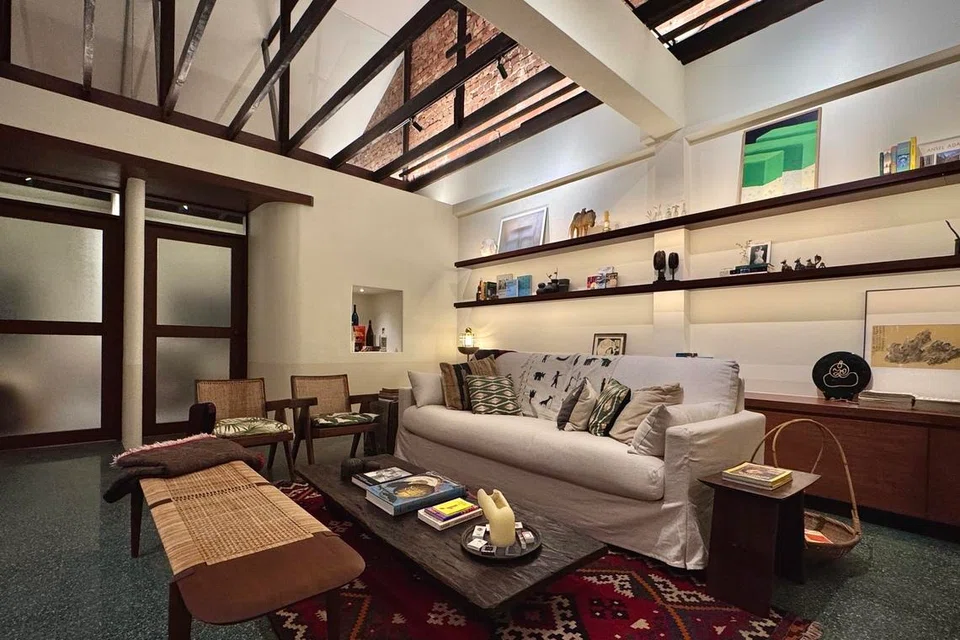
He shared the cigarette-seller story with delight, the reason for which becomes clear once one visits 52cc – Mr Wong’s home and a by-appointment-only private cultural space, situated on the intersection of Joo Chiat and Geylang Serai.
Curated by Mr Wong, the space gathers the pursuits that have defined his life - food, photography, writing, collecting and hospitality. On its walls hang photographs from his travels, including portraits of the cigarette vendor whose ingenuity taught Mr Wong that the most revealing stories of a place are often the ones hiding in plain sight.
After studying anthropology at Stanford University and frequenting Italy in the summers for research, he was drawn less to fieldwork methodology than to its underlying compulsion – what he describes as a fascination not for “what they are, but why they are that way.”
Upon graduation, he returned to Singapore in 2016 and joined the STB as a management associate, where he spent nine and a half years. It was during his posting in the US that a second education began, one that had little to do with his job title. By his own account, he is “not very good at going out and socialising at parties,” but is “very happy to cook” and “very happy to host.”
Hence, what began as a way to meet new people, with his cooking as the conduit, gradually evolved into a regular supper club he named ‘SALON’ that convened many a stranger at his dining table.
Then came Mumbai. He recreated the supper club five months after his arrival in a pursuit to build a community in a country that was new to him. “People were genuinely so open. It really wasn’t difficult to get to know people and start to make friends,” he said.
Over time, that instinct for connection turned towards the city itself, and then towards the overlooked forms of beauty hidden within it. The curiosity led him to the gems he would later adorn 52cc with.
For instance, one of his prized possessions is a century-old Art Deco teak chair he found discarded on one of Colaba’s streets – a staple design that one can find a commonplace watchman sitting on – and had it restored.
To do so, he called on a craftsman who arrived in sandals, carrying raw rattan, and worked from “pure muscle memory”, with no workshop or provenance story attached. “We’ve lost that in Singapore,” he said. In India, he’d found craft to be something ambient and quotidian.
Now that chair sits at the head of his dining table.
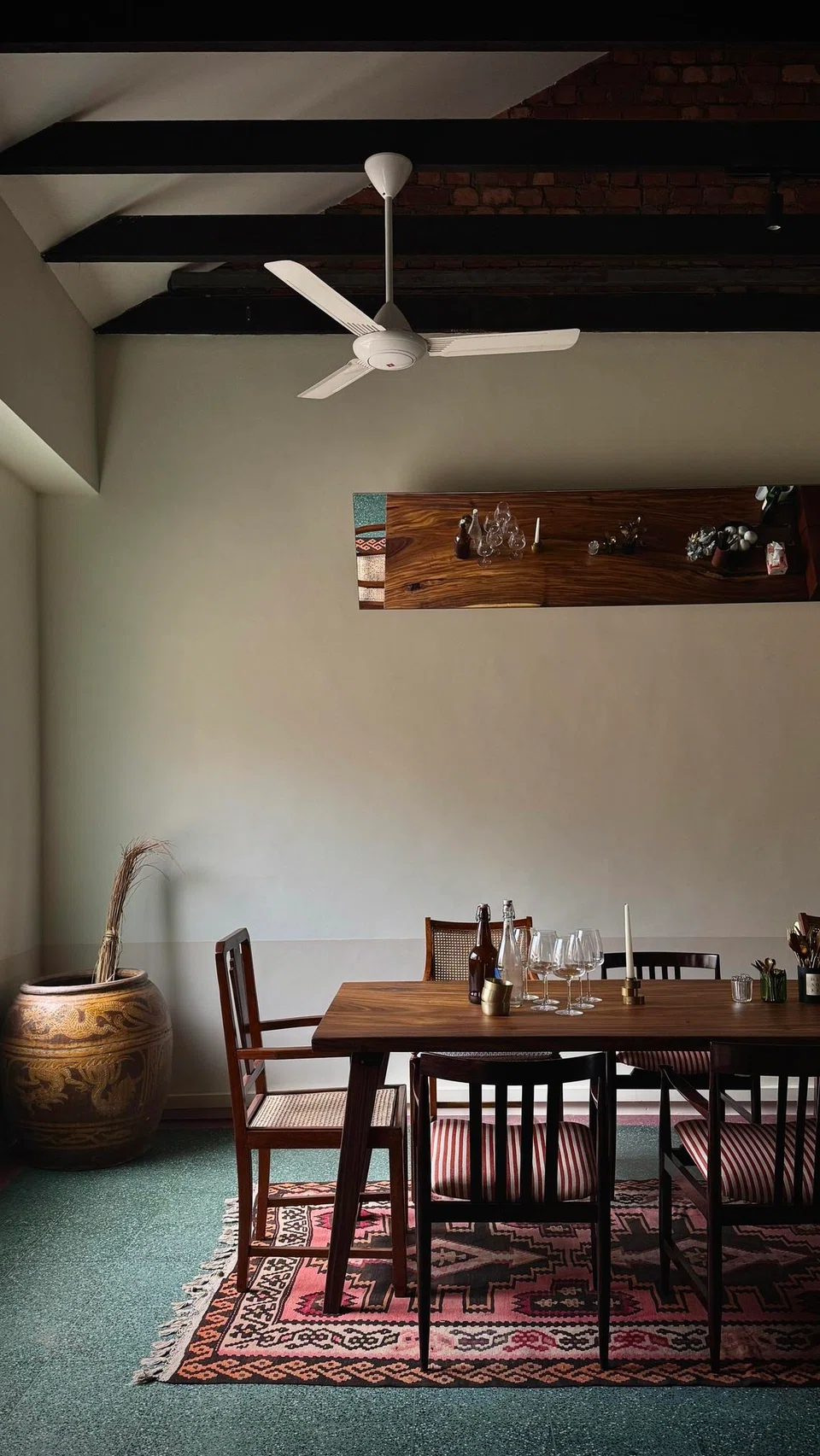
His attention to India’s everyday aesthetics also followed him home. The Art Deco interiors he encountered in Mumbai, particularly the domestic architecture of the city, would later influence 52cc’s floor tiles that recreate the same patterns and visual language found in those homes.
Living in Colaba (located in South Mumbai) during his posting, one of his favourite qualities about the city was the sunlight that cascaded over the neighbourhood immediately after sunrise.
“It was like maple syrup that drenched everything. All the streets had this golden cinematic quality to it,” he said.
For all its beauty, he is careful not to turn his time in India into a romanticised narrative. He is quick to distinguish himself from what he calls the “disgruntled” expatriate – the foreigner who spends their time cataloguing the comforts they have left behind in their home country – while conceding that his own relationship with India was, in his words, “extraordinarily beautiful,” and unique to him.
Mr Eliseus Lean, a friend of Mr Wong’s since the two were thirteen, thinks curiosity is what forms the actual throughline of his life.
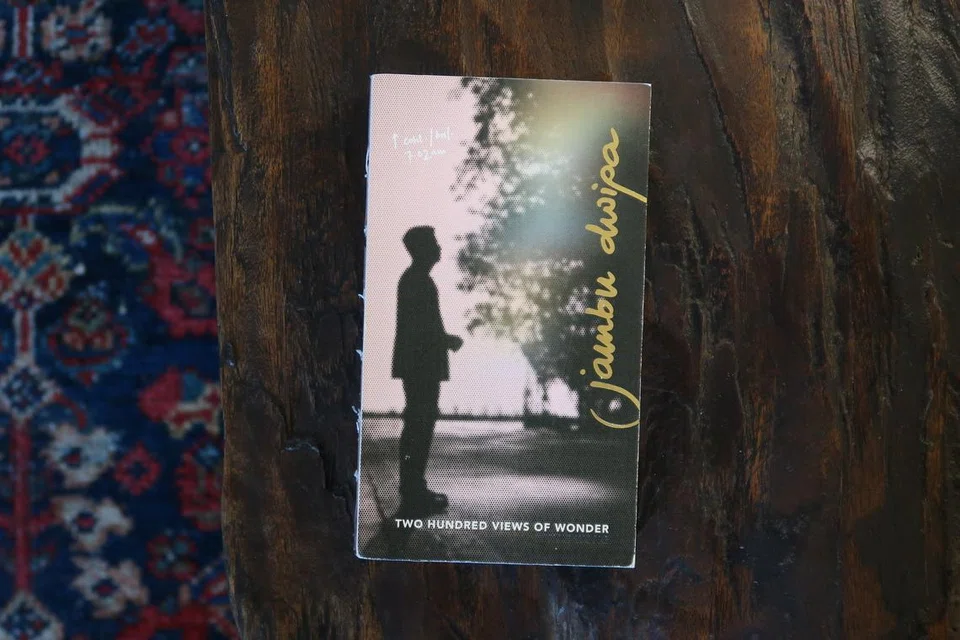
“He creates buy-in to the things that he’s passionate about,” Mr Lean said, describing a trip to Mumbai that Mr Wong had organised for his close friends and reflecting on ‘Jambu Dwipa’, his collection of photographs, essays, and recipes exploring contemporary India, that Mr Wong printed limited copies of and had coptic bound to gift his friends.
Jambudvipa is a Sanskrit term meaning ‘the continent of the jambu (Indian blackberry) trees.’ Originally a cosmological concept in Hindu, Buddhist, and Jain traditions, it later came to be used in many contexts as a name for the Indian subcontinent.
“He tells you in great detail about why it’s special and why it’s beautiful” and it is that specificity, multiplied across a hundred objects and a hundred photographs, that Mr Lean believes explains both Mr Wong and, now, the space he’s built.