Contributions from more than 400 individuals and 100 organisations paved the creation of the Encyclopedia of Singapore Tamils (EST) on Aug 2, 2025 – a digital resource that chronicles the life, contributions, and experiences of the Tamil community in Singapore over the last 200 years.
This encyclopedia addresses the longstanding lack of a comprehensive historical record of the Singapore Tamil community and ensures accessibility to a broad audience, both at home and abroad, noted Mr Arun Mahizhnan, chief editor of EST and chief executive of Centre for Singapore Tamil Culture (CSTC).
“What has been launched today is just the first step in a long, hopefully never-ending, journey of discovery,” Mr Arun said.
The encyclopedia also inspires younger generations to appreciate and connect with their heritage, he added.
Born out of a partnership between CSTC and the National Library Board (NLB), the EST encompasses over 350 entries that span historical events, arts, community organisations, communications, education, politics, and notable figures.
NLB’s chief executive officer, Mr Ng Cher Pong, said: “The EST is designed as a dynamic, living document that will continue to evolve and be updated through careful curation so that it remains relevant and meaningful to all.”
EST’s deputy editor, Azhagiya Pandiyan, highlighted the tooltip feature of the EST that provides an English translation for selected Tamil words.
“NLB has never employed the tooltip before, and we are excited that EST readers will be the first to experience this cutting-edge feature,” Mr Pandiyan said.
Talking about the project, Sivanantham Neelakandan, deputy editor of EST, highlighted the 3-year effort that went into creating the encyclopedia.
“The Encyclopedia of Singapore Tamils is a living repository – built by the community, for the future,” Mr Sivanantham noted.
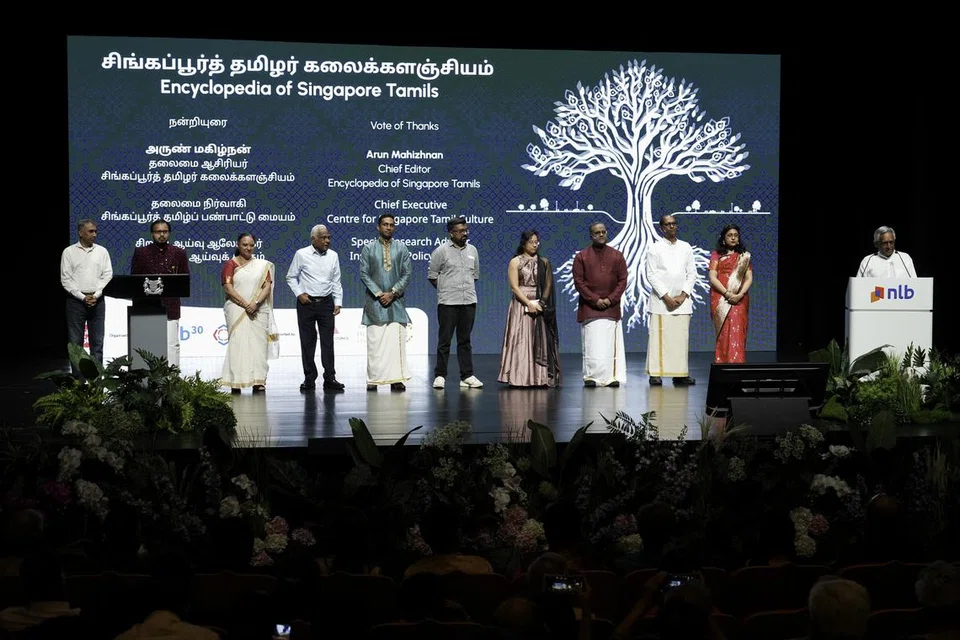
Timed with the celebrations of SG60 and NLB’s 30th anniversary, the bilingual encyclopedia, available in both Tamil and English, was launched by President Tharman Shanmugaratnam, who was the guest of honour at the EST launch ceremony.
The event saw nearly 600 attendees, including Minister for Digital Development and Information Josephine Teo, along with Minister of State for Culture, Community and Youth and Minister of State for Manpower Dinesh Vasu Dash.
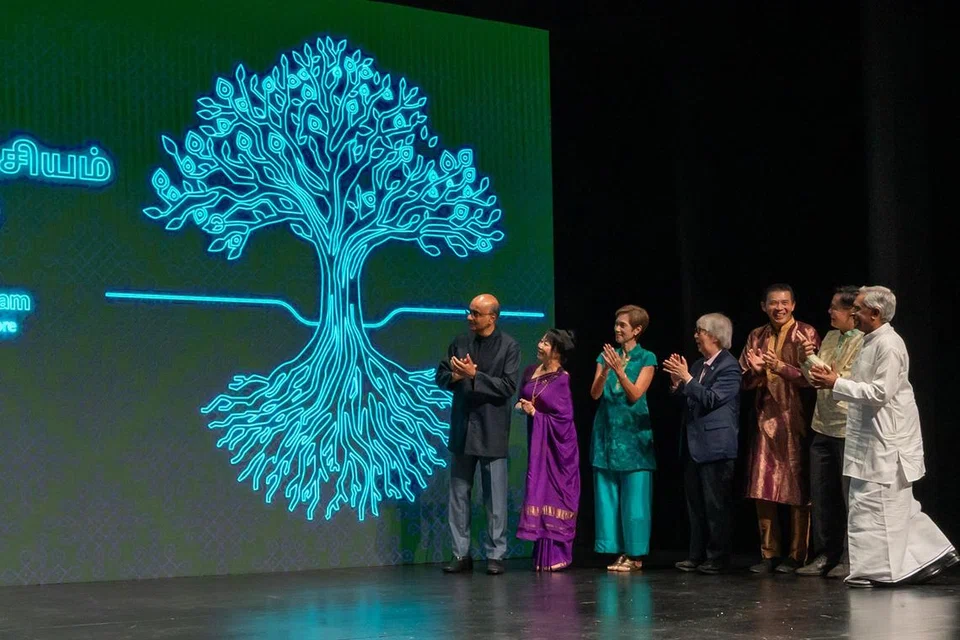
Mr Tharman said the story of the city-state’s Tamil community is, in many ways, that of Singapore itself – one of resilience, multicultural integration and also deep social transformation over the country’s 60 years of independence.
“The Tamils have made lasting impacts in various fields, including medicine, law, education, and the arts,” Mr Tharman said. “This encyclopedia is a testament to the community’s resilience and creativity.”
He highlighted the Tamil community’s contributions to the advancement of Singapore, noting distinguished individuals such as community champion and founder of Tamil language daily Tamil Murasu G Sarangapany, as well as social reformer and former chairman of Tamils Reform Association (TRA) Annamalai Chidambaram Suppiah.
The president, in his speech, noted that in Singapore’s early years, migrants from southern India naturally brought with them their caste traditions and practices. As a result, segregation in their social interactions, jobs and living arrangements closely resembled those in their places of origin.
For example, the EST records how Indian enclaves here had designated Adi Dravida zones for those lowest in the caste hierarchy, such as the area between Jalan Besar and Rochor Canal.
While attitudes towards caste started to change in the 1930s and 1940s due to reformist movements such as the TRA and the Japanese Occupation, the most profound changes came after Singapore gained independence, Mr Tharman noted.
A national education system promoted meritocracy regardless of social background, public housing brought people of all communities together, and a growing economy provided opportunities for all, he added.
The result was a dilution of caste traditions and better appreciation for inclusivity. But there are still remnants of caste practices among those who have been higher up in the traditional social hierarchy, and a renewed influx of such practices among new immigrants, said Mr Tharman.
As much as we have done away with the most regressive social practices, we have to keep working at this; even as we conserve the core of our cultures, Singapore must also remain socially progressive, a place where discrimination of all forms is not tolerated, and inclusivity becomes part of all our lives, said President Tharman. “It is what makes us as Tamil Singaporeans and Indian Singaporeans, distinctive.”
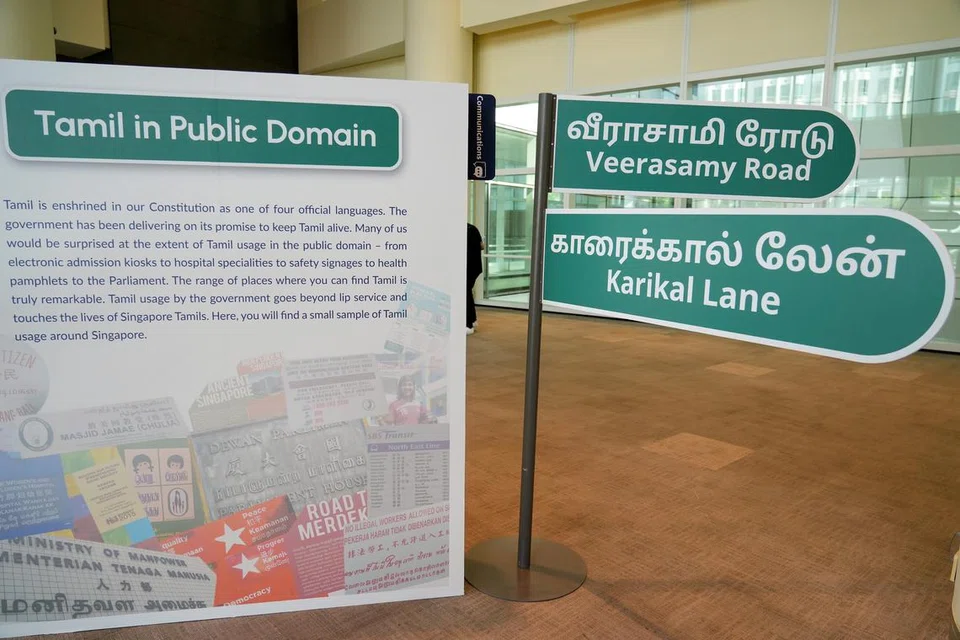
To make the EST more accessible to the public, a roving exhibition will tour four venues across Singapore from August 2025 to February 2026. The exhibition will showcase key aspects of Singapore’s Tamil heritage through interactive panels and displays.
Explore the EST here: http://go.gov.sg/nlb-est.