The talk of the town right now is Robert Pattinson stepping into the iconic tuxedo as the next James Bond. While cinema fans eagerly await his debut, the real world could arguably use a 007-style saviour of its own. Not armed with explosive gadgets, perhaps, but a master of cool-headed diplomacy and international cooperation.
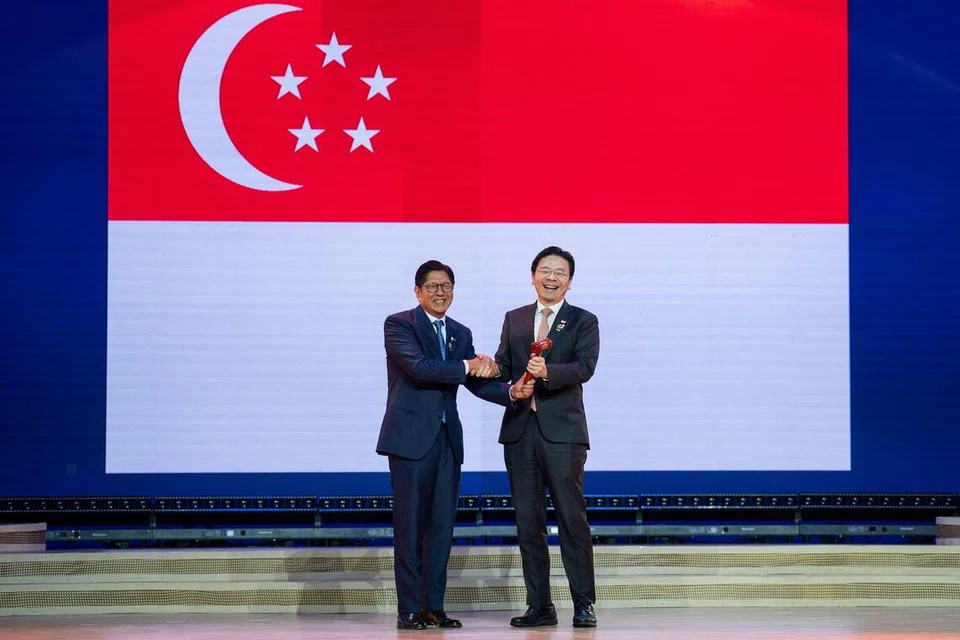
Enter Singapore, which officially assumes the ASEAN Chairmanship on Jan 1, 2027.
Taking the helm during an era of acute geopolitical friction and economic uncertainty is no small mission, yet the timing carries special resonance as the grouping celebrates its 60th anniversary.
Prime Minister Lawrence Wong is well-equipped to steward the bloc through choppy waters. Having served as Principal Private Secretary to then-Prime Minister Lee Hsien Loong when Singapore last chaired ASEAN in 2007, PM Wong knows firsthand that effective chairmanship requires steady leadership and continuity, not just hosting summits.
Under the theme “Deeper Integration, Wider Partnerships”, Singapore’s agenda targets future-ready growth.
Central to those wider partnerships is India, a key pillar where Singapore and New Delhi are already deepening ties across trade, digital connectivity, advanced manufacturing, and energy security following recent talks between PM Wong and Indian Prime Minister Narendra Modi in Manila.
A key priority is implementing the newly sealed Digital Economy Framework Agreement (DEFA). In the rapidly evolving age of artificial intelligence, DEFA will be vital for harmonising digital rules, helping local businesses scale seamlessly across borders, and unlocking a projected US$2 trillion regional digital economy by 2030.
Still, regional unity cannot thrive in diplomatic boardrooms alone. As PM Wong noted, ASEAN must not feel abstract to ordinary citizens. It falls on our businesses, educational institutions, and youth to build cross-border ties and keep the torch of ASEAN burning bright for the next 60 years.