Paisa-vasool, a Hindi phrase best translated as bang for your buck, is something many Indians learn early in life.
I learnt the lessons well and can proudly say that few people can squeeze as much juice out of money-related matters as I can.
In fact, if there is a line between paisa-vasool and cheapskate, I crossed it years ago.
I brought the trait with me when I came to Singapore 25 years ago.
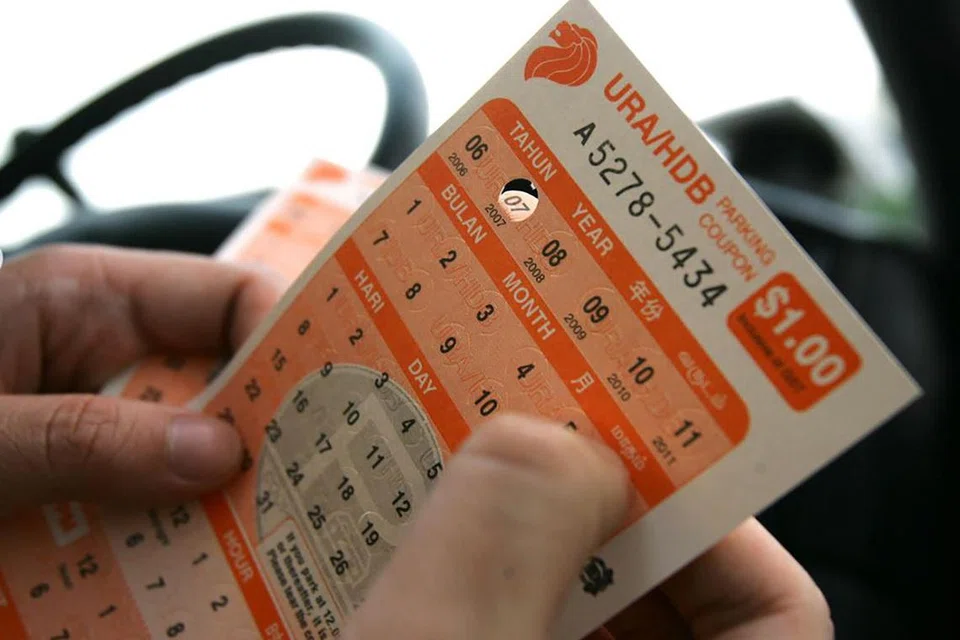
I remember how the parking coupon in those days represented a huge obstacle for a man of my steadfast paisa-vasool values.
In estimating the time of parking I’d go low (obviously) and often end up interrupting my meeting or lunch session to scurry to the car park, place another coupon – for only 30 more minutes of course – and scurry back.
Often I’d return with my shirt wet with perspiration, an unpleasant experience, especially when I had to do the trip more than once during the same appointment, which happened often, thanks to my penny-pinching penchant.
But the warm glow of satisfaction that I experienced knowing I’d paid only for how long I’d parked made the unpleasantness bearable, if not actually pleasant.
However, there was one roadblock on my road to Perfect Parking Couponing (PPC) – my wife. When she asked me to drive her on a shopping errand, she made it tough for me to follow my fine principles.
On one such occasion, I asked her if she’d be done in half an hour.
She said she couldn’t estimate the time accurately and that I should go for a one-hour timing on the coupon, to be safe.
I explained that it was more important to maximise the cents than to be safe, but she stuck to her estimate; so I reluctantly complied.
She browsed around for five minutes in the shop then shook her head and asked me to take her to Kallang. “Keep looking.” I said, consulting my watch.
“You have another 53 minutes.”
“I don’t need 53 minutes – take me to Kallang now.”
“What you need doesn’t matter. I’ve punched the holes, so please shop here for a while. I don’t mind losing the last 10 minutes,” I added magnanimously.
Instead of listening to the cool voice of reason, she simply walked to the car. I reluctantly joined her but did not start the engine.
“Why don’t we sit and chat for, say, 47 minutes?” I suggested, looking at my watch.
She refused, even though, only on the previous night when I was watching the French Open, she had complained that we don’t talk enough.
I drove, with controlled aggression, to reach the Kallang car park quickly, hoping to recoup value from the coupons on my dashboard.
But that car park had been changed to an automated system which, with ruthless efficiency, deducts the exact parking fee when you leave.
Forty-seven minutes of paid parking was squandered. It was painful for a man of my high ethos.
So, when the parking app was introduced a few years ago, the sun began shining once again in public parking spaces for me.
No longer did I have to spend minutes to estimate parking minutes. I could simply start with the half-hour estimate and coolly keep extending the time, waiting till the last few seconds to ensure not a cent is wasted.
But even that is not necessary – I can “end parking” at my will without being charged for the overestimated time.
This app of honour and integrity has made parking almost fun.
I no longer have to drive my wife for a shopping jaunt in a state of anxiety and get into arguments about her powers of estimation at each car park.
There is one problem though.
I often forget to “end parking” when I’m done. And nothing is as frustrating as finding out that I’ve squandered 22 minutes of legitimate paid parking simply because I forgot to touch a button.
Therefore, if any of the geniuses who designed the app is reading this, I humbly request them to introduce an app upgrade.
At the end of my parking session, when I start my car to leave, the app should immediately let out a scream, the volume in direct proportion to the minutes of paid parking left.
And if the whiz kids could whiz some more, the app should also freeze the car’s brakes and release it only when I click on “end parking”.