
Not so long ago, Sunday chicken curry was a simple, pleasant affair. Nobody asked whether the chicken had been ethically raised, whether the brinjals were organic or whether the carrots had achieved Fairtrade status.
The main concern was whether the curry tasted good.
Today, apparently, every ingredient must come with a resume stating its carbon footprint and social credentials.
All this raises an uncomfortable question: Can we really save the planet simply by choosing the right kaykari or sabzian?
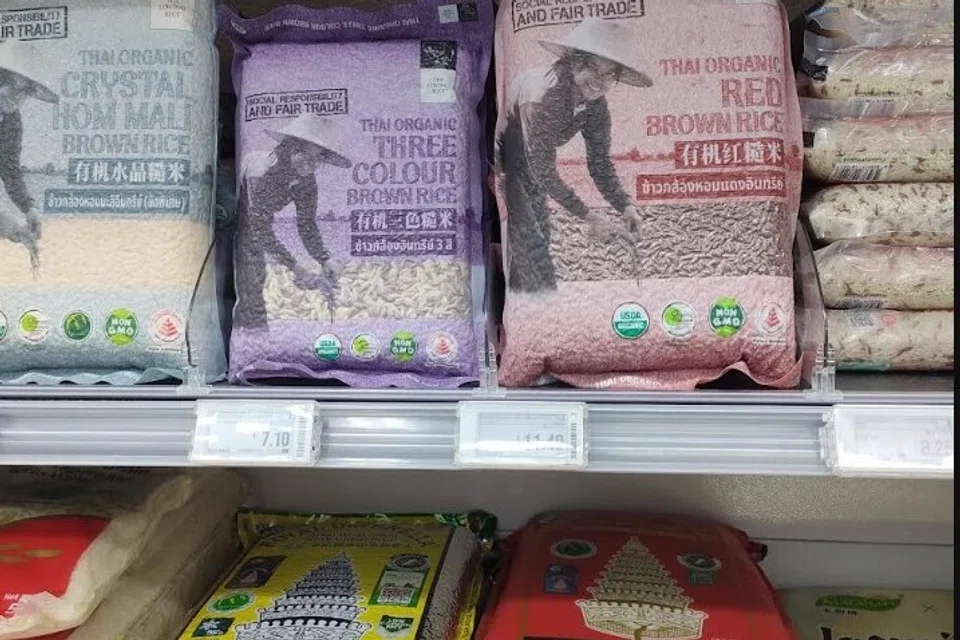
Take organic food. The term itself has the power to confer almost divine status on the shopper.
But organic does not automatically mean environmentally perfect. Growing certain crops organically may produce lower yields, requiring more farmland to produce the same quantity of food.
More farmland can mean more natural habitats being cleared for cultivation.
Oops, that’s not very organic.
Even Norman Borlaug, the father of the Green Revolution, pointed out that intensive farming and synthetic fertilisers had dramatically increased food production without a corresponding increase in cultivated land.
So while one shopper is proudly placing organic spinach in his shopping trolley, another might reasonably ask: “Can we save the planet without starving half of our population?”
It is not that organic farming is bad. Just stop expecting it to automatically solve every environmental issue.
Then, there’s Fairtrade, which sounds almost impossible to oppose, since who in his right mind would object to farmers receiving fairer prices and enjoying better conditions?
But the economics can become complicated. Fairtrade certification for farmers has costs, and the benefits may not always reach the poorest producers.
Guaranteed higher prices can also encourage farmers to stubbornly produce more of a particular crop. If demand fails to keep pace, the result could be surplus produce, storage problems and wastage.
The intention may be admirable, but the economics do not always add up.
Singapore is particularly affected by this food confusion because it imports more than 90 per cent of its food supply from over 180 countries.
Walk into a supermarket, and you encounter an entire United Nations of groceries.
Apples from one continent. Vegetables from another. Jasmine rice from Thailand. Basmati from India.
Somewhere between the atta and the broccoli, you are advised to buy local.
This sounds perfectly reasonable. Supporting local farms is a worthy objective, and the less distance food travels, the smaller its carbon footprint might be.
But the environmental arithmetic is not quite so straightforward.
Henning Steinfeld, an agricultural economist at the Food and Agriculture Organization of the United Nations, once declared: “The blanket advice to eat local is misguided. It needs to be qualified.”
Consider countries such as Saudi Arabia, which depend on imported fruit because of land and water shortages. Producing the same fruit domestically could create a higher environmental footprint.
Singapore offers another illustration.
A 2019 report titled Environmental Impact of Key Food Items in Singapore found that frozen chicken imported from Brazil, despite travelling much farther than chicken from Malaysia, had 15 per cent lower greenhouse gas emissions.
The explanation was that Brazil used electricity generated from hydropower, while Malaysia depended more heavily on fossil-fuel-based energy.
In other words, the chicken that travelled farther could have a smaller environmental footprint.
This complicates the familiar argument that buying local is automatically better.
Food miles matter, but so do the conditions under which food is produced.
And while Fairtrade may offer important benefits, its label cannot automatically resolve every economic problem.
Our grandmothers may not have discussed carbon footprints, agricultural productivity or the energy requirements of hydroponic farming.
They knew how much to purchase, how much to cook and how to make the food last.
If there were leftovers, Sunday’s chicken curry could make a cameo appearance at Monday’s lunch.
Perhaps the most sustainable food is the dish that is not wasted.
That is one environmental achievement that needs no certification.