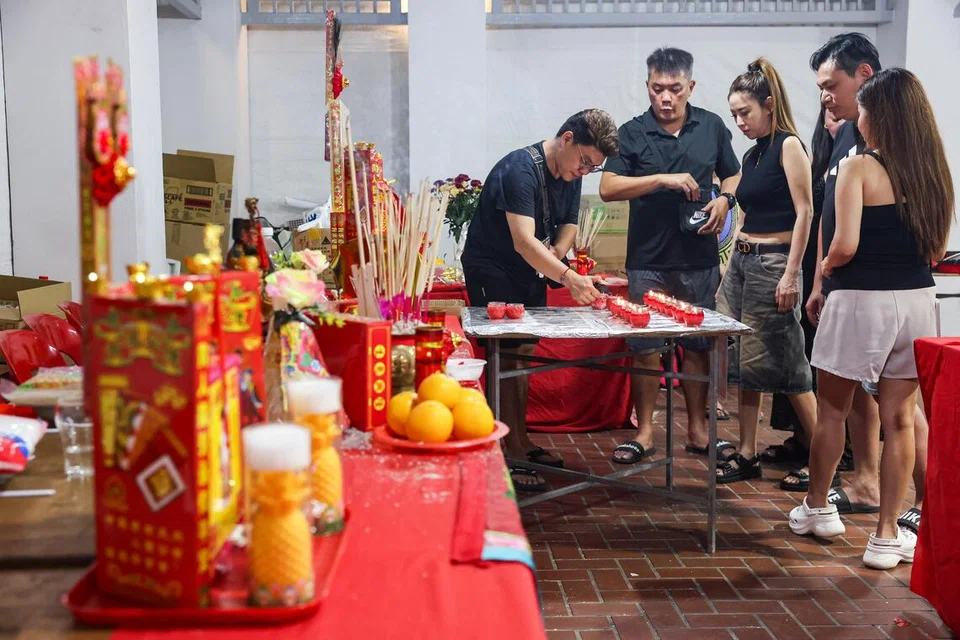

Every year, Singapore’s seventh lunar month, which just ended, brings a familiar change to our neighbourhoods. Temples become busy, offerings appear, community dinners are held and the sounds of getai fill the evenings. It is often called the “Hungry Ghost Month”, but behind the rituals is also a tradition of remembering and giving.
One aspect that has always interested me is the charity connected with some seventh-month celebrations. Auctions are held, often with much enthusiasm and friendly bidding. At some events, part of the proceeds goes towards charitable organisations.
I experienced this personally when I was with a community organisation. We were invited by companies and Chinese temples to attend their seventh-month events. What struck me was the way a cultural tradition could become an opportunity to help people in need. The money raised through the auctions was shared among several charitable organisations.
The atmosphere could be lively, even festive. Yet, there was a quieter message behind the celebrations: Remembering those who have passed away can also inspire the living to care for others.
Interestingly, another period of remembrance will soon begin (Sept 26) in the Hindu calendar, “Pitru Paksham”, commonly associated among Tamil Hindus with “Mahalayam” (ancestor worship fortnight). It is a period when families remember their ancestors and perform traditional rites and offerings in their memory.
The two traditions are certainly not identical. Their beliefs, rituals and cultural expressions are different. The Chinese seventh month is associated with the return of spirits and offerings to them, while “Pitru Paksham” focuses particularly on remembering and honouring ancestors.
Yet, there is a striking human connection.
Both traditions create a pause in our busy lives. They remind us that we did not arrive in this world alone. There were people before us – parents, grandparents, relatives and earlier generations, whose lives, sacrifices and values helped shape our own.
There is another interesting contrast. Seventh-month remembrance is often highly visible in Singapore’s public spaces, with community events, dinners and auctions. “Pitru Paksham” is generally quieter and more family-centred.
But perhaps remembrance does not have to look the same to carry a similar human message.
Singapore gives us many opportunities to witness this beautifully. We may not follow another community’s beliefs, but we can still appreciate the values expressed through its traditions.
And perhaps the most meaningful connection is this: remembrance can lead to compassion.
The departed cannot benefit from our wealth. But the living can. A donation can help a child, an elderly person, a patient or a family facing difficulties.
As one community completes its seventh-month observances and another prepares to enter its period of ancestral remembrance, perhaps we can look beyond the rituals.
Different traditions. Different beliefs. Yet one deeply human instinct: to remember those who came before us, and to let that remembrance inspire us to care for those around us.
In the end, perhaps the best way to honour the past is to do some good in the present.
Rhama Sankaran is a freelance journalist.