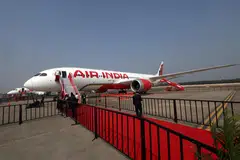
The 158-year-old house of Tatas is a beloved household name in India, but the US$185 billion (S$237 billion) conglomerate also touches distant shores as it makes everything from the Land Rover to Tetley tea to the latest version of the Apple iPhone and runs software giant Tata Consultancy Services (TCS). In good measure, the group also owns Air India, the troubled national carrier which the Tatas assumed control of in 2022.
The impact of the current boardroom tussle will reverberate across the world – from Singapore, where the group has had a longstanding presence since the early ’70s, to Solihull in the UK, where the Range Rover is produced. Unlike Las Vegas, what happens in Tata in the next few months will not stay with Tata.
Quite simply, the future of the group is at stake as its giant holding company – Tata Sons – which had fiercely resisted getting listed all these years could be forced to do so. That, too, because the board and its chairman openly took on – and prevailed against – a direct descendant of the Tata family who thought he called the shots. A protracted legal battle looms, which may even hinder India’s ambitions to position itself as a viable manufacturing destination away from China.
Unfortunately, prospects for an early resolution look highly uncertain. Like the peeling away of the veritable onion, each layer of this saga, when removed, reveals yet another complex layer underneath. The first layer is ownership and who gets to control Tata Sons, which owns vast swathes of the Tata empire.
Superficially, this should not even be a matter of debate. Two Tata trusts headed by Noel Tata, the family descendant who thought he held the keys to the empire, own around 66 per cent of Tata Sons. However, since assuming control in 2024, following the death of his half-brother Ratan Tata, Noel Tata has clearly struggled to assert control over Tata Sons.
Matters came to a head on Sept 17 when its chair N. Chandrasekaran, who had resigned unexpectedly in July, was granted a fresh five-year term by a majority of independent directors, against Noel Tata’s wishes, precipitating the crisis. Asia’s family-owned businesses will be watching the Tata saga carefully because ownership does not necessarily yield total control as the independent directors on the Tata Sons board have demonstrated.
The second layer cuts to the heart of the matter: a potential public listing. India’s central bank, the Reserve Bank, has mandated that all “core” holding companies such as Tata Sons should be listed in the public market, which when, and if, implemented will certainly dilute Tata trusts’ control over the group. Noel Tata has opposed a listing from the start but was cornered by the Tata Sons board, which favour it.
“A listing will destroy its (Tata Sons’) character,” he said in a statement. He added that if it got listed, Tata Sons would face pressure from shareholders, leaving it little room to back ventures with payoffs far in the future.
There is a third layer, too – the business house of Shapoorji Pallonji which controls an 18.4% stake in Tata Sons and apparently favours a public listing which will help reduce their group’s own debt burden. To prove that nothing is as simple as it seems, Noel Tata is married to the sister of the man who runs this group and this saga could see family and commercial interests collide.
Rough weather
The conflict comes at a time when the Tata companies face a relatively harsh operating environment. IT services company TCS has laid off tens of thousands of staff and is facing headwinds from the rapid application of AI models, although results in the latest quarter show a more robust outlook. The outlook at Jaguar Land Rover is bleaker as the company is facing revenue headwinds as competition begins to bite from made-in-China models across Europe and much of the world. A bright spot is Tata Electronics, which has stepped up production of Apple iPhones in India and is seeking to make a modest dent on China’s primacy as a global manufacturing hub.
A more spectacular example of why Tata Group needs stability currently concerns Air India, which has suffered a series of setbacks, including a tragic air crash in 2025, and has struggled to restore the carrier to passenger growth and profitability. The airline reported a loss of over US$2 billion in the latest fiscal year and Tata Sons has agreed to pump in US$1.1 billion in fresh capital, with an additional infusion expected from minority shareholder Singapore Airlines.
On paper, a revival of Air India should be easy to achieve. India represents the world’s third-largest domestic and fifth-largest international aviation markets, riding on demand from the country’s middle class who have developed a taste for travel and Instagrammable moments. But factors such as rising fuel prices on account of the Iran war have held back its recovery. Its promising new boss Tewolde Gebremariam has stepped into his Air India role just as the boardroom battles heated up, complicating his ability to execute a cohesive revival plan.
Too big to break up?
Both camps seem determined to fight to the bitter end and observers are already speculating about what a post-listing break-up of the group will look like. They should be careful what they wish for.
To put it simply, the Tata Group is too big to break up, too important for India’s manufacturing ambitions, and too embedded into the very fabric of Indian society. A listed Tata Sons with diluted Tata control will tempt the asset owner to reshuffle the vast portfolio, without regard to the group’s longstanding history and ethos of investing for the long term.
Corporate break-ups are the favoured mechanism for investment funds on the grounds of extracting better value. But the case is already being made by many that the Tata name and business contributions to India exceed any financial arguments about earnings per share or price-to-book values. Simply put, the Tata Group looms so large in the Indian psyche that most would not like to see it splintered. Analysts have called for a time out and have appealed for a negotiated settlement, including with the central bank, which will keep the Tata Group in Tata hands. The Indian government has not yet revealed its stance.
A personal note on my own Tata journey. I was a business reporter in Mumbai and Singapore through much of the 1980s and 1990s and covered what, in retrospect, were relatively mild twists and turns within the group. I have been an interested observer ever since.
When the late Ratan Tata succeeded the legendary JRD Tata in 1991, obituaries were prematurely written about the imminent break-up of the group. In the end, Ratan Tata, through guile and determination, reasserted control over the group and placed it on a spectacular growth trajectory.
The task before Noel Tata is even more daunting but Tata’s global stakeholders, including those in Singapore, will be hoping that the outcome under his leadership will be on a similar trajectory to what his late half-brother achieved. An important first step, however, is a ceasefire between the warring factions at the group’s headquarters, Bombay House. THE STRAITS TIMES
Vasuki Shastry is the author, most recently, of Emerged Markets: The Global Economy’s Better Half. A former journalist, he previously worked with the Monetary Authority of Singapore, International Monetary Fund and Standard Chartered Bank.