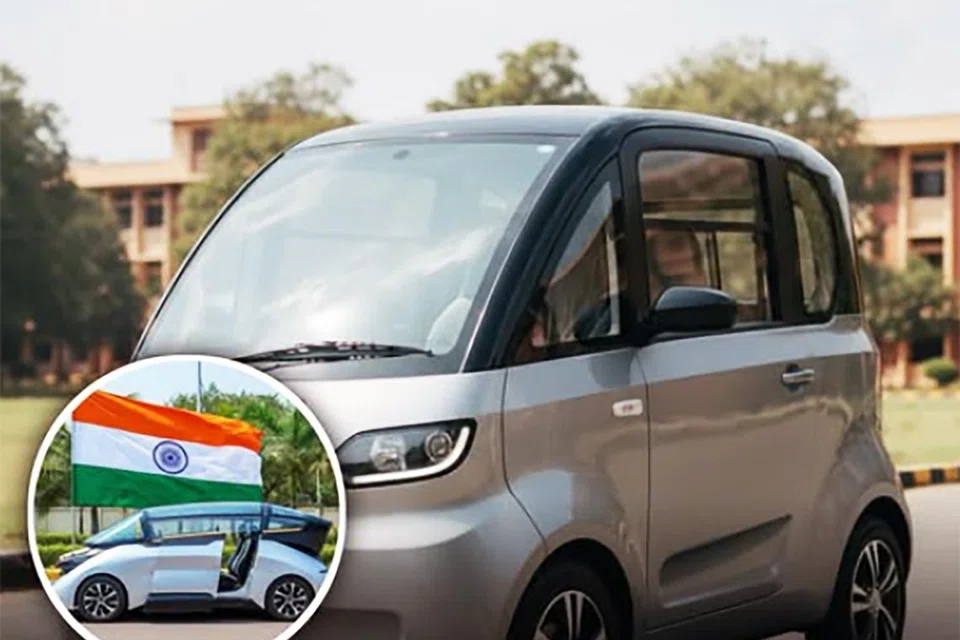
The driverless car, also affectionately called the autonomous vehicle (AV), has come a long way since Google’s prototype nervously inched onto Californian streets and got rear-ended by a human driver in 2015.
In China, Baidu’s robotaxis have driven 130 million kilometres without a human at the wheel. AVs roam the streets in six American cities and have made a debut in Europe. And Singapore is set to join the party. “AVs will be trialled in Singapore from 2026”, said the Ministry of Transport.
What about India? “AVs are in the early stages of development,” said an article in TimesTech, but offers the caveat that “India’s real-world conditions pose significant challenges to the adoption of AVs”.
Once I stopped wondering what unreal, otherworldly conditions exist in other countries, I had to agree with the sentiment. Driving in India is, well, different, as I experience every few months when I visit my mother in Chennai and drive her car. And, on that note, I selflessly volunteer to test a prototype during a future visit.
Here’s how I imagine the experience:
I get into the car and input my destination into the map. The car reverses silently into my colony road. When we reach the main road to turn right, the car switches on its indicator and stops. Immediately, the driver behind us blares his car’s horn and gesticulates “Move, idiot!” with his arm.
I realise the car is programmed not to move until it can sense enough empty space, probably “two car-lengths”, in front of it. But Annanagar’s 4th Main Road has not seen two car-lengths of empty space since 1984. So, I take over control and move forward slowly. Vehicles on the main road immediately accelerate to block me, but I continue to inch forward. Soon, I’m blocking some vehicles, while others manoeuvre around my car and continue on their way. I wait until I spot a car on the other side with three feet of empty space in front of it. I quickly move into this – forcing the car to stop – and make a tight right turn.
I hand back control to the autonomous driver. A car on the left moves in front of us. Instead of honking and accelerating, my car slows down... silently. I seethe... silently. And later, when it slows down again behind another vehicle instead of moving into the empty lane on the left, I take over the wheels again and execute the lane change. And the next time it slows down, preparing to stop at a zebra crossing, I pre-emptively press the accelerator.
Within 30 minutes, I know what re-programming is needed in the car.
1. Reversing must be accompanied by loud, repetitive music. Watching a car reverse in eerie silence may cause onlookers to panic.
2. The setting for safe-gap to move into needs to be changed from two car-lengths to two feet.
3. The instructions stick to your lane and stop at a zebra crossing for pedestrians should go. The car needs to be programmed to understand that lane markings, if present, are only for fun, and that zebra crossings are to facilitate a friendly game between pedestrian and driver. If the pedestrian walks boldly, slow down respectfully; if they hesitate, accelerate.
4. In fact, the instruction slow down should be replaced with accelerate in most situations, for example, when approaching a zebra crossing, seeing a car try to overtake, and noticing that the signal ahead is turning amber.
5. The current horn instruction, sound in an emergency, doesn’t make any sense. The car should be programmed to sound the horn generously, for five seconds at a time:
a) when a motorist on the right (or left) tries to get in front;
b) before, during and after changing lanes;
c) when a pedestrian tries to cross the road;
d) when a pedestrian does not cross the road because the car accelerated so well, to signal “I
won!”, subtly;
e) while waiting at traffic signals, five seconds before the light turns green; and
f) if none of the above happens, every hundred metres, to stay in practice.
There is more to be taught – like how to read the competitiveness of another driver in their eyes, what to say when your side-view mirror is ripped off and how to adjust your driving when competing with a taxi driver – but even AI may never understand such nuances.
Paddy Rangappa (https://www.linkedin.com/in/paddyrangappa/), an ex-CEO, now teaches humour for leaders; happiness at work; and marketing through consumer insights.