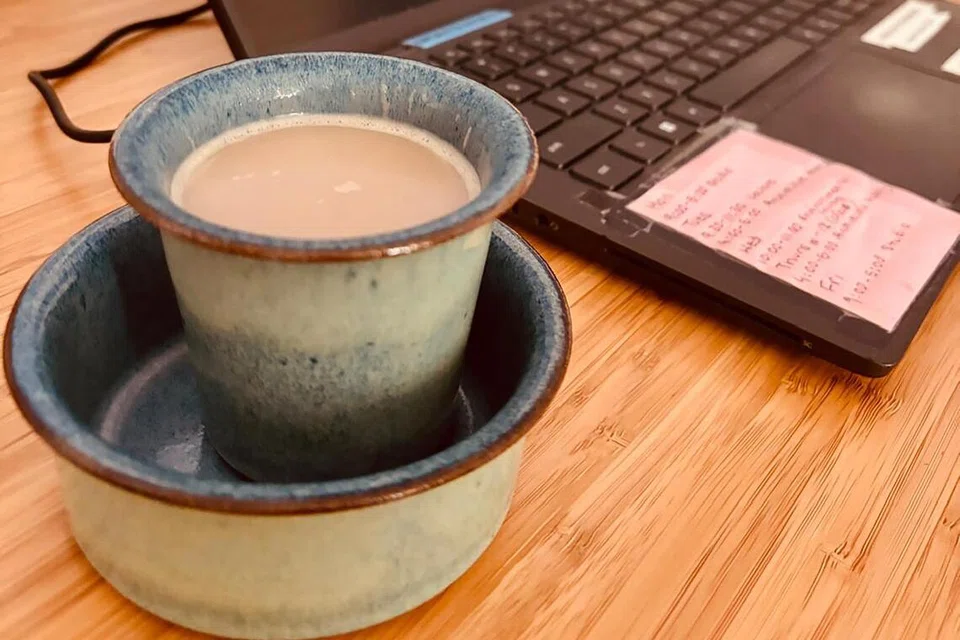
My love for coffee probably began in childhood. I was raised in a South Indian family, but lived almost entirely in the north of India.
My Hindi grew stronger than my Malayalam. I reached for papdi chaat more often than thosai. Yet, every morning, no matter the pin code or the city skyline, filter coffee was a constant.
The day started with the scent of freshly brewed coffee drifting through the house, paired with hot parathas or idlis, depending on where life had placed us that year.
I moved through India slowly and steadily – from New Delhi to Vijayawada and several cities in between. As a child, I resisted the rhythm of relocation: New schools, new languages, new films, new friends.
But the same pattern that exhausted me as a girl built an unexpected skill as an adult – agility. Adaptation became almost instinctive.
When I finally took up a year-long exchange programme in Germany after university, the decision felt surprisingly simple.
I had spent years stretching and reshaping my sense of belonging. Even the quiet confidence of sitting alone in a cafe, asking for a “table for one”, and enjoying my coffee felt natural.
My career took me further, beginning in India and then looping through Dubai, Singapore, and eventually Indonesia. India and Dubai shared enough cultural texture that the adjustment felt smooth; this is where my Malayalam, once overshadowed, returned stronger than my Hindi.
Dubai in the early 2000s, with its unmistakable entrepreneurial buzz, nudged me towards imagining a business of my own. I secretly wanted to call it “Black Koffee”, because nearly every deal seemed to take shape over a cup.
It didn’t happen – we became Watermelon Communications – but the idea still makes me smile.
Dubai also widened my culinary vocabulary. Lebanese spices, Indian flavours, and global gourmet chains all flowed easily into a single dining landscape.
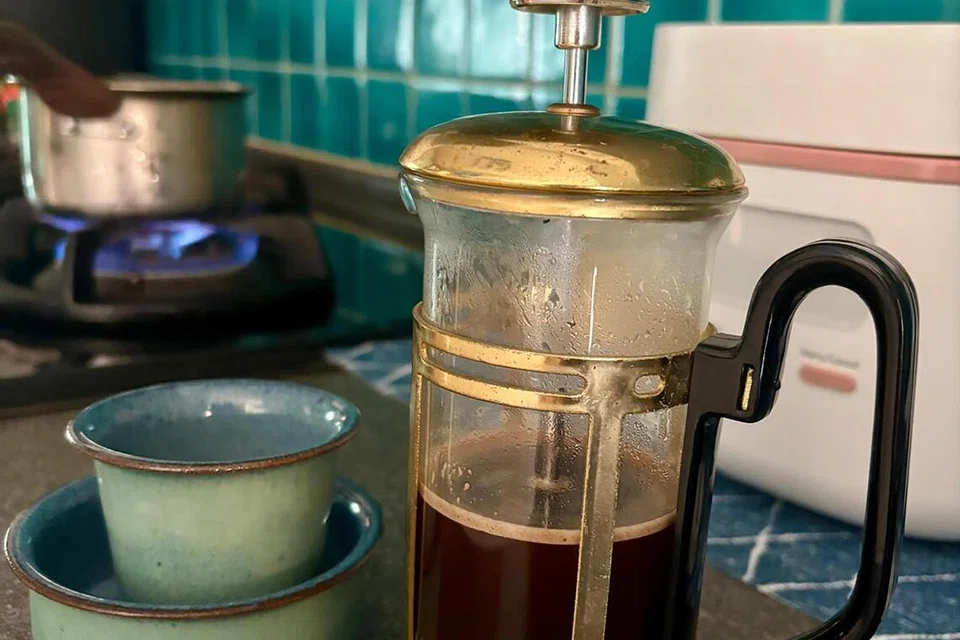
Singapore arrived in 2009 with its own mix of clarity and overwhelm. Its multicultural ease felt familiar, but I learnt quickly that filter coffee would not present itself as conveniently as it did back home. So, the tradition moved into my kitchen.
Every morning, the ritual of brewing filter coffee reconnected me with a scent-memory of childhood.
Over time, friends and colleagues taught me the language of Singaporean kopi – Kopi C, Kopi C Kosong, Kopi C Siew Dai – and the occasional surrender to the unapologetically sweet BRU.
Then came Indonesia, a relationship that began with curiosity and settled into something deeper. Almost a decade in, Jakarta’s traffic – chaotic but strangely calming – and the warmth of its people continue to steady me.
By then, Singapore had already sharpened certain rhythms in me: The instinct for order, the quiet discipline of routine, and the comfort of a morning brewed exactly the way I like it.
Carrying that sensibility into Indonesia created an intriguing balance. My work took me across the archipelago: Makassar, Solo, Bandung, Yogyakarta, and the enduring favourite, Bali.
Coffee became both an anchor and an adventure. Gula aren lattes, beans from small farms, and the spectrum of local cafés all worked their way into my daily rhythm.
Perhaps it is the blend of my Indian roots and Singaporean habits – years of learning to adapt while also holding onto ritual – that allows me to find a grounded, almost meditative peace within Indonesia’s generous, unhurried disorder.
These days, I often return to Singapore with bags of Indonesian coffee beans for friends and family, brewing them in the familiar style of Indian filter coffee – and carrying some back with me when I visit India.
It is a quiet fusion of two geographies, two identities, and a lifetime of movement.
Coffee, in all its forms, has become less a beverage and more a companion – a through-line connecting the places I have lived, the cultures I have absorbed, and the person I continue to become.
(Anu Gupta is owner-director of Singapore-based communications firm APRW.)