What disappears first in a rapidly changing world is rarely what we notice. It is the quieter things – the crafts, the rhythms, the cultural memory we assume will endure.
In Thanjavur, once the capital of the Chola empire in India, fewer than ten families still handcraft the veena. The challenges they face are telling.
The jackfruit wood needed for the instrument is becoming harder to source as land gives way to development. Younger generations are drawn to better-paying jobs in factories and the tech sector. A single veena can take weeks to make, yet demand has declined as musical tastes shift. The craft has survived centuries, but its future is far less certain.
I have often found myself returning to this example in my work with the Indian Heritage Centre (IHC). It captures a broader truth: heritage does not sustain itself. It requires deliberate effort to remain meaningful.
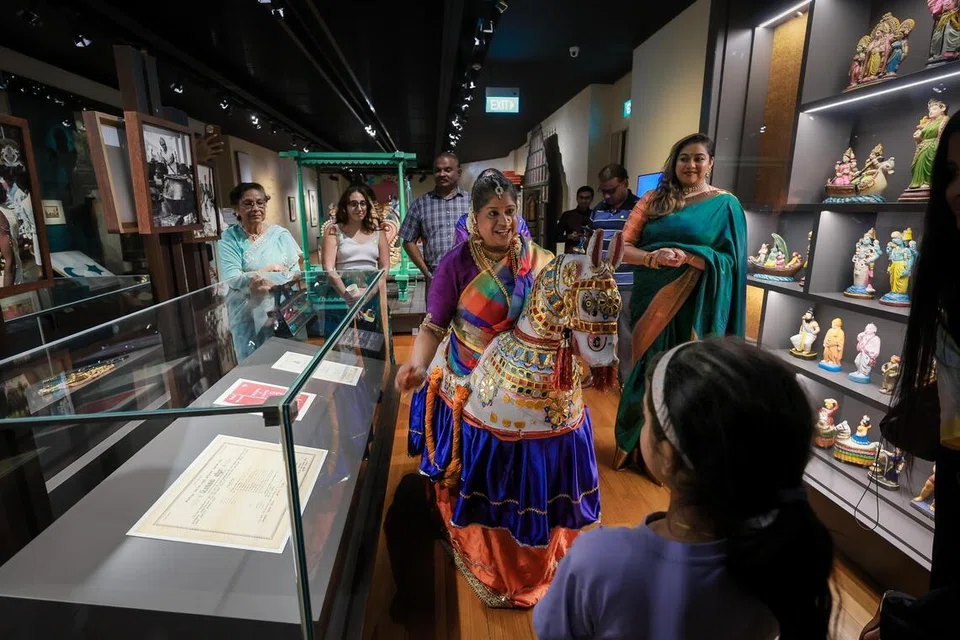
At the IHC, the challenge is not simply to preserve what we inherit, but to ensure it continues to matter in people’s everyday lives. Heritage that sits behind glass may be protected, but it is not always understood.
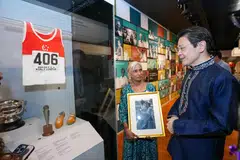
What has become clear over time is that the Centre works best when it feels less like a museum and more like a space people can enter and participate in. Located at the junction of Serangoon Road and Campbell Lane, the IHC has increasingly become a place where Singapore’s diverse communities come together – not just to observe, but to engage with one another through its programmes and actively contribute by sharing their stories.
This is reflected in who walks through our doors. In 2025, about 7 in 10 of our Singaporean visitors were from non-Indian communities. During the school term, some 300 students visit the Centre each day through the week, each day that it is open, as part of the Ministry of Education’s Museum-Based Learning programme.
For many of the 11-year-olds, it would be their first encounter with Little India and Singaporean Indian culture.
Our open houses offer another opportunity for Singaporeans to engage with the Centre; children try traditional activities, families linger, and conversations – sometimes tentative – begin to take shape. These may seem like small moments, but they are often where understanding begins.
That shift – from observation to participation – is important.
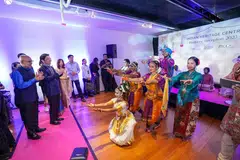
The permanent exhibitions and collections reflect the diversity and evolution of the Singapore Indian community – across language, religion, and tradition. But it is through programmes, partnerships, and shared celebrations that these stories come alive. Festivals such as Pongal, Deepavali, and the Indian New Year – observed across different sub-ethnic communities – when brought into common spaces, become less about any single group and more about shared experience. Over time, this begins to shape how people see and relate to one another.
In a society like Singapore, this is not incidental. It is how cohesion is built. Diversity does not hold on its own; it requires spaces where people can encounter difference with curiosity rather than assumption.
Institutions like the IHC play a quiet but important role in creating these spaces. Not through grand gestures, but through sustained, everyday engagement – whether through exhibitions and objects that communicate our shared history and experiences, community programmes or digital platforms that reach younger audiences.
Heritage does not disappear dramatically. It fades when it is no longer part of how people live. If it is to endure, it has to be encountered, questioned, and shared. Places like the IHC remind us that this is possible – not by holding on to the past as it was, but by creating the conditions for it to continue to live in the present.
That work ultimately belongs to all of us – starting with the simple act of stepping in and being part of the story.
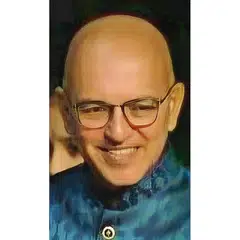
R Rajaram JP is currently the Chairman of the Indian Heritage Centre Advisory Board and the University Registrar at the National University of Singapore. He was also Chairman of the Tamil Language Council, spearheading the annual Tamil Language Festival between 2013 and 2019.