It was a serving of watalappam that prompted me to think about how a simple dish can carry so much history.
Made with coconut milk, jaggery, eggs and spices such as cardamom, cloves and nutmeg, watalappam is a rich steamed custard commonly associated with Sri Lanka’s Muslim community.
It is frequently served during festivals, weddings and family celebrations, and over time, it has become popular among Sri Lankans from all backgrounds.
What makes the watalappam especially fascinating is its connection to Malay cuisine. It is widely believed to have developed from serikaya, a Malay-Indonesian coconut custard traditionally made with eggs, coconut milk, palm sugar, and pandan.
Learning about this connection during my recent visit to Sri Lanka led me to reflect on the movement of people between Sri Lanka and Southeast Asia, and on my own family’s journeys from Jaffna to Malaya and Singapore.
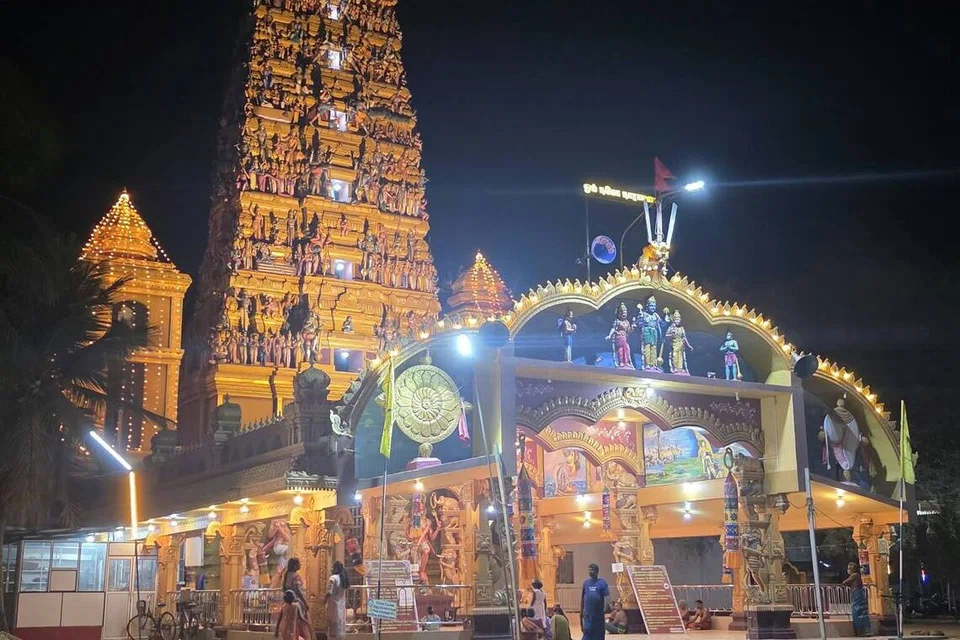
I had returned to Chulipuram – my family’s ancestral village – to attend our yearly prayers at the Varathrajah Perumal Temple, also known as the Ponalai Temple, on Sept 1.
For my family, this is more than an annual religious observance. It is a tradition that brings relatives together and renews our connection with the temple, our ancestors and the place from which our family came.
During the prayers, I found myself thinking about the generations before me and, in particular, the very different journeys taken by my two grandfathers.
Both were brought from Jaffna to Malaya by the British colonial administration to serve in occupations needed for the development and functioning of Malaya.
My paternal grandfather became a station master in the Malayan railway system. The railways were central to the development of colonial Malaya as they connected towns, ports, plantations, and commercial centres. As a station master, he was part of the network that kept passengers and goods moving across the country.
His career took him away from Jaffna, but not permanently. After completing his service and retiring, he returned to Jaffna. My father was born there and later made his own journey to Singapore to seek his fortune and build a life.
My maternal grandfather followed a different path. He was brought to Malaya to work as a postmaster.
At a time when there were no mobile phones, email or instant messaging, the postal service was an essential link between people separated by distance. Letters carried family news, business correspondence and official instructions. For migrants living far from home, they were often the only regular connection with the families they had left behind.
Unlike my paternal grandfather, my maternal grandfather stayed in Malaya and raised his family there. My mother was born in Raub, Pahang.
My family’s story therefore did not follow a simple, one-way route. It unfolded across Chulipuram, Malaya and Singapore. As such, my return to Chulipuram for our yearly family prayers felt like the closing of a circle.
Food became another way of reconnecting with that heritage.
During the visit, I attended a workshop on Sri Lankan cuisine. We prepared crab curry, sothi, sambol (a spicy relish) and puttu before sitting down together to enjoy what we had cooked for lunch.
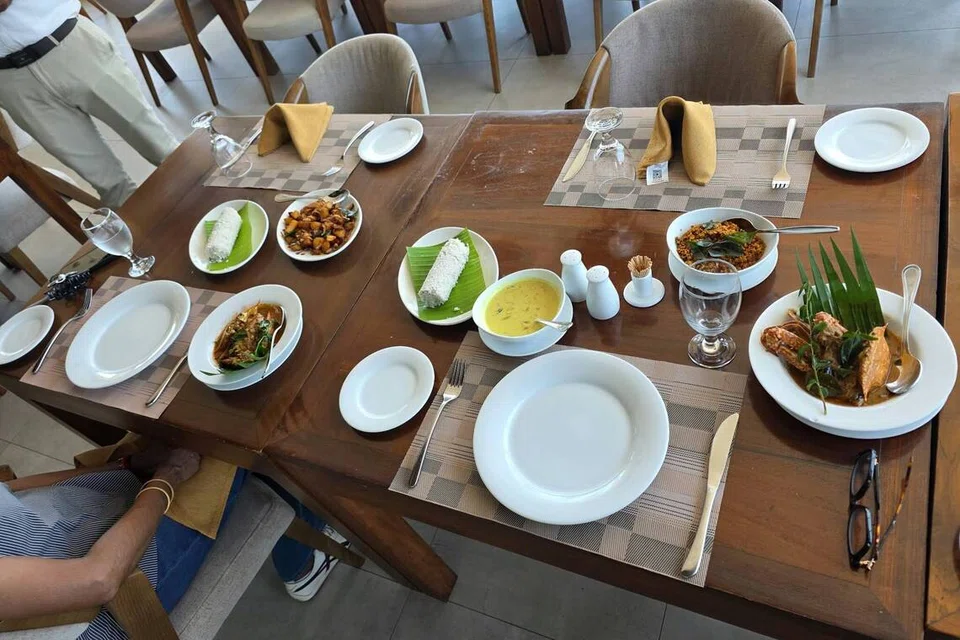
Jaffna cuisine has its own distinctive character. Its seafood dishes are particularly well known like the crab curry we prepared. Sothi, a lighter coconut milk-based curry, provided a natural contrast, while sambol added freshness and heat. Puttu completed the meal.
These dishes reflected the produce, climate and traditions of the region. They also demonstrated how food can connect people across borders.
Variations of appam, puttu, curries and sambols can be found throughout Sri Lanka, South India, Malaysia and Singapore.
It shows how a dish may originate from one community, be adapted by another and eventually become part of a country’s shared identity.
We often discuss multiculturalism in terms of policies, institutions or population figures. Food tells the story in a more immediate and personal way.
For me, the watalappam became more than a satisfying end to a meal. Its journey from the Malay world to Sri Lanka echoed, in a different way, my own family’s movement between Jaffna and Southeast Asia.
Thambyrajah T is a board director at TomoWork, a local non-profit, and former principal of the World Skill Centre Bhubaneswar in Odisha, India.