Traditional folk arts are among the oldest living expressions of a people’s history.
Long before theatres, academies and formal institutions existed, communities sang, danced, drummed and told stories to mark celebrations, worship, harvests, marriages, mourning and everyday life.
These were not performances. They were life itself.
Many of these traditions are fading now. Urbanisation, migration, changing lifestyles and the lack of sustainable livelihoods for artistes have all played their part.
But there is another reason, one we rarely discuss.
When Society Classifies the Artiste
Across India, traditional arts developed within particular communities, passed from parent to child and master to apprentice over generations. This was one of the great strengths of traditional culture. Communities became custodians of extraordinary artistic knowledge.
It also created an unintended consequence.
When society assigned a certain standing to a community, that perception often travelled with its artistes, and in time attached itself to the art. Art is one thing. The artiste is another.
The classification imposed on either is something else entirely. A drum has no social standing. Neither does a rhythm, a dance movement, a melody, or a story. Yet once an art becomes tied to a social position, parents grow reluctant to teach it, institutions give it less prominence, and young people see no future in it. The art becomes collateral damage of a judgment it never earned.
The Real Threat Is Non-Adoption
We often talk about preserving traditional arts. Preservation alone is not enough. A performing art cannot survive inside an archive or a museum. Someone must perform it, learn it, teach it again.
When young people stop seeing an art form as theirs to inherit, the chain breaks: practitioners dwindle, audiences thin, and something irreplaceable is eventually lost.
The task is not just to preserve these arts, but to make them adoptable again, in two senses: keeping the line of teaching and learning alive, and opening it to more hands than it has ever reached before.
In Singapore, the signs are encouraging: a 2024 national study found that 56 per cent of youth now engage with intangible cultural heritage, a 10 percentage-point rise since 2022, with performing arts among the fastest-growing areas of participation.
Singapore: New Soil for Old Roots
Singapore offers an interesting possibility. When a traditional Indian art form arrives on this soil, its geography changes, its audience changes, and its practitioners can change. Some of the old social baggage need not make the journey with it.
Young Singaporeans are encountering traditional art forms not because of the community into which they were born, but because they are drawn to the rhythm, movement, storytelling and history.
A child in Singapore can encounter Urumi Melam simply as a powerful percussion tradition, or Kalbeliya as a compelling dance form. Someone with no connection to the art’s community of origin can learn it from a master, understand its history, respect where it came from and help carry it forward.
When an art form becomes something anyone can respectfully learn, perform and pass on, heritage stops being an inheritance available to a few and becomes a living cultural resource for everyone. This is not about cutting the roots. It is about replanting them without the walls that once grew around them.
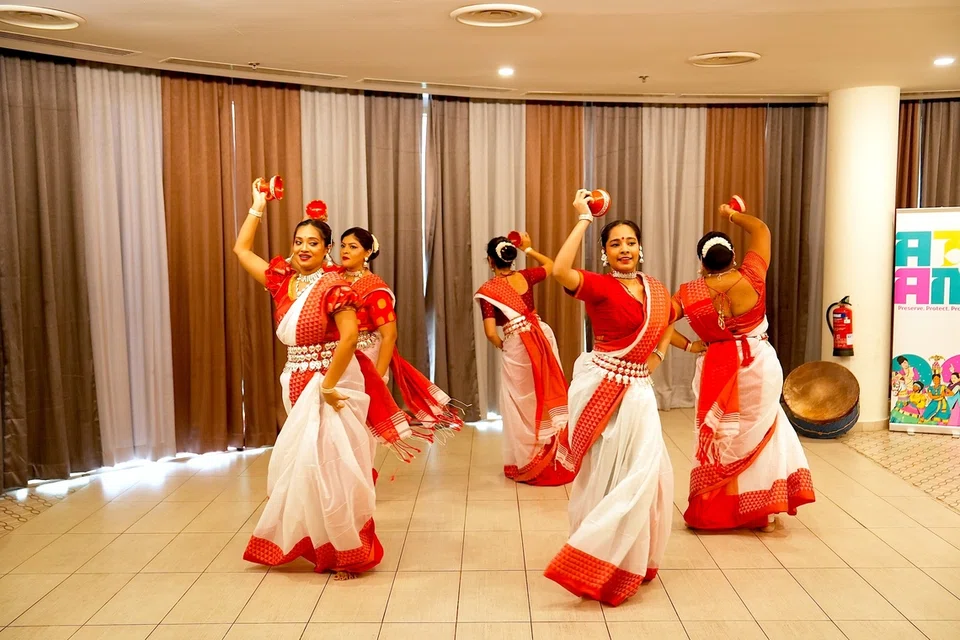
Local organisations are already putting this into practice. ATAM Ltd, a charity dedicated to Indian folk arts, has reached more than 2,000 people through its Nam Marabu series since 2022, including over 150 students across workshops held at 13 venues.
Its flagship Anandha Kondaattam festival at the Esplanade has attracted more than 30,000 attendees over three years, showcasing over 40 traditional art forms performed by some 400 artistes. Most encouragingly, 70 per cent of the performers were young people.
Preserve the Roots. Leave the Hierarchy Behind.
Traditional arts do not need to lose their histories to gain a future. We should know where an art came from. We should honour the people who protected it, and the masters who kept it alive when there was little reward in doing so. But the social judgments once attached to an artiste should never decide the worth of the art, or the dignity of the person performing it.
Roots tell us where something came from. Chains decide where it is allowed to go. Traditional folk arts need their roots. They do not need the chains. Let the art travel. Let the artiste stand with dignity. And let the next generation decide that this heritage belongs to them too.
In Singapore, where one in two young people now actively engage with heritage, the opportunity is clear: to build a future where traditional arts are not relics of the past, but living inheritance shared by all.
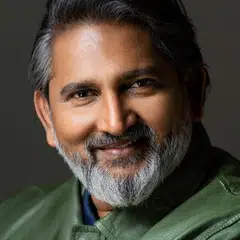
Japhire Gopi Kannan is the founder and CEO of JA Assure, a regional InsurTech venture, and Founder of ATAM Ltd, a charity dedicated preserving Indian traditional folk arts in Singapore.