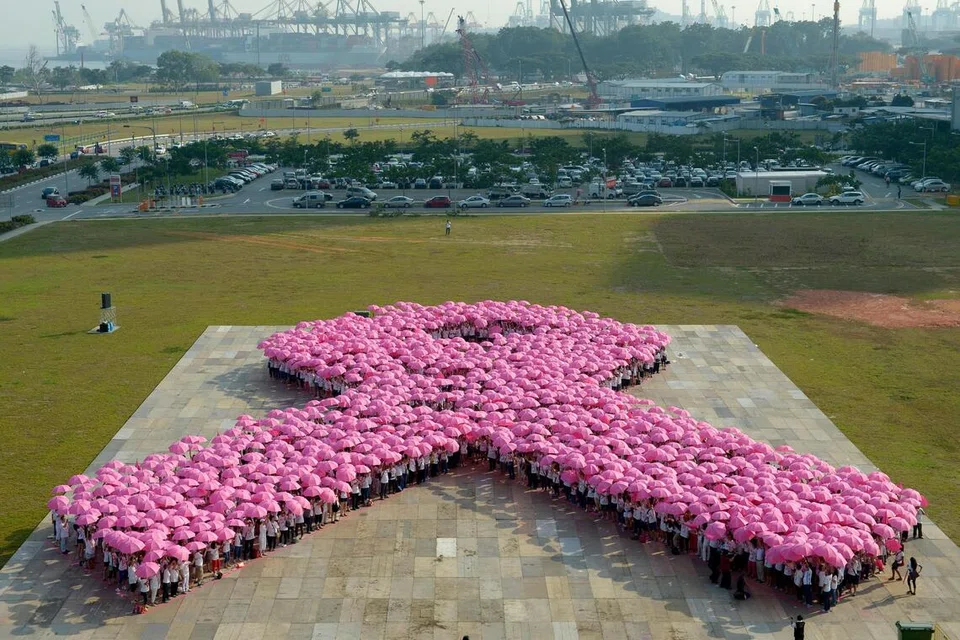

Breast Cancer Awareness Month - observed worldwide each October - reminds us about early detection, screening and support for those affected by breast cancer.
In Singapore, the message is particularly relevant. Breast cancer is the most common cancer among women, accounting for around 30 per cent of female cancer diagnoses. About one in 12 women may develop it in her lifetime, according to estimates.
But awareness need not remain only in hospitals, clinics or health campaigns. Sometimes it can begin in places where families already gather.
I learnt this in 2010, when I was a committee member of Sri Sivan Temple in Geylang.
During our Sivarathri cultural programmes, we worked with Singapore’s Breast Cancer Foundation to set up a small breast-health awareness stall.
There was nothing elaborate, just posters, brochures and volunteers ready to answer questions.
Yet the little stall attracted attention.
Some visitors were surprised to see a Breast Cancer Foundation stall - with its Pink Ribbon message - among the other stalls near the cultural performance area. A few wondered why such a campaign in the temple festival?
But women stopped. They read the posters. Some spoke to the volunteers. Others quietly picked up a brochure before leaving.
That simple experience stayed with me.
Perhaps health awareness becomes more meaningful when it travels beyond medical institutions and enters our everyday community spaces such as temples, community centres, cultural programmes and festive gatherings.
There is nothing culturally inappropriate about discussing women’s health with dignity.
Tamil literature has long spoken about the human body with openness, dignity and grace.
From Sangam poetry to the devotional verses of Andal and other poet-saints, the female form, motherhood, love and human emotion have been expressed with remarkable sensitivity.
If literature can speak about the human body with grace, surely modern society can speak about its health with the same grace.
The purpose is not to create fear. It is to encourage attentiveness.
Singapore’s health authorities encourage women to understand their breast health and undergo mammography at the recommended ages.
Mammograms can detect changes too small to be felt, allowing abnormalities to be investigated earlier.
The Breast Cancer Foundation also promotes early detection and provides awareness programmes and support for patients and caregivers.
Pink October therefore offers community organisations an opportunity.
A short health talk after a cultural programme, an information booth at a community event, or brochures in different languages can quietly reach people who might otherwise never seek out such information.
And families have a role too. A husband can remind his wife. A daughter can accompany her mother. Sisters and friends can encourage one another to speak to their doctors about appropriate screening.
The Pink Ribbon is ultimately not a symbol of anxiety. It represents awareness, solidarity and hope.
Our 2010 temple stall was small. But the conversations it started between us were not.
This October, let the Pink Ribbon remind us that caring for others also begins with caring for ourselves, with one conversation, one reminder and one decision that could make a difference.