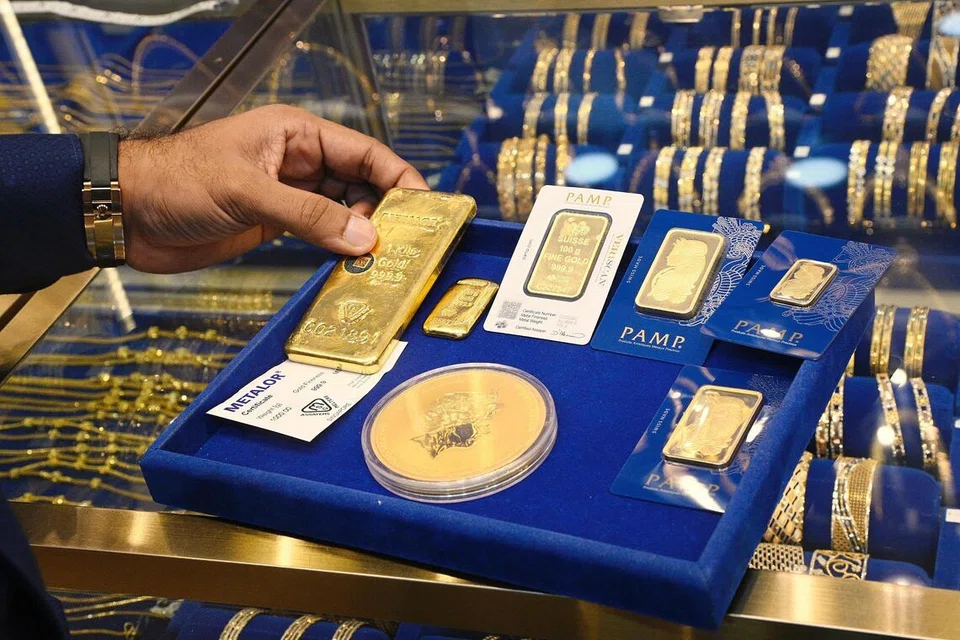
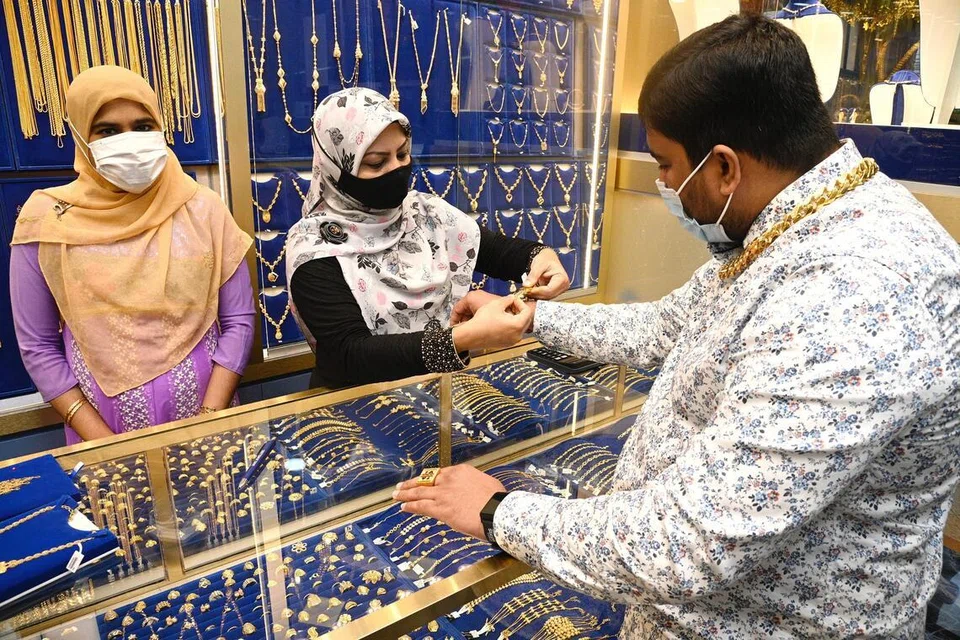
Last week, I took my three-and-a-half-year-old granddaughter to Little India. On our way to a thosai and vellam appam dinner, we passed by a goldsmith’s store.
“Look”, I said, lifting her up to gaze at the sea of gold that shone back at us, “That’s gold, darling”. She exclaimed “hmm...”, totally unimpressed.
She was indifferent until we stopped by the next shop and the next one and the next one between Buffalo Road and Belilos Road - until the look in my eyes and the sheer scale of the glitter got to her. As her little Indian brain quickly computed the value proposition on display, her “hmms” turned to “wows”.
I immediately kicked myself. I had unwittingly introduced this innocent little waif to the allure of gold. The single element that creates more emotional fission than Iran’s radioactive uranium does to Donald Trump.
Will her attraction to gold bring with it those terrible human emotions of greed, avarice and envy? Oh my God... what had I done? The girl needs to be purified and cleansed immediately.
Ah, the Sri Veeramakaliamman Temple is across the street. Perfect! I rush her in like an emergency case at the A&E, hands folded in desperate prostration.
I open one eye to see if a divine light was washing my beautiful granddaughter clean of all the ill effects of my boo-boo. I find her spellbound, pointing to every bejewelled idol in the temple and, with wonder and admiration, saying: “Look Mo… look... gold.”
I stopped fretting, stole a banana from the prasad tray in defiance, while accepting the reality that my girl was Indian and is genetically equipped to deal with gold in industrial quantities.
And I’m not kidding about “industrial quantities”. I mean, just look at those necklaces spilling over the shop mannequins and, you know, no other race can carry that load without orthopaedic consequences. Bangles are stacked up the arms like emotional armour. Dangling earrings that would put a weightlifter in a cervical collar.
Sounds over the top, but let’s be honest, for Indians, gold is not an accessory, it is a family member. It arrives at weddings, stays through crises, and occasionally gets taken to the pawn shop with great secrecy and mild shame, only to return later like a prodigal relative.
“Keep it,” mothers say. “You never know.” That “you never know” is what is doing the heavy lifting.
Today, wealth floats invisibly – numbers on screens, rising and falling with the mood swings of the global economy. But gold? It sits in your locker, mildly judging your life choices, but never disappearing.
It doesn’t need wi-fi. It doesn’t crash. It doesn’t send you notifications saying “your value has dropped 12 per cent while you were having lunch”.
It simply is.
Take an Indian wedding. Somewhere between the vows and the buffet, there is an unspoken subtext: how much gold can one human body reasonably support?
Brides are adorned to the point where they resemble divine installations – part woman, part treasury. Aunts scan quietly, mentally calculating. Friends admire loudly, occasionally adjusting pieces that have begun to slide under their own double chins or expanded cleavages.
No one says it aloud, but everyone is fluent in the language of carats. Not the ones we eat, silly! The ones we store.
Gold, in the Indian imagination, is not about wealth. It is about backup. It is the quiet Plan B to life’s unpredictability. Before banks were trustworthy, before markets were legible, before passwords could lock you out of your own money – there was gold.
Solid. Silent. Unhackable. The best part – you can wear your security. Try doing that with cryptocurrency. Gold, here, is not just security. It is statement. Continuity. Proof that something has been built, preserved, passed on.
My friend’s mother passed on a couple of days ago. I went to pay my respects. The lady lay in her coffin looking beautiful in a Kanjeevaram silk sari and resplendent in her traditional gold necklaces and bangles.
“Oh my God, is she going to be cremated with all this jewellery on?” Obviously not – but just to confirm, I checked with her daughter that it wasn’t some last wish the lady had to arrive in the next karmic cycle locked and loaded.
That thought dismissed, my kaypoh sense kicked in. In my suspicious Indian brain, a gold-laden corpse was an invitation for a heist. With that amount of gold around, you can’t trust anybody. Not the mourners, not the funeral organisers, and not the food delivery guys.
I proceeded to lecture the intelligent young lady that all her mother’s gold jewellery was rightfully hers, and she should make certain that every piece should be retrieved before the cremation – the nose ring, the ear rings, the necklaces and
finally the bangles. She gently informed me that her mother was hardcore Indian and would not allow anyone to wrestle her gold away from her dead body. I was satisfied with that explanation.
Okay, but my point is that gold triggers some peculiar sentiments in us that we want to preserve and protect it better than Fort Knox. Wonder Why?
Standing there on Serangoon Road, watching people press closer to the glass, I couldn’t help but notice something odd. The gold was not looking back. All that brilliance, all that carefully arranged radiance – but it was the people outside who were alive.
Eyes lighting up. Imagination running ahead. Futures being quietly negotiated. What we were really looking at was not gold. It was possibility.
Because gold does not guarantee safety. It does not prevent loss. It does not soften heartbreak or fix time. It simply sits there, glowing with the illusion of permanence in a world that refuses to offer any.
And maybe that’s why we love it. Not because it makes us rich. But because it lets us believe, if only for a moment, that something in our lives can be held, stored, and saved… untouched by uncertainty.
And perhaps the real luxury, far rarer than gold, is to reach a point where we no longer need that illusion quite so desperately. Where we can walk past the glow, admire it, even laugh at it… and still feel, quietly and convincingly, that we are enough without it.