Ordering coffee or tea at a Singapore kopitiam is rather complicated. A few clipped syllables can determine the strength of the brew, the type of milk and the level of sweetness.
There is C (evaporated milk), O (no milk), kosong (no milk and sugar), siew dai (less sweet) or gah dai (more sweet). There’s also peng (iced).
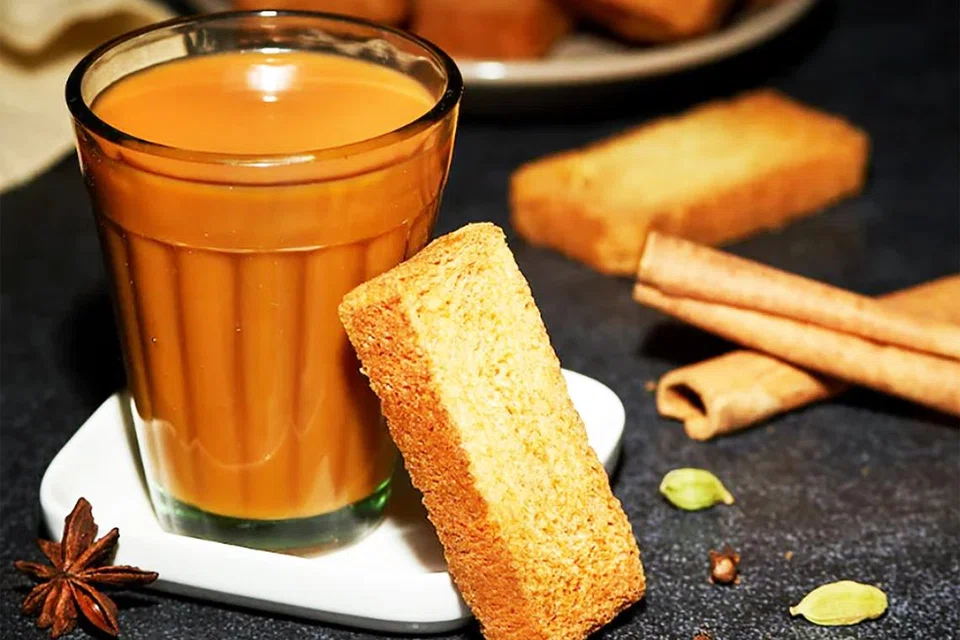
At Indian drink stalls, there’s teh halia (ginger tea) and masala chai (tea reinforced with spices). Now there are new concoctions known simply as India tea and India coffee.
According to my kopitiam’s barista, often referred to simply as the tea uncle, these last two orders mean one thing: an extra, generously heaped spoonful of sugar.
It is not quite the same as ordering teh gah dai, where extra sweetened condensed milk adds both sweetness and creaminess. India tea, he explains, is about a direct hit of sugary sweetness.
“That’s how they like it,” he shrugs, referring mainly to South Asian migrant workers who order these drinks while toiling at construction sites, cleaning jobs and landscaping work.
But, while this trend demonstrates how Singapore’s food culture readily absorbs and adapts to foreign preferences, it also raises an uncomfortable question about our collective relationship with sweetness, particularly within certain sections of the Indian community.
Traditionally, Indians have always had a sweet tooth. Chai, at its simplest, is black tea brewed strong, softened with milk and sweetened with sugar.
Then, sweets, or mithai, are also inseparable from Indian culture. No festival, wedding or religious celebration feels complete without them.
Our fondness for sweetness is deeply cultural, symbolic and emotional. It also comes with serious consequences.
In Singapore, about 14 per cent of Indians cope with Type 2 diabetes, compared with roughly 11 per cent of Malays and 8 per cent of Chinese.
Reports from the Saw Swee Hock School of Public Health also indicate that among those aged 60 and above, the figures are even more alarming.
Close to six in 10 Indians have diabetes. Among Malay seniors, it’s about five in 10, and 2.5 in 10 for Chinese Singaporeans.
Type 2 diabetes is the most common form of the disease and develops when the body becomes resistant to insulin or does not produce enough of it because of diet and lifestyle factors.
Insulin is the hormone that allows sugar from the bloodstream to enter cells safely to be used for energy. When this system fails, blood sugar levels remain chronically high, gradually damaging blood vessels, nerves and organs.
This is distinct from Type 1 diabetes, which usually appears in childhood or adolescence and is believed to be caused by a combination of genetic predispositions and environmental factors such as viral infections.
Research further shows that Indians are more genetically prone to insulin resistance. But, as Professor Chia Kee Seng, Founding Dean of the Saw Swee Hock School of Public Health, has so aptly observed, genes may load the gun, but lifestyle pulls the trigger.
Globally, the picture is equally sobering. India has the world’s second-largest number of people living with diabetes, behind only China, though this is largely due to their large population.
When it comes to estimated diabetes prevalence, World Population Review 2024 figures show that India is not among the highest. Its 10.5 per cent places it somewhere in the middle, behind the United States at 13.7 per cent and China at 11.9 per cent.
Before we celebrate with a cup of India tea, it is worth noting that the wider Indian subcontinent paints a more troubling picture, with Pakistan topping the list at 31.4 per cent.
Back at the kopitiam, however, none of this features in the tea uncle’s calculations. When asked about diabetes, he offers a simple and honest answer: “I keep customers happy. They want sweeter, I give them sweeter.”
After all, businesses do not create demand out of thin air. They respond to it. If customers ask for less sugar, they will be served less sugar. If they ask for kosong, that is what they will get.
In the end, our sugar intake depends on our everyday choices. And that responsibility rests, uncomfortably but firmly, on us.
Correction note: An earlier version of the article stated that Professor Chia Kee Seng was the Dean of the Saw Swee Hock School of Public Health. He is in fact the Founding Dean. We apologise for the error.