
So you’ve packed your bags, hugged your dog, cried at the airport (some from relief, others from grief), and landed in Singapore – the land of food courts, flip-flops and fines. Welcome to your new life.
You may have survived Delhi’s traffic, Mumbai’s monsoons or Bengaluru’s disappearing footpaths, but are you ready to go full Singaporean?
Here’s a handy guide to ease your transition:
Understanding Singlish
Singlish is kind of the Hinglish of Singapore. It’s universally spoken (Singapore being the universe) but incomprehensible to anyone outside the tribe.
It’s not English, not Chinese, not Malay – just a uniquely Singaporean blend where everything ends with lah, lor or meh.
At first, you’ll nod politely while having no idea what’s going on: Hawker aunty: “Can, can. Eat here or tapao, lah?” You: “Uh... yes?”
Eventually, you’ll get the hang of it. You’ll start saying “can” instead of “yes,” “lah” at the end of everything, and even ask your mother on WhatsApp: “Done your dinner or not, lah?” She’ll reply: “Aarey Wah! You already speak Chinese!”
The sari v the sweat
You brought 20 silk saris, two lehengas, one sherwani for your spouse, and a suitcase full of FabIndia kurtas. Three weeks in, and you’re wearing Uniqlo dry-fit shorts and flip-flops like everyone else.
Because Singapore, my friend, is humid.
That crisp cotton kurta you brought from Lucknow? It now resembles a limp tissue by lunchtime. And don’t even talk about makeup – it slides off faster than the MRT doors shut.
Still, you wear your sari proudly to Deepavali events... only to be told by a Singaporean Tamil aunty: “Wah, you wear so traditional ah? Nowadays we all wear pants, lah!” You smile, trying not to pass out from heatstroke.
The clash of cultures
Ah yes. Here comes the tension no one talks about. You, with your Netflix Hindi-accented English and Karan Johar emotions, meet the Singaporean Indian who has lived here for generations and thinks your Bollywood melodrama is a bit much lah.
You: “I feel the spiritual energy of Little India, so vibrant, so soulful.” Singaporean Indian friend: “Vibrant? You mean noisy ah? Every weekend no parking. And the smell of incense stays in my hair until Tuesday.”
They think you haggle too much. You think they’ve forgotten the art of bargaining. They’re baffled you don’t eat pork or beef. You’re baffled they put fish head in curry. One North Indian NRI was even found staring at chicken rice in horror: “Where’s the masala?”
But, after a few awkward Deepavali gatherings and potluck misunderstandings, you’ll find a beautiful friendship.
You’ll laugh over Milo Dinosaurs and discuss who has better butter chicken: Delhi or Dunlop Street.
Treasure hunts, trolley drama
You don’t need to worry about finding Indian groceries in Singapore, the shops are tucked around everywhere!
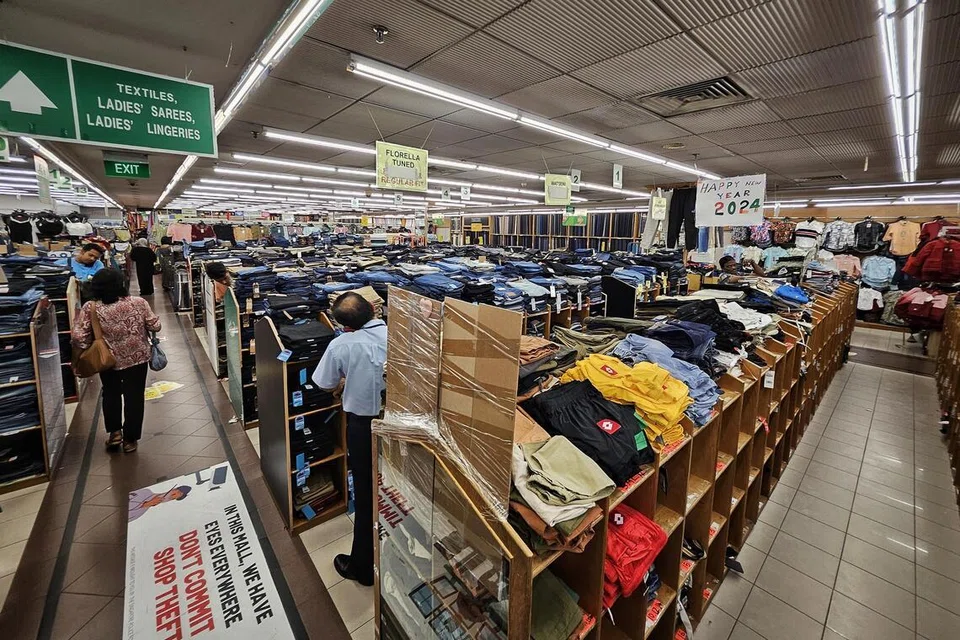
You’ll hear tales of Mustafa Centre – a 24-hour labyrinth of everything from gold jewellery to gobi.
You’ll go in to buy atta and come out six hours later with a suitcase, a pressure cooker, three phone chargers, and no memory of how you got there.
Then there’s Tekka Market, where the uncles will size you up, guess your community and recommend chillies accordingly: “Gujarati ah? Take this mild one. North Indian? This one will wake your ancestors.”
Hawker Food v Home Food
Your stomach wants thosais and vadais. Your new colleagues want you to try laksa, carrot cake (which is neither carrot nor cake) and sambal stingray. You politely try everything and then run home for curd rice.
Your Singaporean Indian friend turns up with bee hoon and says: “Try, try. My grandma’s recipe!” You eat it, smile, and wonder whether it’s dessert, breakfast or both.
Eventually, you find your rhythm. You eat chicken rice for lunch, dal chawal for dinner and ice kacang when no one’s looking.
Family holidays and tiffin boxes
Now that you are here, Singapore is a holiday destination for your family, your family’s family and your family’s family’s friends!
You plan a three-day trip to Sentosa with your in-laws, which turns into a five-day retreat with three tiffin boxes, one complaint about the aircon and several arguments about whether the Merlion is worth it.
The Indian in you endures it. The Singaporean in you wants to lock them all up in the Sentosa Surrender Chamber and throw away the key.
What you really learn
You learn that adaptation is not about giving up who you are but just tweaking the recipe. You can speak Hinglish and Singlish. You can laugh at the fact that your Chinese neighbour puts durian in the fridge next to your rasgullas – and now everything smells... confusing.
But, most of all, you learn that home isn’t just where you were born. It’s where you learn to laugh at yourself in a new language, eat with your hands even if people stare, and help newbies find hing (asafoetida) on a desperate Tuesday night.