
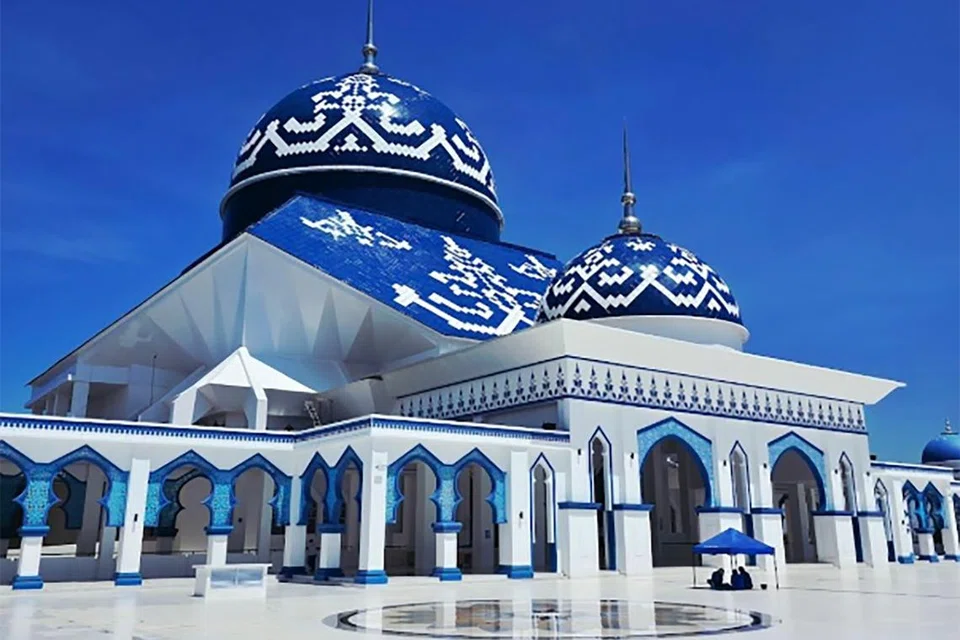
During my recent visit to Batam, I visited the magnificent Raja Hamidah Grand Mosque in Batam Centre. Formerly known as the Batam Grand Mosque, the recently renovated structure stands majestically on more than 33,000 square metres of land. Its striking blue-and-white dome and towering minaret dominate the skyline near the city centre.
Like many visitors, I entered the vast prayer hall expecting mainly silence and solemnity. Instead, I encountered something unexpectedly warm and communal.
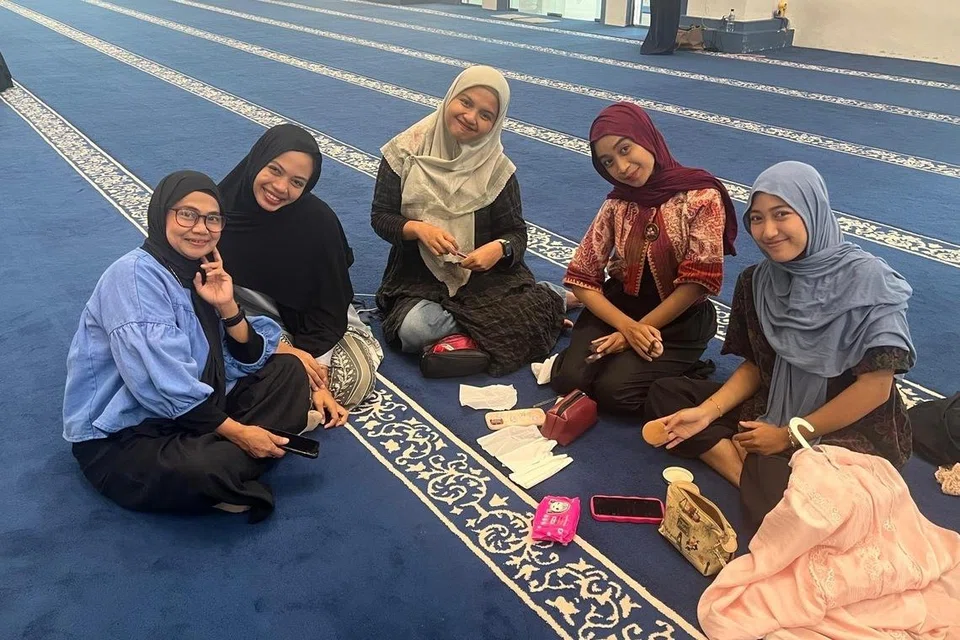
After prayers ended, groups of women remained comfortably seated on the carpeted floor. Young women chatted softly with friends, adjusted their scarves, applied light make-up and changed attire before continuing with their day. The atmosphere was relaxed yet respectful. Faith and ordinary life appeared to coexist naturally.
One lively group of young women became excited when I asked to take their photograph. They cheerfully told me that they sometimes climb the mosque’s 66-metre minaret to enjoy panoramic views of the city and to take photographs near the iconic “Welcome to Batam” sign on the nearby hill.
Laughing together, they described it as “a spiritual trekking for us”. One jokingly added: “Sometimes our voices become louder than the prayer announcements.”
Their humour and openness revealed a side of mosque culture that is rarely discussed outside the region.
Mosques are often imagined purely as ritual spaces governed by strict formality. Yet, in many parts of Indonesia, they also function as communal centres – especially for women. They are places where friendships are nurtured, family ties strengthened, and social belonging quietly reinforced.
The towering minaret itself carries religious significance. From there, the azan, or call to prayer, is sounded five times daily by the muezzin. Around this sacred rhythm of prayer, however, ordinary human interactions continue to flourish.
The mosque grounds further reinforce this communal atmosphere. Clean ablution facilities, small souvenir stalls, snack vendors and nearby restaurants create a welcoming public space. I noticed local vendors selling quick snacks and drinks, including local rujak, within the compound itself. The mosque can accommodate about 3,500 worshippers indoors and up to 15,000 people, including the outdoor courtyard.
One particularly memorable encounter was with a family group of 12 women gathered around their 81-year-old mother for family photographs. One daughter, who now lives in Singapore, explained warmly: “My mother’s name is Hamidah. During her childhood, it was considered honourable and fashionable to use that name because of the famous historical figure from the Riau-Lingga Sultanate.”
The mosque itself was renamed after Raja Hamidah, also known as Engku Putri, an influential female figure associated with the old Riau-Lingga Sultanate. Historically, the Sultanate once covered a vast region including the Riau-Lingga islands, Singapore, parts of Malaya and the eastern coast of Sumatra. It was regarded as one of the great Malay kingdoms of the region.
The mosque’s architectural history is equally fascinating. It was originally designed by architect Achmad Noe’man and became known for its distinctive four-sided pyramid roof, or limas design, reflecting Malay philosophy rather than the conventional Middle Eastern dome. Following recent renovations, the mosque now combines modern grandeur with historical symbolism.
During earlier travels across Java, I was fascinated by mosques with tiered roofs resembling the wooden religious structures of the Hindu-Buddhist civilisations of Java and Bali. In contrast, mosques in Batam and northern Sumatra project marble splendour and monumental scale.
Yet, beyond architecture, what remains most memorable are the human moments inside these sacred spaces.
Mosques across the region become even more emotionally significant during Hari Raya Haji. Families gather for prayers, conversations, photographs, meals, and preparations for the festivities.
In Batam, I realised that the mosque is not merely a ritual hall. It is also a social courtyard, a family meeting point, a resting place and a cultural landmark. For many women, especially, it has become a comfortable communal space woven naturally into everyday life.
Rhama Sankaran is a freelance journalist.