
Whenever the word kampong is used, one immediately thinks of an old-fashioned village where people lived in simple wooden houses with zinc roofs, surrounded by nature, chickens running around and a strong sense of community, where neighbours would shout across fences and the occasional neighbour who knew what you had for breakfast before you had finished eating it.
Then came progress.
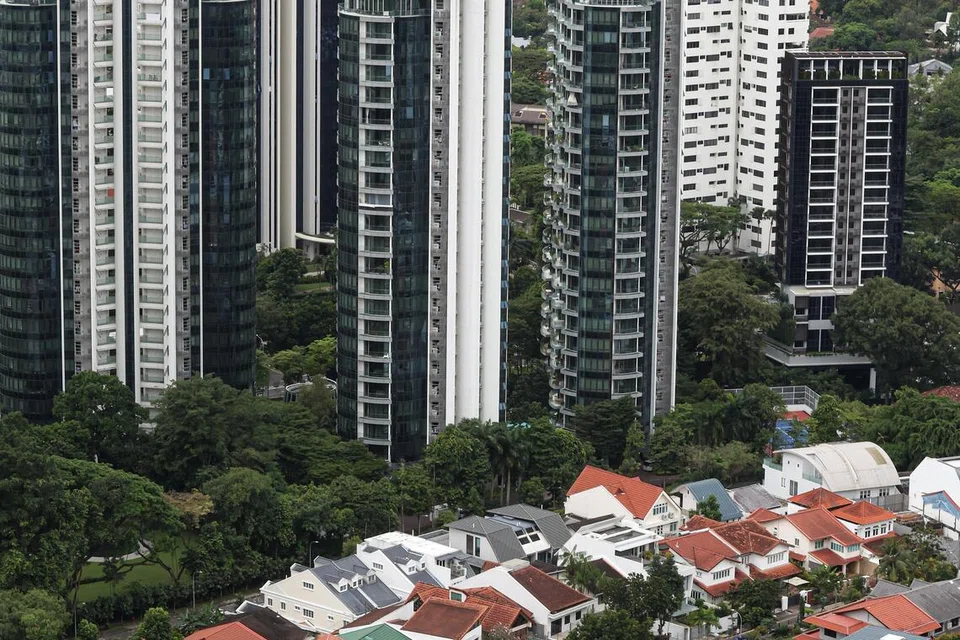
The wooden houses disappeared, the chickens were relocated (or did they suspiciously disappear, ending up as a curry), and zinc roofs gave way to concrete. Singapore grew up towards the sky, and before long the kampongs moved into modern towering blocks of flats.
Welcome to the urban buildings where people moved into vertical kampongs, with greatly reduced interaction and camaraderie.
But what happened to the unofficial kampong village chief? Surrounded by concrete, is he the one who is now an administrator using WhatsApp messaging, armed with a smartphone? Reading an endless supply of forwarded messages and the ability to pick up information of suspicious activity.
It’s 7.03am and a message appears: “Good morning neighbours! There is a black mongrel dog which has been sitting most comfortably near the swimming pool and does not appear to belong to anyone. Please directly message if you think that this may be your dog.”
At 7.15am: “It’s not my dog, but did anyone see my black haversack which I left near the pool?”
A photo of the mongrel is sent by somebody, which is clearly not of a black dog.
This starts a very active conversation between the neighbours.
“It looks very hungry, will someone give it some food?”
“But does anyone know whose dog it is?”
A very exciting exchange of messages develops. By now many have woken up, and the dog lovers in the kampong are very energetically engaged in animated conversations on the dog, its type, its colour and how come it has settled down near one of the ground floor flats which is not far from the pool.
“I have some spare dog food. Will someone pick it up from my flat?”
“Let’s call the SPCA,” pipes in someone.
“While others are ‘rescuing’ the dog, can I let you know that I am raising funds for a new old folks day care centre. Can u contribute pre-loved items? You can also contribute some money, if you prefer.“
Apart from avid dog-lovers, the mood of other kampong dwellers shifts.
“Can someone spare a few small drumsticks, I need some for my curry.”
“Please send your helper to collect some from my apartment”
Is this the type of interaction that used to happen in the old kampong?
Of late, I find that many vertical homes are unintentionally generating some old aspects of the kampong spirit.
A modern kampong uses many methods to stay in touch, often not face-to-face but certainly via the use of modern communication gadgets such as WhatsApp and e-mails.
Many become part of a chat group that can include most, if not all, the residents. So, on a typical day you may find a message to enquire if anyone can spare a few leaves of mint for a special chutney, which needs that peppermint taste.
A parcel meant for a different flat gets delivered to the wrong block with the same number. A question sometimes arises when a parcel containing perishable food is delivered to the wrong flat but marked correctly for the neighbour. You know the person next door is away, what should you do with the food items?
In the kampung spirit, do I allow the parcel to be put outside the neighbour’s flat, knowing that it might go to waste?
Would you leave a note to say that “I did not wait for your return” and consume the food?
“I am a vegetarian, so I did not touch the fish. That item did get spoilt.”
In the spirit of living in a friendly condo, could this have been misconstrued?
Should the fish have become the subject of another WhatsApp note, inviting a neighbour to take away the fish?
“I did that, and the only one who sent me a message of interest could not leave her house as she had a small baby”
It’s sad, but the fish found its way into the rubbish bin.
At this point, as the writer of this note, I can’t help feeling that this condo is typical of some kampongs in the sky.
By the way, what happened to the dog?
Uttam Kripalani is an insurance professional with over 65 years of experience across Europe, India and Southeast Asia. He is the founder and chairman of Galaxy Insurance Consultants and is active in various social and community service initiatives in Singapore.