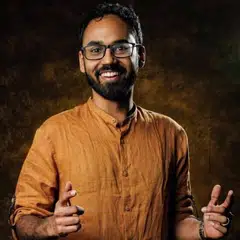
Avant Theatre Artistic Director G Selva was as usual chatty during my recent meeting with him at his workspace at the Aliwal Arts Centre to hear him reflect on his artistic journey.
It was fortuitous as he is gearing up for a month-long break in Melbourne, where he received his formal theatre training and established Avant in 2001 before bringing the company to Singapore a decade later.
“Substation Was My Mentor”
Selva’s Tamil theatre journey, much like those of his contemporaries Mr Vadivalagan PVSS and Mr Ravi Velu, began with the Ravindran Drama Group (RDG) in 1988. They sought to inject freshness into both form, through stagecraft and technology, and the themes Tamil theatre explored.
The opening of The Substation in 1990 was a seminal moment. Its black box theatre, which Selva describes as his “creative mentor”, reflected the evolving zeitgeist of the 1990s, when alternative spaces and experimental artistic practices gained prominence.
The decade also saw the emergence of Agni Koothu under Elangovan’s artistic direction, signaling a broader shift toward experimentation in Tamil theatre.
In 2011, Selva founded Avant in Singapore to address what he saw as a “creative void” in Tamil theatre.
Heady Beginnings
In the years following Avant’s inception in Singapore, Selva sought to reinvent what Tamil theatre could look and feel like. He admits that part of the motivation was personal.
“I wanted to expose the Tamil theatre audience to a new style of storytelling on stage. The youth in my team also impelled me to experiment,” he said.
The Mahabharata was no stranger to Tamil audiences, but the Moksha trilogy shed new light on Bhishma (2011), Sakuni (2012), and Stree (2014) – three layered characters from the Mahabharata epic whose complexity had often been flattened by Tamil cinema.
Romz and Julz (2011) – a transcreation of Shakespeare’s Romeo and Juliet – introduced Tamil audiences to Total Theatre, allowing them to watch both the performance and the process behind it through video feeds from the dressing room, foyer, and scenic runway.
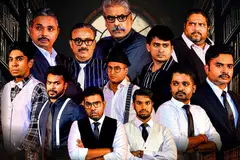
12 Angry Men (2012), adapted from Reginald Rose’s screenplay, became an audience-mediated production in which audience members chose roles for the actors just before entering the venue. I remember watching it as a 19-year-old and being struck by the ambition – theoretically 479 million possible casting configurations.
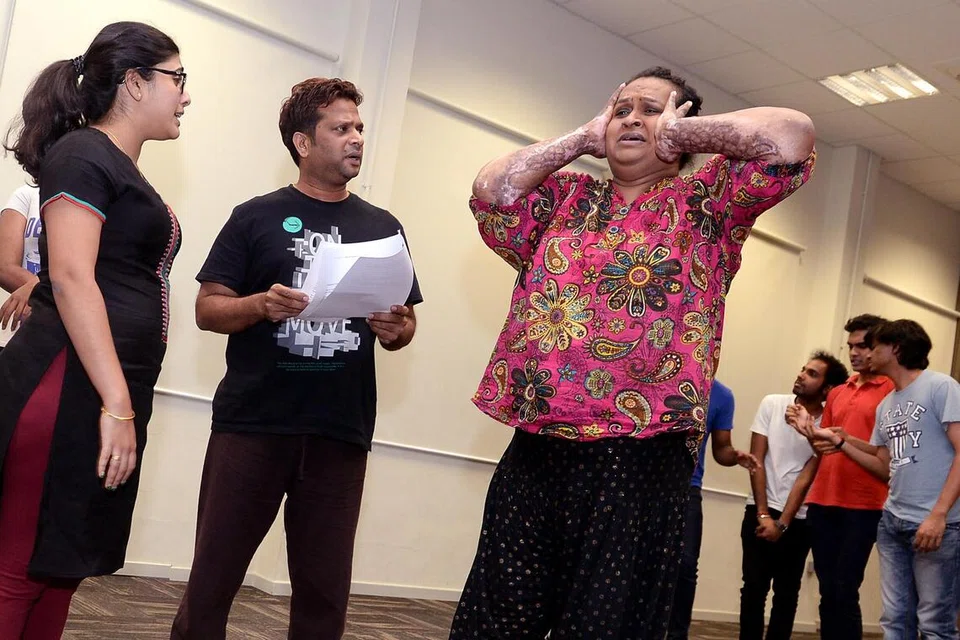
Even productions that flew under the radar, such as Adagu, performed by the late Mr Anandha Kannan, and Antham Aathi, experimented with more interactive forms of storytelling that closely resembled Forum Theatre.
Growing the Audience
The question, however, was whether experimentation could also translate into growth. Selva acknowledges that the Tamil theatre-going community is small, but says he has deliberately worked to expand it.
In this spirit, Avant staged Reservist (2019), billed as a “For Men, By Men” production, hoping to draw more men back to Tamil theatre. They also sought to cultivate a love of Tamil theatre from a young age, bringing schools into their productions, including Irruthiyil Yaar (2013) and Num Kaatiniley (2018).
A concern I often heard from younger audiences was that literary Tamil in productions based on epics could deter some from attending theatre. Selva flatly rejects calls to simplify the language.
While most productions use spoken Tamil, he had little desire to “adulterate” the experience for audiences when staging epics.
Upholding Standards and Shaping the Future
Selva believes his greatest challenge is maintaining standards. Some lack accurate Tamil pronunciation, and others underestimate how long it takes to hone their craft. He has no qualms about his reputation as a demanding taskmaster.
“For my actors, theatre is a passion. For me, theatre is a profession,” he emphasises. Selva remains accountable to ticket-paying audiences and their hard-earned money.
Despite these challenges, Selva’s optimism rests on building a strong creative ecosystem of playwrights, supported by initiatives such as Calvet and Muthirai, organised with support from the National Arts Council.
The next generation of writers, however, need to ask what constitutes a “Tamil play”. Must it be performed entirely in Tamil or, more importantly, will it continue to be? Can it be bilingual, even multilingual, while remaining rooted in Tamil storytelling?
The tension is a real one. Tamil theatre must preserve the language that gives the art form its distinctiveness while attracting audiences whose relationship with the language may differ fundamentally from that of earlier generations. After 25 years of Avant, however, Selva has kept the conversation about what Tamil theatre can be, and who it should serve, alive.
The writer is an arts enthusiast with a keen interest in Tamil theatre.