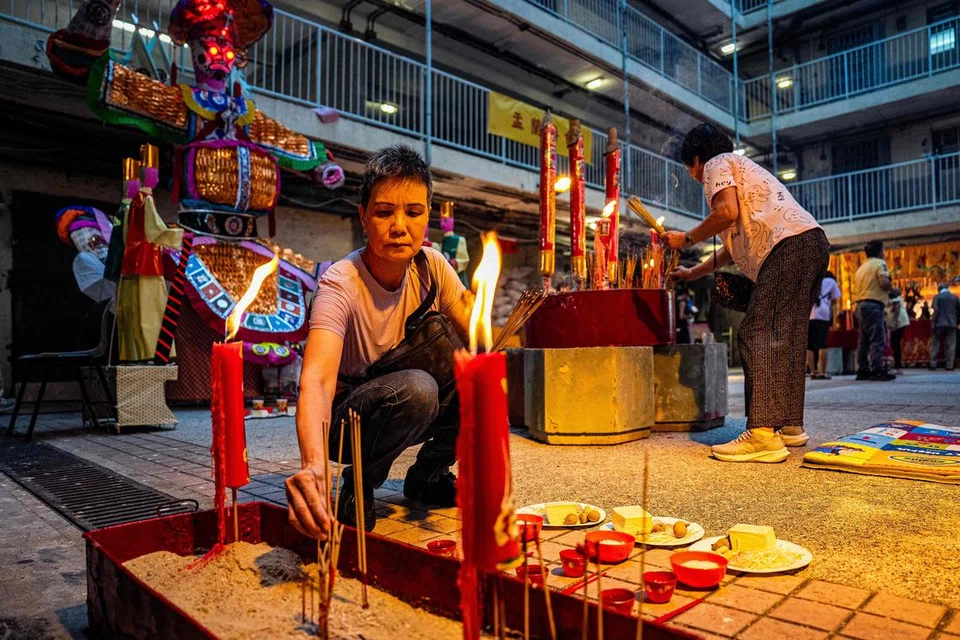

To the uninitiated foreigner, the joss sticks, neatly arranged fruit, or roasted meats placed along pavements might look like mysterious street rituals.
But for locals, it is all about honouring the restless spirits who return from the afterlife for a short stay on earth.
As a Chinese friend aptly put it, the festival is essentially for “ghosts on staycation”.
Behind the humour lies a deep-rooted belief that the gates of Hell stay open during the seventh month of the Chinese lunar calendar to allow spirits to wander among the living.
This year, it runs from Aug 23 to Sept 21.
Also known as the Hungry Ghost Festival, it is widely observed by Buddhist and Taoist devotees and combines ancestor worship, cultural tradition, and superstition.
The idea is simple: Feed and placate the visitors from the netherworld, and in return, practitioners are blessed with peace and good fortune.
In addition to food offerings, believers burn symbolic banknotes, as well as intricate paper versions of mansions, cars, and mobile phones for use by the dearly departed.
Keep your eyes peeled for these elaborate paper creations in neighbourhood markets and Chinatown.
Taboos and superstitions
It is also believed that the Hungry Ghost Month Festival is an inauspicious time, and the list of taboos runs long.
Many Singaporeans – including some non-Chinese – avoid buying property, starting businesses, or getting married during this period.
Even activities like swimming are frowned upon, since it is said that water spirits may try to pull the living under.
Abstain from whistling at night as it could draw the attention of spirits, and don’t pick things up from the ground, or you might land with a nasty surprise.
Also, don’t respond if you hear your name being called from behind. It may not be from a friend.
In short, don’t tempt fate.
And perhaps the most important rule of all is not to disturb the offerings.
Accidentally stepping on or knocking over food meant for the spirits is thought to invite bad luck, which can only be resolved through temple offerings.
Business folk also adopt a low profile during this period, and there is a noticeable decrease in advertising and promotional activity.
At one time, the Hungry Ghost Festival was synonymous with getai. These were lively stage performances held in large tents that popped up near housing estates.
Rooted in Chinese opera and puppet shows, getai evolved into neon-lit spectacles of flashy costumes, pop hits, and cheeky Hokkien banter.
Everyone was welcome, though one rule is non-negotiable. The front row of seats must always be left empty. Those places are reserved for the honoured ghostly guests.
While getai has waned over the years, the spirit of the festival lives on through community dinners and charity auctions. Proceeds often go to temples or community causes, keeping the spirit of giving alive.
For younger Singaporeans, the Hungry Ghost Festival may come across as a mash-up of superstition and Instagram-worthy paper effigies.
But at its core, it’s about honouring ancestors and weaving the living and the departed into a shared story that transcends even the divide between these worlds.
I think it’s a tradition worth honouring.