An exchange of flowers and a wrapped gift of designer chocolate followed by a candlelight dinner. Every Feb 14, people around the world celebrate romance on Valentine’s Day in typical commercialised fashion.
Historians might argue over the occasion’s true origin – some say the inspiration for the holiday was a festival celebrating fertility, some cite the execution of a clergyman named Valentine, who was beheaded by a Roman Emperor for refusing to forsake his faith, thus making him a “saint” for his martyrdom.
But maybe in the age of 2025, the real contention is: Why are we still buying into the commercialisation of it all?
This cynicism is perhaps mostly demonstrated by Generation Z – or those born between 1995 and 2012.
In the dating app age, where relationships are largely by-products of happenstance right-swiping, Valentine’s Day no longer evokes a puppy-eyed disposition in many woke Gen Z-ers. Because really, is finding love even sexy anymore?
For many among the woke folks, Valentine’s Day is simply a fodder for the consumerist trap.
Feb 14 has long been a marked spot on retail calendars. According to the US-based National Retail Federation, in 2024, shoppers spent a whopping US$25.8 billion on Valentine’s Day gifts, from jewellery to vacations. That makes V-Day the second most materialistic holiday after Christmas.
Another gripe youngsters have against the occasion is the focus it places on displays of affection – be it public or across social media. After all, love these days isn’t real if it isn’t highlighted on social media. To which, singles everywhere will lament: Must we be reminded that we’re miserable and alone in the middle of every February?
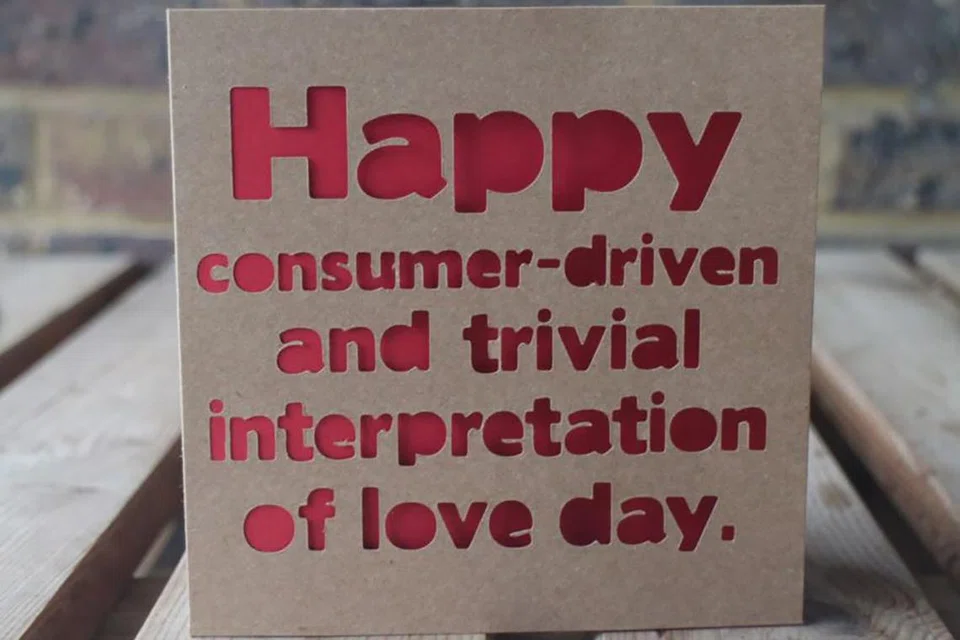
Not surprisingly, a slew of anti-Valentine’s protests have popped up. For instance, anti- Valentine’s merchandise has flooded platforms like Etsy, where messages like “I can buy myself flowers” emblazoned on a red T-shirt are being sold for US$38.85. A “greeting” card with the tag “Happy consumerism-driven love day” starts at US$5.76.
Ironically, this new trend is also another way for retailers to fetch a profit. Sigh. Valentine’s Day remains profitable whether you are for or against it.
It’s about time the significance of Valentine’s Day is detached from the bells and whistles of gift-giving and lavish public displays of affection. The day, in essence – if we refer to the Roman clergyman’s intent – is meant as a celebration of love, perhaps not just between romantic partners but among friends and family too.
This latest generation has seemingly chosen to subvert consumerist practices and redefine what days like Valentine’s Day mean. If Saint Valentine was still around, he’d buy one of those T-shirts on Etsy.
Reema Dudekula