
The simplest things in life are often a reminder of the profundity of the cultures into which people are born.
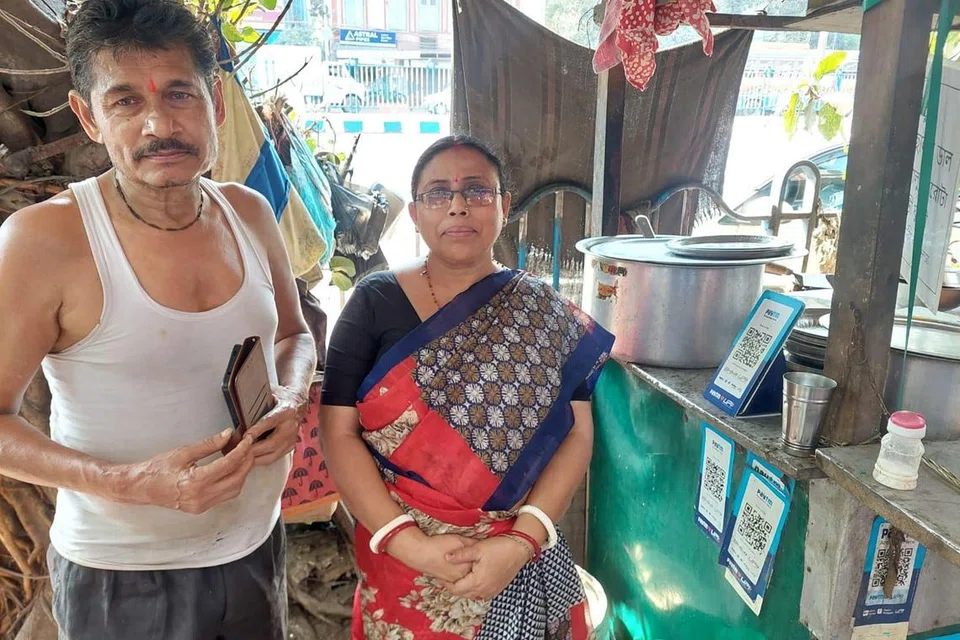
I received that happy lesson last week during a visit to Kolkata, the city of my birth. I stopped by a streetside eating place in the Tollygunge area of the city’s south. The stall is run by Gourhori and Taposhi Das, a couple whose ancestral home lies in the Midnapore area of West Bengal.
For Rs65, a single Singapore dollar, I got to eat the Bengali rice-and-lentils preparation called khichuri, aloo bhaja (chopped potatoes fried to crispy perfection) and rui fish curry. The point was not the price (which was affordable, to say the least) nor even the food (which was delicious). The point was the way in which it was served.
The khichuri and aloo bhaja arrived on a piece of brown paper designed as talpata (thatch), which was placed on an aluminum tray (along with the fish curry in a stainless-steel bowl). Since I could have eaten out of the tray, why the vicarious need for talpata, I wondered.
The reason: Aluminum is universal and therefore anonymous. Talpata is local and therefore personal. Culture means preferring the personal over the anonymous. While I take delight in the multitude of cuisines that the world offers, Bengali food is the preferred diet of my soul.
And the soul takes delight in the presence of the inherited and the familiar. Talpata provides visual reassurance of the continuity of Bengali culture. The finest porcelain plates, even if they are embossed with official or corporate insignia, do not match up to the raw joy of sitting on the ground, in the home of forefathers and foremothers, and eating from whatever the plate might be made of.
Talpata is a metaphor of the ecological plenitude of Indian and Bangladeshi civilisations, the leaf signifying nature’s capacity to fulfil the needs of those born and those yet to be born.
To a child, food is nothing if it is not served by her grandmother, mother, aunt or elder sister. Men know how to eat: Women know how to feed.
Taposhi, the garrulous matriarch of the establishment, made certain of that distinction. Everyone who ate at the establishment was personal to her. A young woman who arrived was asked: “Ma, what would you like today?” Ma (mother) is the procreative womanhood that parents confer on daughters, those mothers-to-be. (Taposhi and Gourhari have two loving sons but miss the daughter they never had.) The girl-as-customer therefore became a part of Taposhi’s vicariously extended biological family, and was treated likewise.
She responded with a beaming smile, calling the matriarch Mashi (aunt). A young man was asked indulgently: “Do you want some more mixed-vegetable tarkari? (At the same price). I was not even asked. Gourhari simply added more mixed tarkari to my emptying talpata.
In front of my astonished eyes, unaccustomed to witnessing Indian civilisation change from year to year – I have been away for four decades now – I saw a Bengali culture that had been transformed from a natural talpata to a paper one. But what had not been transformed was the maternal provenance of Bengal.
It existed in the interstices of the relationship between the past and the present. It flourished in a makeshift stall next to an avenue on which plied hundreds of buses and cars, who knows where they came from and where they were headed. All of them belonged to passing chance: The stall was a sanctuary of destiny.
I asked Taposhi what sustained her delight in being a part of the life of others. She said: “It is very easy to lose respect. It is very difficult to gain respect. Every time a customer returns to my stall, she – like that girl eating there who just called me Mashi– returns to the sound of my words and the shape of my smile. That is why my customers respect me. I shall not lose their respect by forgetting how to keep making them my own.”
I know that these words sound forced and perhaps even corny in translation, but in Bengali, Taposhi’s reply possesses the natural energy and eager flow of a river that travels through the land of the unknown, contouring the lives and thoughts of humans but without asking for anything in return. What can a human give a river?
Bengal is a mother, or she is nothing.