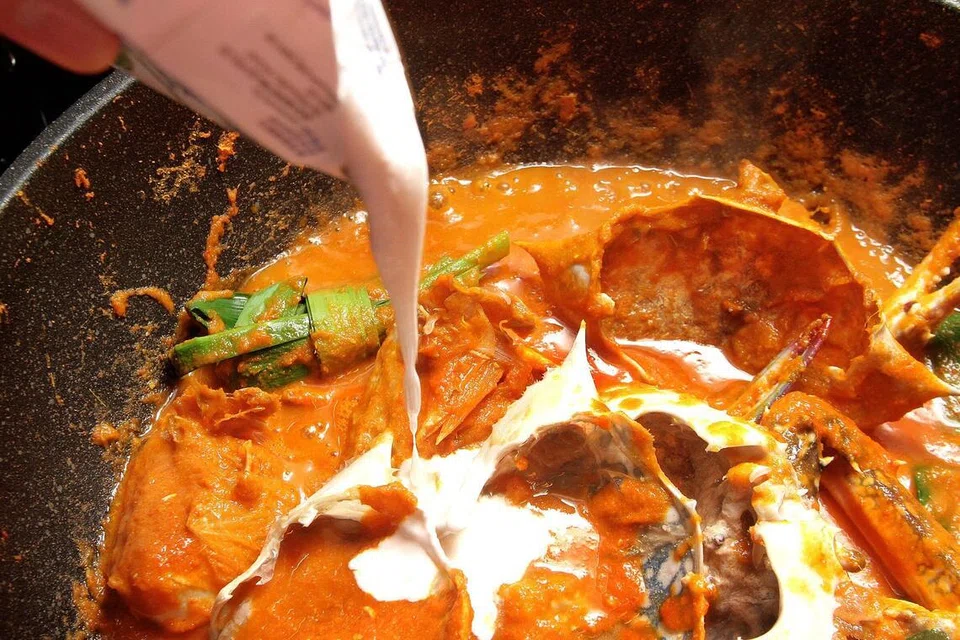

It was a typical Sunday afternoon in Singapore, and the house was filled with the tantalising aroma of spices.
The kitchen, usually a sanctuary for peace and creativity, had turned into a battlefield. On one side stood Manjeet Singh, a proud Punjabi man from Delhi with arms folded, eyebrows furrowed and an expression that could curdle milk. On the other, with a coconut in hand like a ball of fire, was Meenakshi Nair, a fiery Malayali who had made Singapore her home.
The bone of contention? Curry. Specifically, whether or not to add coconut to it.
Manjeet was adamant. “Listen, Meenakshi, curry is supposed to be rich, spicy and full of flavor. We use ghee, yogurt, cream – anything that adds that robust taste! Coconut will just water it down. It’s like asking a lion to purr!”
Meenakshi rolled her eyes as she twirled her coconut. “Manjeet, you Punjabis think that all curries should just burn your tongue off! Coconut adds a smooth, creamy texture that balances the spices perfectly. It’s like a symphony in your mouth, not a rock concert!”
The debate had begun.
Round One: The ingredients showdown
Manjeet decided to make his first move. “In the North, we use whole spices like cardamom, cloves and cinnamon. The curry is slow-cooked until the meat or vegetables absorb all that rich flavour. And let’s not forget the kasuri methi, a secret weapon for that authentic Punjabi taste. The result is a curry so rich and hearty, it can stand on its own.”
Meenakshi smirked, not one to back down. “Oh, we have our secrets too! In Kerala, the curry starts with freshly grated coconut and curry leaves, mixed with a blend of spices that you North Indians wouldn’t even know how to pronounce! Ever heard of kokum or kudampuli? I didn’t think so. And our curries aren’t just about heat; they’re about layers of flavour that evolve with each bite.”
Manjeet looked skeptical. “So, you’re telling me your coconut concoction can compete with a proper butter chicken? Or a rich, creamy dal makhani?”
Meenakshi raised an eyebrow. “Butter chicken? That’s just dessert with a hint of spice! Try our ishtu – an aromatic coconut milk-based stew with vegetables or meat, or the famous Kerala fish curry. They’re dishes with depth, not just a slap of ghee and cream!”
Round Two: The health argument
Manjeet, realising that taste alone might not win this battle, decided to pivot to health. “All right, let’s talk health. Do you know how much fat is in coconut milk? My arteries are hardening just thinking about it. And what about cholesterol?”
Meenakshi was ready. “Ah, typical North Indian thinking! You drown everything in ghee and butter and then worry about cholesterol? Coconut is actually quite healthy. It’s rich in lauric acid, which can boost immunity, and it’s full of healthy fats that can lower cholesterol. Plus, it’s completely plant-based, so it’s vegan-friendly. How’s that for modern living?”
Manjeet scoffed. “Vegan, schmegan! I want flavour, not a health lecture. And what about your coconut oil? You fry everything in it. Isn’t that bad for your heart?”
Meenakshi shot back, “Not all frying is bad, Manjeet. Coconut oil has a high smoke point, which means it’s more stable at high temperatures. Plus, it’s been used in Ayurvedic medicine for centuries. Can your refined vegetable oil say the same?”
Round Three: The cultural connection
The debate was reaching boiling point. Manjeet, sensing the argument was slipping from his grasp, went for the emotional kill. “But Meenakshi, what about tradition? My grandmother made curry the way her grandmother made it, without any coconut! It’s our heritage, our identity.”
Meenakshi softened, just for a moment. “I understand, Manjeet. But tradition isn’t just about following a recipe; it’s about adapting to where we are. In Kerala, coconuts are everywhere, so they became a part of our tradition. Here in Singapore, we have access to all kinds of ingredients, so why not combine the best of both worlds?”
Manjeet thought about this for a second. He could imagine his grandmother stirring a pot of curry on a cold Delhi winter’s day, and he could see the pride in her eyes. But he also remembered the first time he tasted a Malayali fish curry in Singapore, with its tangy, spicy, coconut-infused sauce that felt like a warm hug on a rainy day.
The Final Verdict
In the end, the debate ended the way most great debates do – with a compromise.
“Maybe we could try a fusion?” Manjeet suggested cautiously. “A curry that combines the richness of Punjabi spices with the smoothness of coconut milk?”
Meenakshi smiled. “Now you’re talking! We could even throw in some kasuri methi and curry leaves. It could be the best of both worlds.”
And so, the two unlikely friends set out to create a new dish, a symbol of the rich tapestry of cultures that make up the Indian diaspora in Singapore. It was a curry that neither had tasted before, but both agreed it was delicious.
In the end, whether to coconut or not to coconut wasn’t the question. The real question was how to embrace the diversity of flavours and traditions that define who we are, wherever we may be. And that, my friends, is a recipe worth savouring.
Daisy Irani Subaiah is a media and theatre professional with work experience in Singapore and India.