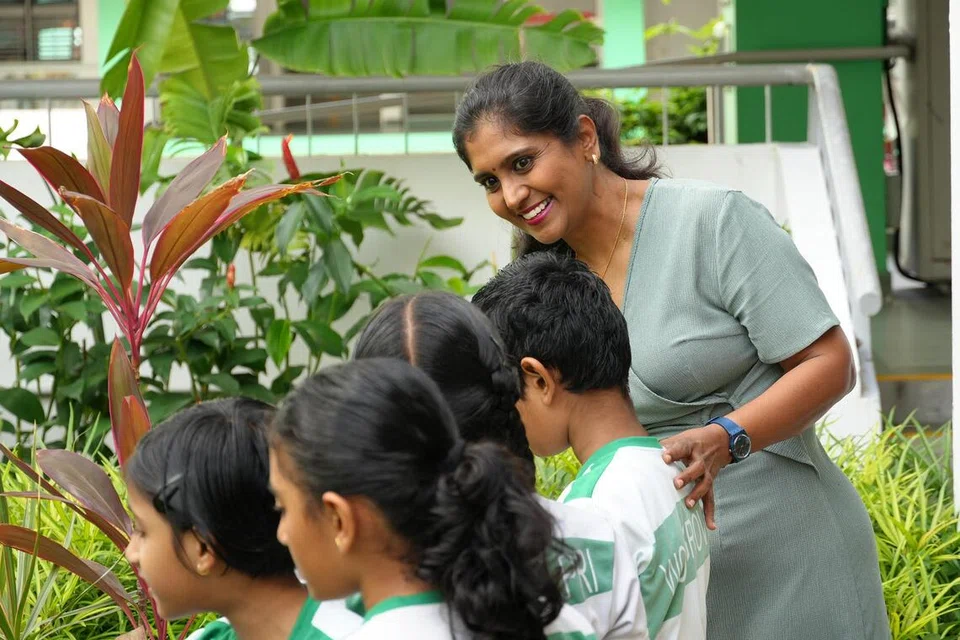

If you look closely, classrooms in Singapore feel different now.
On weekends and during holidays, you’ll find children rehearsing presentations rather than finishing stacks of homework.
Even on school days, the load seems lighter. More time is going into projects, discussions, and questions that invite curiosity. The rhythm of learning is shifting from drill to discovery.
Outside the classroom, commitments are no less intense. Co-curricular activities matter deeply. Even rain that cancels a training session can bring real disappointment. Schooling today extends beyond academics into identity, performance, and emotional investment.
This reflects broader shifts in our education system.
Recent moves by Education Minister Desmond Lee, including more hiring, administrative support, and AI tools, show a recognition that the system has been under strain.
Teachers are no longer just instructors. They are counsellors, organisers, facilitators and, increasingly, emotional anchors for their students.
These efforts are grounded in lived realities. Those in community work will recognise a leadership style that focuses as much on people as on systems, in small moments beyond policy headlines.
But this raises a deeper question: Can Singapore lighten the load on teachers without rethinking the meritocracy that created it?
For decades, teaching here has held a paradox. The profession is respected and well-compensated, yet persistently stretched.
Teachers don’t just deliver lessons. They sustain an entire ecosystem of expectations. Academic standards must be upheld. Student well-being must be safeguarded. Parents must be engaged. Policies must be implemented with speed.
Each demand is reasonable. Together, they are relentless. The result is invisible labour, small, often unrecognised tasks outside formal teaching but essential to the system.
A teacher today mediates not just knowledge, but anxiety of students navigating competition, of parents managing aspirations, and of a society that ties outcomes closely to opportunity.
The latest reforms try to redistribute this labour. More teachers can reduce class loads. Administrative support can ease clerical work. AI can streamline planning and feedback. These are necessary steps, but they operate at the level of efficiency.
What remains is the density of expectations. In a high-performing system, every gain in efficiency is absorbed by new demands.
Time saved on administration goes to more customised teaching. Smaller classes invite deeper pastoral care. AI tools raise expectations for even more differentiation.
The system doesn’t become lighter. It becomes more intricate. This isn’t a failure of policy. It’s a feature of meritocracy. A system built on continual optimisation adds layers rather than removing them. The teacher becomes the point where all ambitions converge.
There is also a cultural dimension that policy alone cannot shift. Singapore’s success rests on a powerful compact: Effort will be rewarded, and institutions will respond.
This builds trust, but also pressure. Parents expect attentiveness. Schools expect adaptability. Students internalise performance.
Teachers, at this intersection, carry the weight.
A truly supportive environment isn’t just about shifting tasks. It means being clear about what teachers should not be expected to do.
But that is hard. If teachers do less, expectations must also ease. That means fewer demands, fewer initiatives, and fewer layers of accountability. It is difficult in a system recognised for doing more, and doing it well.
Singapore has long excelled at solving what can be measured: Class size, staffing ratios, administrative hours. The harder challenge is what cannot be measured, the cumulative weight of expectation and the quiet erosion of professional boundaries.
Perhaps, on Teachers’ Day, the most meaningful question is not simply how we can support teachers better.
It is whether Singapore is ready to imagine a different kind of excellence- one that asks less of our teachers, and perhaps, in the process, asks a little less of everyone.