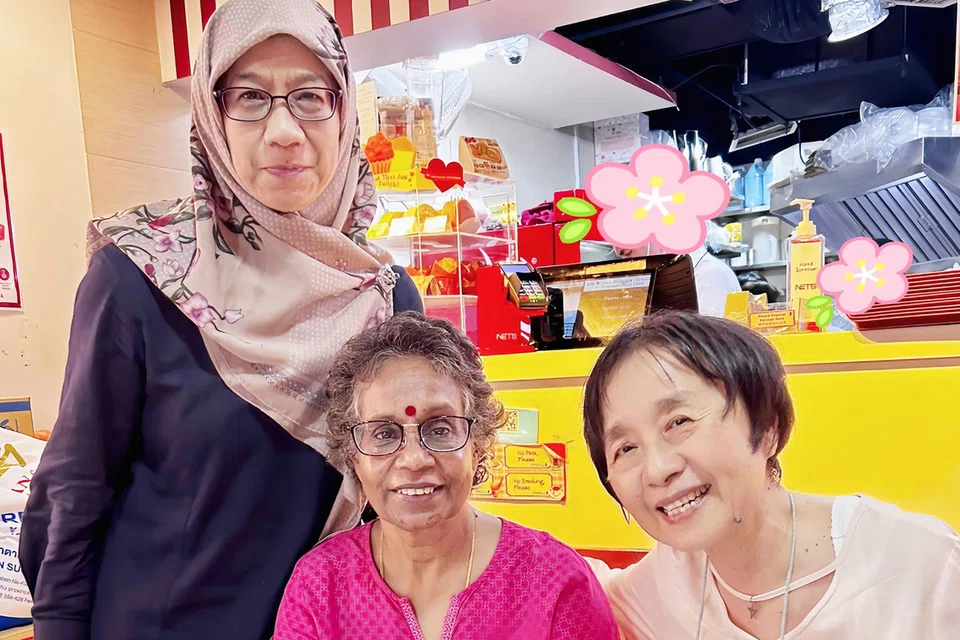
When Nanyang University admitted its first English-medium students in 1975, Ms Jensrani Thanabal became one of its pioneering Tamil undergraduates. More than 50 years later, the retired educator credits those four years with shaping not only her teaching career but also her lifelong commitment to racial harmony.
Children’s author and retired history teacher Jensrani, 70, who spent 35 years in Singapore’s education service, says she was fortunate to have grown up in Singapore’s kampong days where Chinese families in her quarters could fluently speak Tamil and Indians in Chinese kampongs could speak Cantonese and Hokkien.
With multiculturalism a cornerstone of her upbringing, her university experience deepened that appreciation by allowing her to live and learn alongside students from different backgrounds.
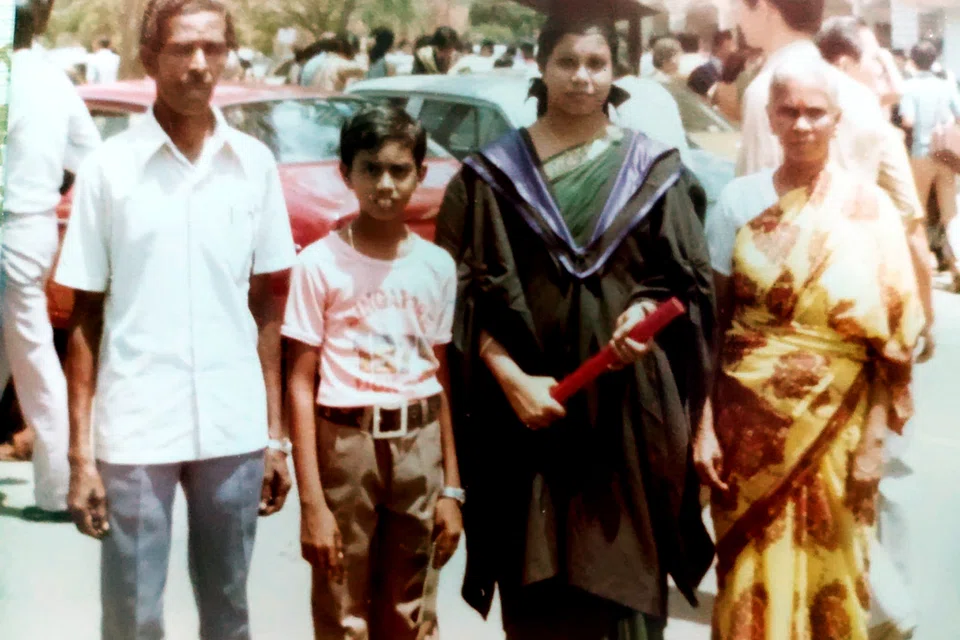
When she first got her offer to study for a degree in Government, Public Administration and History (Honours) at Nanyang University, or Nantah as it was often called, she couldn’t believe it. She says: “At that time, I didn’t know Nantah would be offering English-medium lessons, so I was confused. It was my father who told me that from that year on, the university was offering English medium.”
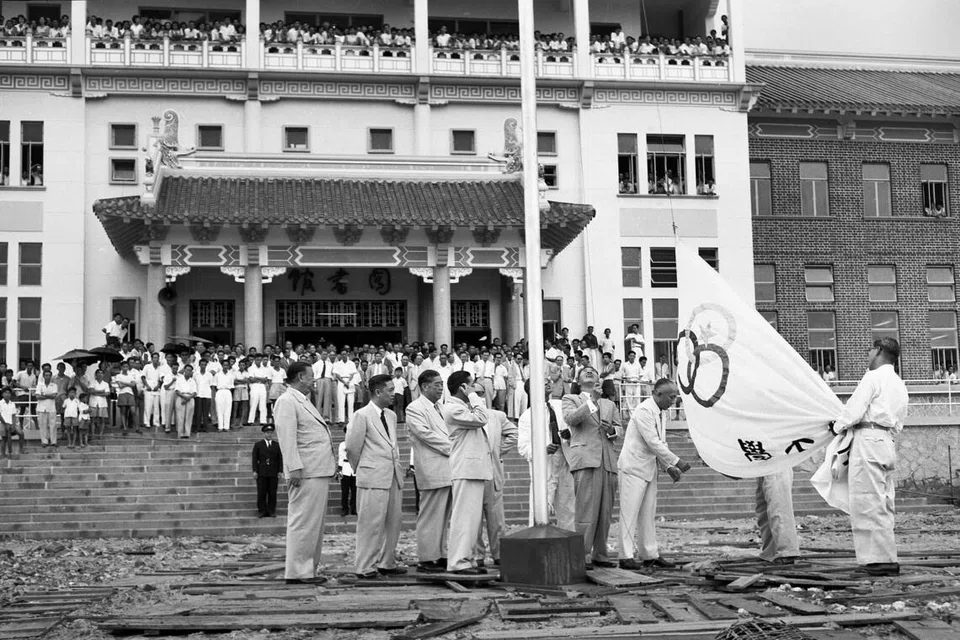
She still vividly remembers arriving on campus with her father to enrol. She says: “Looking at the traditional Chinese-style buildings, each with its own story of Chinese heritage, it felt like I had entered China.” With that awe, she embarked on her educational journey of four years.
Having studied previously in English, Ms Jensrani adapted more easily than many of her classmates, most of whom had come from Chinese-medium schools. Along with her, there were five other Indian students and three Malay students.
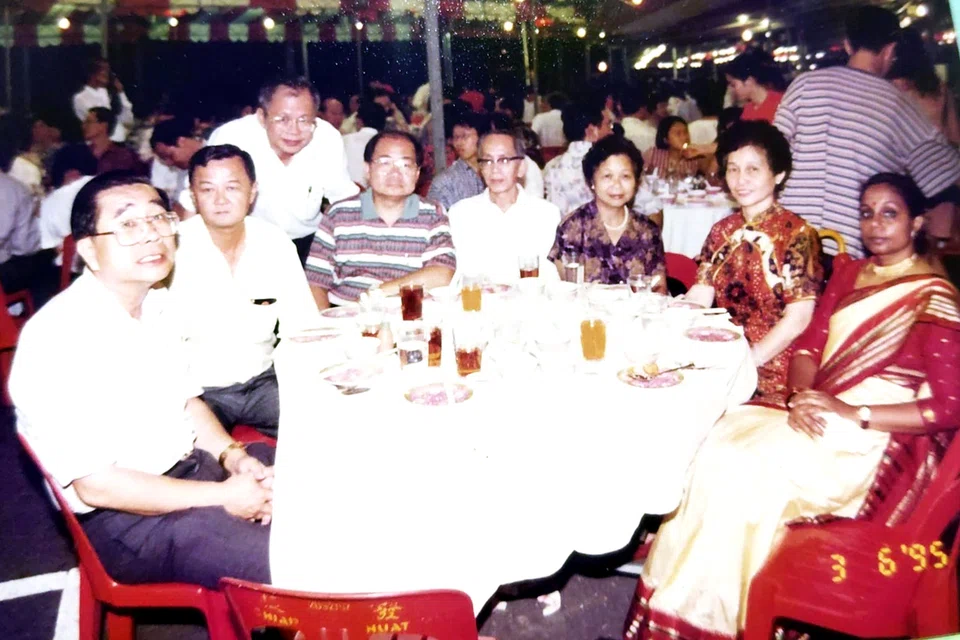
Ms Jensrani recalls: “Some teachers taught the classes fully in English while other teachers would teach first in English then at the end, with our permission, re-explain in Chinese. The Chinese students were very hardworking. Some students even borrowed my English notes to study. Many went on to become teachers.”
She also formally learnt Mandarin at the university. She says: “Mandarin never felt like a foreign language to me. Although I can’t quite speak it fluently, I can understand it. I can understand some Chinese language movies even without subtitles.”
She fondly recalls the days students would be scattered outside the library in the evenings studying. That was a way for her to reconnect with friends after different lessons throughout the day.
Like many of her university mates, she stayed in the campus hostel 5 days a week to study. Her dishes like mee goreng, mee hoon, rasam and sardine, intrigued curious hostel neighbours, who would frequently come over to taste it. In turn, she also tried Chinese and Malay food and even attended a Hari Raya celebration at her university mate’s house.
She says: “One particularly memorable moment was when my friend Jesvinder Kaur taught me to make French Toast. I returned home and taught my family. Catching the aroma, my neighbors also learnt from me how to make it. Another friend, Nina Sachdev, who later became my colleague at Dunearn Secondary, would share her chapatis and chole with others. Weekly once, my parents would come down to the university to bring me some tasty home-cooked food.”
Although graduation took them in different directions, the values learnt stayed with Ms Jensrani. She says: “As a teacher, I would always ensure that I treat my students equally regardless of their race.” At Fuhua Secondary School, as part of the National Education committee, she was twice tasked with organizing Racial Harmony Day activities. One year, the students recited the National Pledge in different languages weekly. Another time, the class with the most students wearing traditional attire was rewarded. She recalls: “Some students would lend other students their traditional wear. I myself would wear a Baju Kurung and go to school.”
As a children’s book writer, Ms Jensrani takes it upon herself to emphasize racial harmony in her books as well. She says: “I ensure that there are characters of different races in my books and that they show compassion toward one another, in my children’s books such as ‘Ramuvum Rockiyum’ and ‘Paatiyin Visithira Thottam’.” Even in her first Tamil children’s novel ‘Dragonai Thedi’ selected for the Beyond Words initiative by the Singapore Book Council, China is mentioned from a historical perspective while the main character is Tamil.
For Ms Jensrani, racial harmony is not simply something to be taught during a school celebration – it is a value that must be lived every day. She says: “I have always told my children and grandchildren that they must have friends from other races.” Seeing her grandchildren proudly wearing Chinese and Malay traditional attire during Racial Harmony Day reminds her that the lessons she learnt half a century ago at Nantah are now being passed on to a new generation.