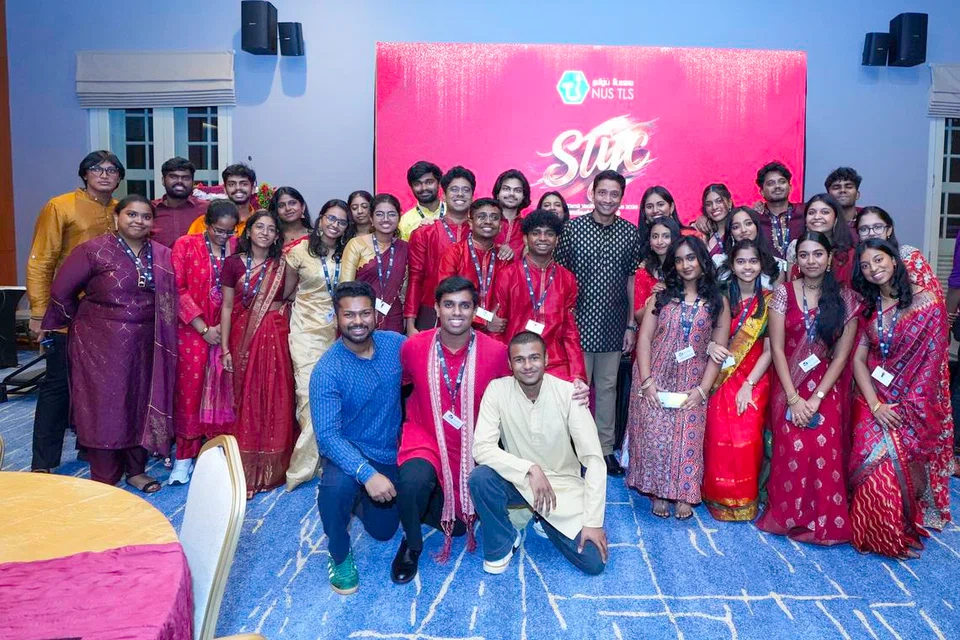

The local Indian community rests in capable hands with a strong foundation of past and present leaders, and even greater milestones can be reached if everyone dreams big together, said Minister of State for Culture, Community and Youth, and Manpower Mr Dinesh Vasu Dash.
He was speaking at the final showcase of the Singapore Tamil Youth Conference (STYC) 2026 held on July 4 at the Asian Civilisations Museum.
Organised by the National University of Singapore Tamil Language Society (NUS TLS) in collaboration with Tamil Murasu, SINDA, Narpani Pearavai Youth and the Indian Engagement and Development Committee (INEI), the conference brought together youths and community leaders to discuss the development and future of the local Indian community.
It also marked the first large-scale youth-focused conference organised after the newly formed INEI’s inaugural dialogue held on April 25 this year.
Encouraging young people to chart their own paths, Mr Dinesh urged them not to measure success against societal expectations or peer pressure.
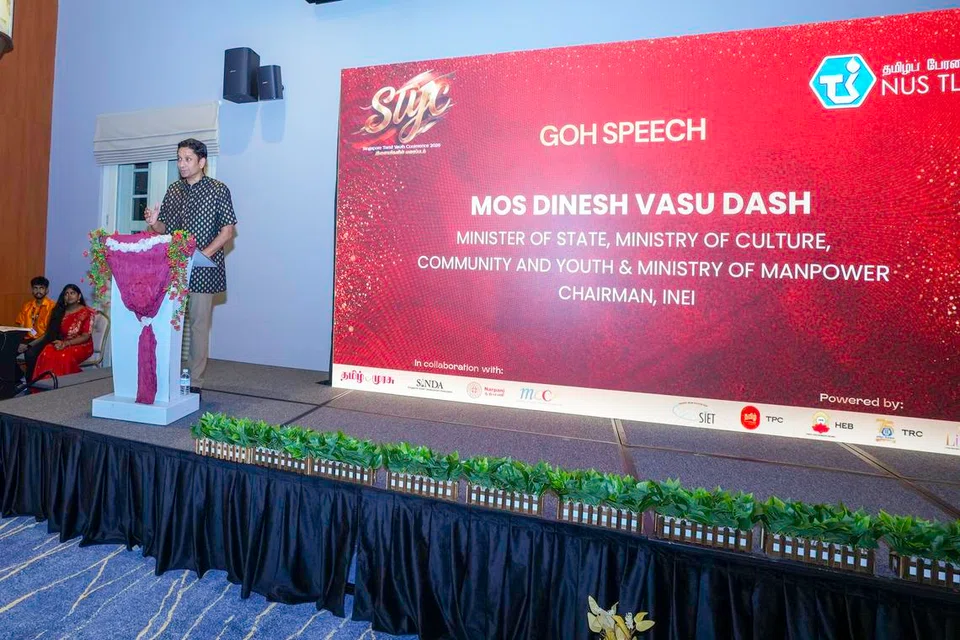
“Individuals should define what success means to them and set their own expectations,” he said. He also cautioned against comparing themselves with others, particularly when it comes to careers, stressing that Singapore’s job market continues to offer strong opportunities for locals despite growing concerns about artificial intelligence replacing jobs.
Drawing on his own experience, Mr Dinesh recalled participating as the lighting crew for NUS TLS’ cultural production Sangae Muzhangu in 1994.
As the production approaches its 40th anniversary, he asked the current committee to think beyond NUS and transform it into a national cultural platform involving universities across Singapore, adding that both the Government and the community would be willing to support such efforts.
Among those present at the conference were West Coast-Jurong West GRC MP Dr Hamid Razak, SINDA chief executive officer Mr Anbarasu Rajendran, Narpani Pearavai chairman Mr Ravindren Ganasen, Tamil Murasu editor Mr T. Raja Segar, and leaders from various community organisations.
The conference also marked the finale of Tamil Murasu’s 90th anniversary celebrations that started on July 6, 2025.
Speaking at the event, Mr Raja Segar reflected on the newspaper’s journey alongside the community and said its next chapter would increasingly be shaped by the younger generation.
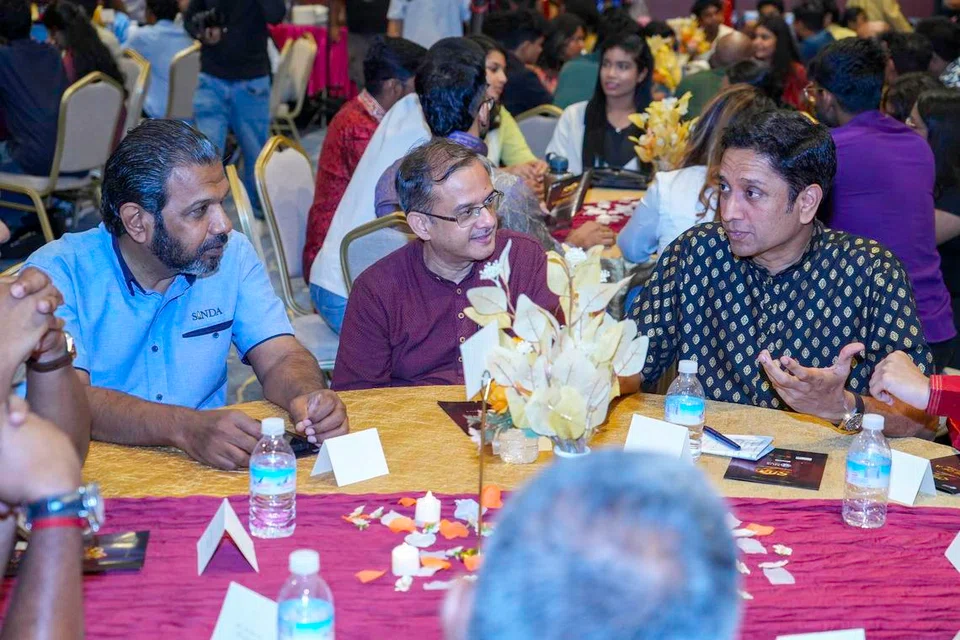
He also urged senior community leaders to place their trust in young people, saying leadership responsibilities should be handed over with confidence. While setbacks are inevitable, he added that experienced leaders should continue to guide and support the next generation as they grow into their roles.
NUS TLS President M. Mohanan stressed that the evening should be the beginning of meaningful change rather than the end of a conversation. “This conference cannot end with just findings. It cannot end with speeches. It cannot end with a nice report or manifesto. It must lead to action,” he said.
Addressing the society’s legacy, he noted that the organisation’s longevity is secondary to its ongoing impact. “The true achievement is that NUS TLS remains vibrant, relevant, and forward-looking. Fifty years on, we are still inspiring young people to lead, to serve, and to make a meaningful difference to the community,” he said.
In line with this commitment, the event featured the presentation of the NUS TLS x SIET Bursary Awards. Jointly presented by the Singapore Indian Education Trust, it granted S$1,500 each to five students selected for their academic commitment and active community involvement.
Decoding the Pulse of Singaporean Indian Youths
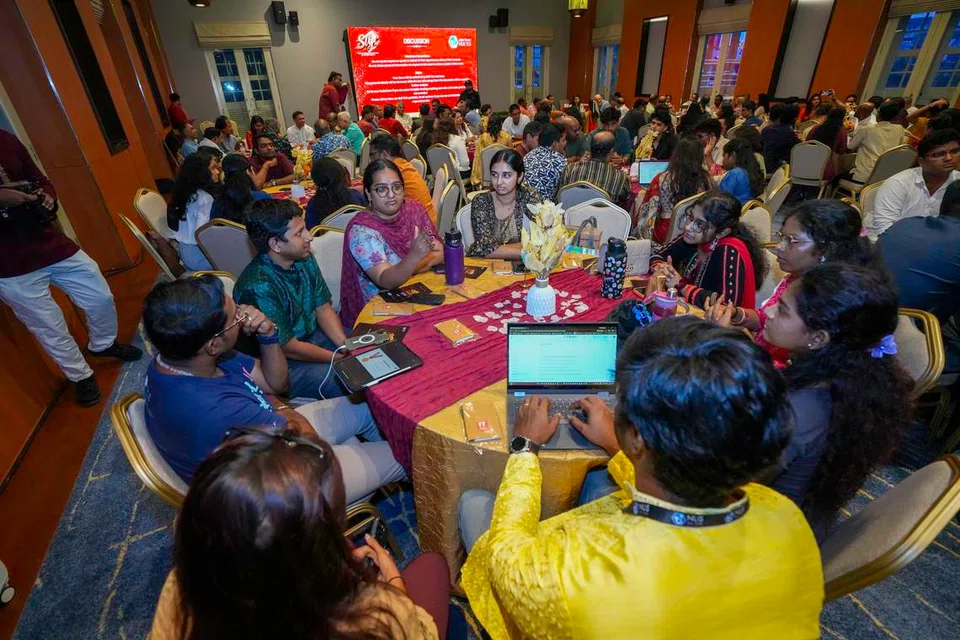
A central component of STYC 2026 was the presentation of findings from a six-month study conducted by the NUS TLS committee, which engaged over 500 members of the Indian community through surveys and focus group discussions. The presentation addressed key topics such as youth aspirations, mental wellness, arts and culture, and community leadership succession.
Youth Aspirations
The study revealed a strong focus on financial security among young Singaporean Indians, heavily influenced by the high cost of living. A significant 65% of surveyed youths associated success with anxiety over wealth, noting that studies, work, and uncertainty about the future are their top sources of stress. For many lower-income youths, success is defined by their ability to support their parents’ retirement and fund their siblings’ education. Focus group participants cited an “Access Gap” as a major hurdle, noting that establishing professional connections and social capital is difficult, and those without industry contacts are heavily disadvantaged.
Furthermore, communal norms continue to favor traditional career paths. Only 31% of youths felt actively encouraged to pursue non-conventional fields like the arts or humanities.
Mental Wellness
When examining mental wellness, the data showed that early adulthood brings severe “performance overload”. About 83% of youths reported experiencing this overload, juggling multiple expectations simultaneously. Compounding this is an external “timeline pressure”, with youths feeling forced to align major life decisions, such as career progression and marriage, by the age of 25. Studies and work were cited as the primary stressors.
While awareness of mental health resources is high, an “expression gap” remains. Half of the respondents rated community stigma around mental health as high, explaining that fear of judgment or appearing weak prevents them from seeking help. One in four respondents noted that their parents score low on understanding the importance of discussing mental wellness.
It was also found that support beyond school is limited, leaving many youths without accessible mental health resources after entering the workforce.
Arts and Culture
The presentation also explored youth engagement in Tamil arts and culture. Classical arts like Bharatanatyam are widely recognised, while theatre remains popular among contemporary forms. Social circles play a significant role in sustaining interest, with 53% of youths participating because their friends are involved.
The NUS TLS committee members identified a ‘Secondary School Cliff’, where engagement peaks during secondary school due to highly accessible, school-hosted clubs and competitions. However, participation drops sharply at the tertiary level, where joining cultural organisations requires independent self-sourcing and extra effort. Additionally, youths with lower Tamil language proficiency reported feeling intimidated, which acts as a barrier to joining cultural groups.
Community Leadership Succession
Addressing community leadership, the findings indicated that youths are not apathetic about serving the community, but their preferred model of participation has shifted. Traditional organisations rely on long-term committee commitments, whereas modern youths favour ad-hoc, flexible, and project-based volunteering.
Approximately 35% of respondents cited time constraints and work priorities as main barriers to sustained leadership roles. Youths also reported a lack of clear succession pathways connecting university youth clubs to parent organisations, causing groups to operate in silos.
To adapt to changing mindsets, the STYC 2026 committee proposed a tiered engagement model designed to offer youths multiple entry points based on their availability, ranging from low-commitment, one-off event support to joining main planning committees and shaping future organisational direction.