Rediscovering the magic of Urdu poetry
Singapore, long celebrated for its multicultural arts scene, is witnessing an unexpected cultural revival: Urdu poetry and shayari (verse often known for its romantic and emotional themes) gatherings.
While cities such as Dubai have hosted mushairas (an evening social gathering at which Urdu poetry is read) since the 1990s, Singapore is only now seeing a notable uptick, with at least four events held this year alone.
From Sufi singing to ghazals, qawwalis to storytelling, South Asian literary arts are finding new, enthusiastic audiences – many of whom are experiencing shayari for the first time.
Two recent events illustrate this growing momentum: “Rumaaniyat – Celebrating the Romance of Poetry”, held on Nov 15, and the upcoming “Shayari Ka Adda” on Dec 7. Both have drawn overwhelming interest, hinting that shayari may be carving out a permanent space in Singapore’s cultural calendar.
In a fast-paced, high-pressure urban environment, audiences say the appeal lies in shayari’s emotional depth and quiet intimacy.
Unlike music concerts or Bollywood shows, mushairas rely solely on the power of words – no instruments, lights, or theatrics.
“Urdu poetry is felt poetry,” says event organiser Udai Bajaj, who is bringing poets from India for his Dec 7 event at the Singapore Swimming Club. “It connects the listener with their inner world. Once people experience that, they want to return again and again.”
For Mr Bajaj, shayari offers a counterbalance to modern anxieties. “Poetry gives strength – especially against loneliness, rejection, or stress. The great Urdu poets always spoke of universal love and humanity. That message is timeless.”
His audience reflects that breadth. While many attendees come from the South Asian expatriate community, a surprising number are newcomers simply eager to explore a different art form. Some will even be travelling from overseas to attend.
Mr Bajaj, who has lived in Singapore for a decade, says he was motivated by friends who often enjoyed shayari with him.
“Singapore is conveniently located, and poets love visiting,” he said. His platform, Shayari Ka Adda, is not a commercial venture. “I’m doing this out of love. Poetry doesn’t follow logic – I just want it to touch as many people as possible.”
His upcoming event will feature renowned poets such as Madan Mohan, Azhar Iqbal, Mehshar Afridi, Charagh Sharma, Tehzeeb Hafi, and Rajesh Reddy – voices representing classical and modern Urdu verse. The evening is not positioned as entertainment, but as immersion: an adda (a place where people gather for conversation) where “poetry is lived and felt”.
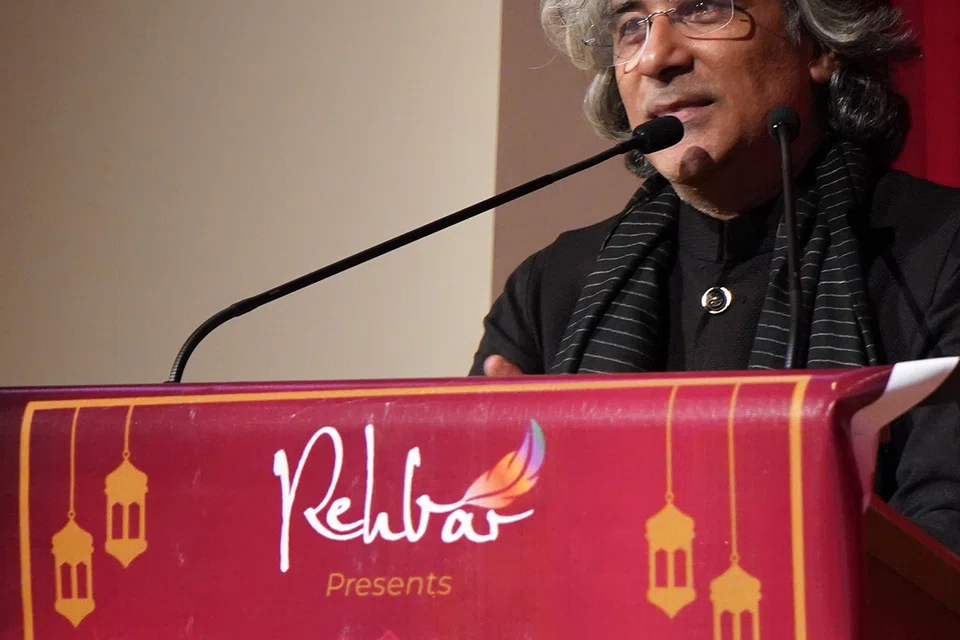
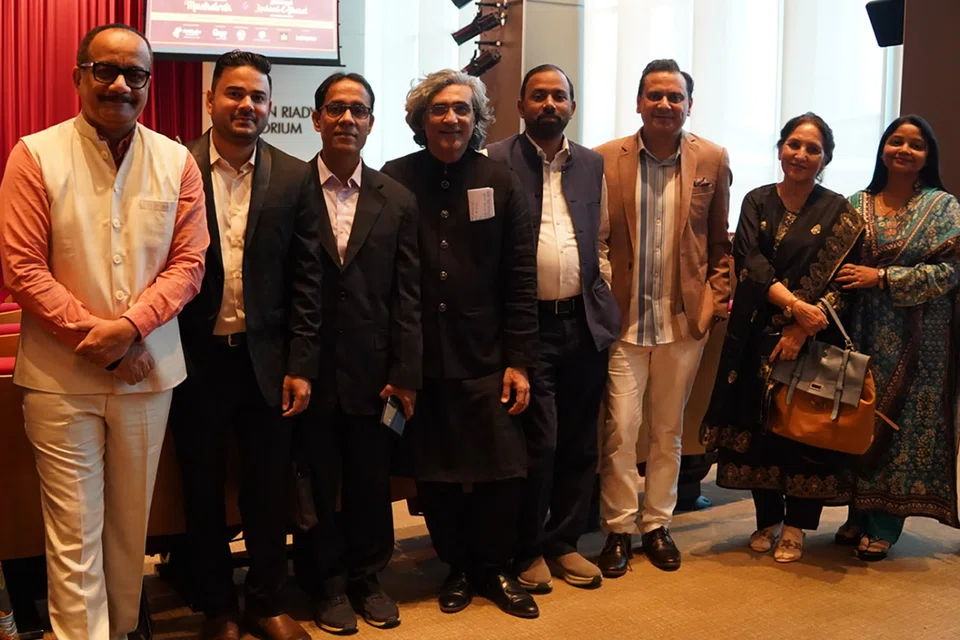
On Nov 15, poet and founder of Rehbar, Sujit “Haasil” Sahgal, hosted Rumaaniyat at NTUC Auditorium – a nearly sold-out evening of dastangoi (an ancient Urdu storytelling art form that combines oral narration with dramatic performance), ghazals, and an elegant mushaira featuring poets from India, Pakistan, and the wider diaspora.
For a “purist” recital with no music, the response astonished even him. “We sold over 300 tickets. The most expensive VIP seats were fully sold out,” Mr Sujit said. “For three hours, there was constant applause, standing ovations, and messages poured in till 2am the next day. People now want us to do it every month.”
Both organisers believe shayari’s popularity is part of a wider pattern. “People are bored of predictable Bollywood shows,” Mr Sujit said. “Original, non-filmy events feel refreshing. When audiences don’t know what to expect from each poet, the curiosity is electric.”
He pointed out that Singapore has a 25-year history of hosting ghazal and qawwali icons – from Jagjit Singh to Abida Parveen, Rahat Fateh Ali Khan, Gulzar, and Javed Akhtar. What’s new is the appetite for poetry-led events rather than music-driven ones.
In India, the trend is already booming. “For the past 15 years, demand has exploded, especially among youth,” Mr Sujit noted. “One reel gets 20 million views. A single live poetry event can draw 300,000 people. Colleges everywhere are hosting mushairas.”
Singapore, he believes, is on the cusp of its own movement. “Rumaaniyat has sparked what I call the Starbucks effect – once one event takes off, more will appear, and the pie only grows.”
Singapore-based Hindi author Vinod Dubey says poetry gatherings offer emotional relief. “They provide intellectual upliftment. It is therapeutic and soothing – a break from the corporate grind. Such sessions advocate humanity.”
Ms Mamta Mandal, founder of Global Hindi Foundation, calls the events “a privilege” in Singapore. “They give a sense of cultural connection. The market is nascent, but growing.”
Both Mr Udai and Mr Sujit view poetry as a healing force. Mr Sujit’s non-profit Rehbar hosts workshops in ghazal-writing and appreciation, residential retreats, and mushairas in places without a poetry tradition.
“Poetry brings out the goodness in people,” he said. “It helps them process their life’s ups and downs.”
Mr Udai agrees that shayari offers rare introspection: “The listener identifies his own life in the poetry. It transports you into a world inside your heart.”
With two major events within one month – and more planned – shayari appears poised to join Singapore’s expanding multicultural arts ecosystem.
“It’s been interesting to see our patrons accept newer concepts that are unique and have an element of poetry paired with music,” said Ms Anu Samtani, founder of events and entertainment company Action Replay. “We have had an overwhelming response from a varied age demographic who have given us positive feedback on our shows where poetry is the main feature.
“Main Pal Do Pal Ka Shayar Hoon, our show in April, was a sell-out and we have been constantly requested to bring it back to Singapore. At first, as an event promoter, it seems challenging to float different concepts, but we are confident the audiences are alleviating their tastes to such curated evenings that are simply unique.”
Whether fuelled by nostalgia, curiosity, or the search for emotional depth, Singapore’s audiences are embracing a centuries-old tradition and making it newly relevant.