
Arab and Indian merchants arrived in Singapore around the early 1800s, both drawn by its rise as a regional trading port. They traded alongside one another in the same districts, particularly around Arab Street in Kampong Glam.
The majority of these Arabic tradesmen were from the Hadhrami diaspora who descended from Hadhramaut in Yemen, a geographic region in the southern part of the Arabian Peninsula.
One of the first few settlers was the notable Alsagoff family, which established Alsagoff & Co in 1848 and maintained an import-export enterprise for commodities such as sago, spices, coconut, coffee, pineapple, shark fins, tobacco, honey, and dates.
As the family’s wealth and influence grew over the years, they hired a head chef who would later go on to found the iconic Islamic Restaurant in 1921. A bill collector at the time, Mr M. Abdul Rahiman chose to pursue his passion for food through entrepreneurship.
More than 100 years later, his grandson, Mr Kalilnoor Wahab, ensures that the restaurant still serves its acclaimed nasi biryani, faithfully prepared according to the original recipe his grandfather learned as a young man in Tamil Nadu.
Similar accounts of the Arab community’s relationship with Indian and other ethnic groups are documented in the coffee-table book, Arabs of Singapore: 200 Years On.
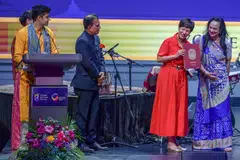
Published by the Arab Network @ Singapore (AN@S), the book was launched in November 2025 at an event officiated by President Tharman Shanmugaratnam.
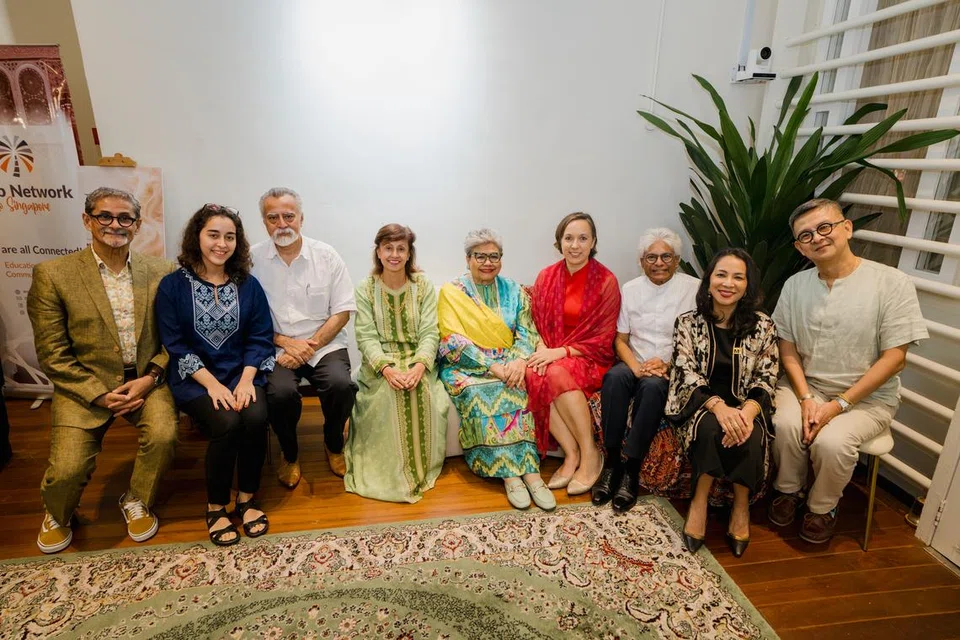
This was followed by an intimate gathering themed Threads of Time on May 28, where 25 members from the diplomatic, cultural, literary, and business communities participated in a panel discussion that continued the conversation beyond the pages of the book.
Also in attendance were the former Minister for the Environment and Minister-in-charge of Muslim Affairs Ahmad Mattar, and Senior Parliamentary Secretary for Education and National Development Syed Harun Alhabsyi.
It included an immersive, multisensory experience for the guests, who were treated to oud music, samosas and kopi halia (ginger coffee), the scent of Arabic bakhoor or incense, live dance performances by The Samrah Club, and more.
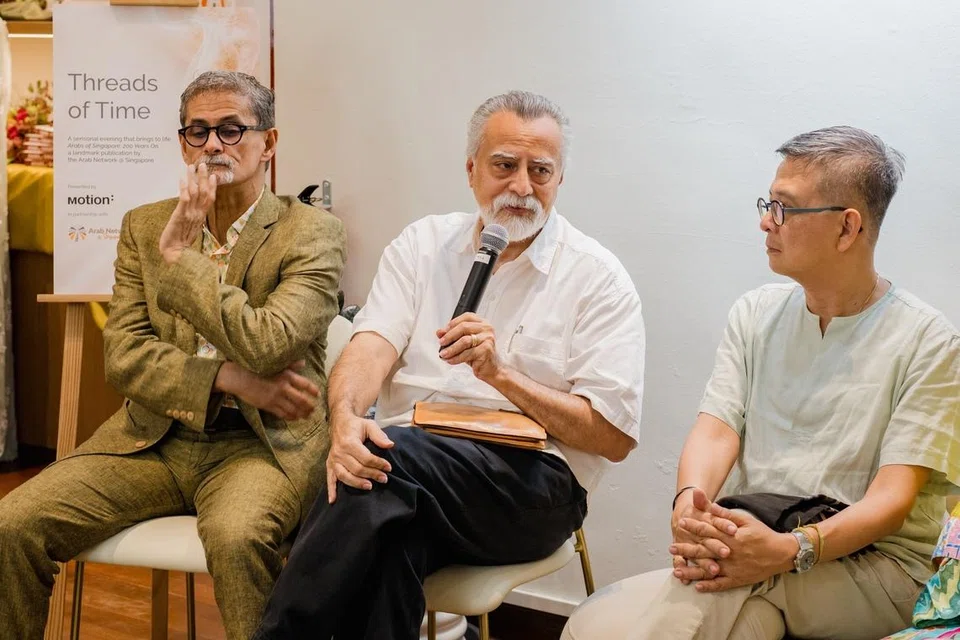
“Through scent, sound, taste and discourse, we wanted to show that the Arab story isn’t a distant chapter in a history book,” said Ms Juliana Mattar, 47, founder and CEO of Motion: For Impact, the creative agency that organised the event in collaboration with AN@S.
She is also featured in the book, which details the legacy of her patrilineal heritage. Her forefathers established the Matter Brothers Co. at North Bridge Road in the 1920s, specialising in textiles and pilgrim garments (ihram cloth, traditional headwear, and tarboosh) for the Muslim community.
Unwittingly, Ms Juliana’s first office space was located along the same road. “It was only when I had to recount my childhood history that I realised it was a full circle moment,” she added.
Another focal point of the publication and panel discussion was youth participation. Four of the book’s 14 chapters were written by members of the AN@S youth collective, noted the organisation’s president Khadijah Alattas.
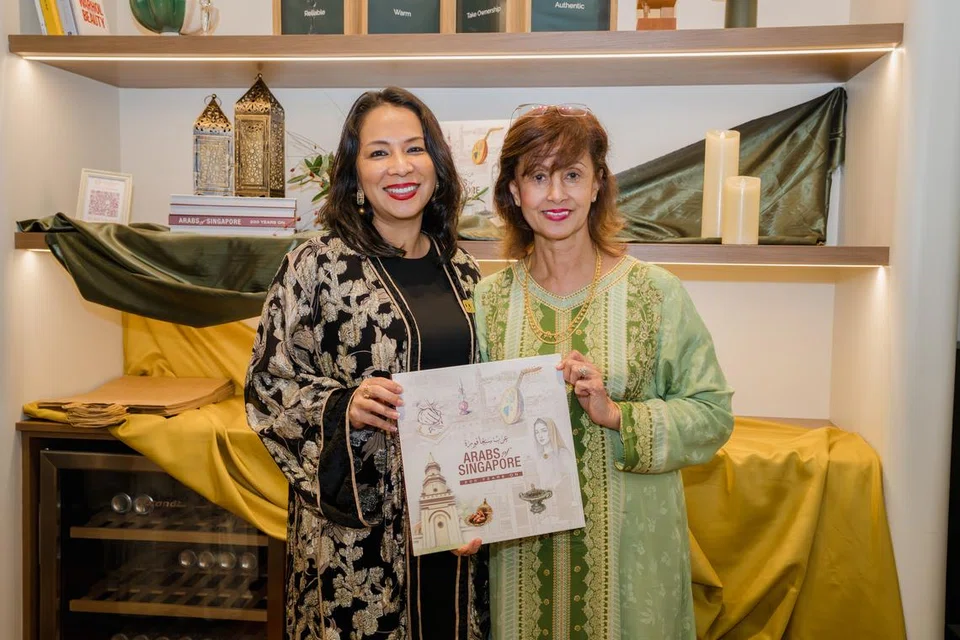
Ms Nahlah Alsree, 30, has been an AN@S youth volunteer since she graduated from the University of Arts London with a degree in graphic design eight years ago. She created a digital video that brought the book’s pages to life, which was screened at the event.
“There is a need for us to shout louder,” she explained. “It’s not that we are more proud than other cultures, but we, the Hadhramis, are a very, very tiny population in Southeast Asia, so we have to.”
Arabs of Singapore: 200 Years On is available for purchase at https://take.app/arabnetworksg