
An entrepreneur may start out alone, but then, they can never be alone.
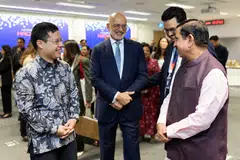
“They need someone who recognises the value of their contribution, the potential of their idea, and backs them when no one else will,” said Mr Jayant Chaudhary, India’s Minister of State for Skill Development and Entrepreneurship.
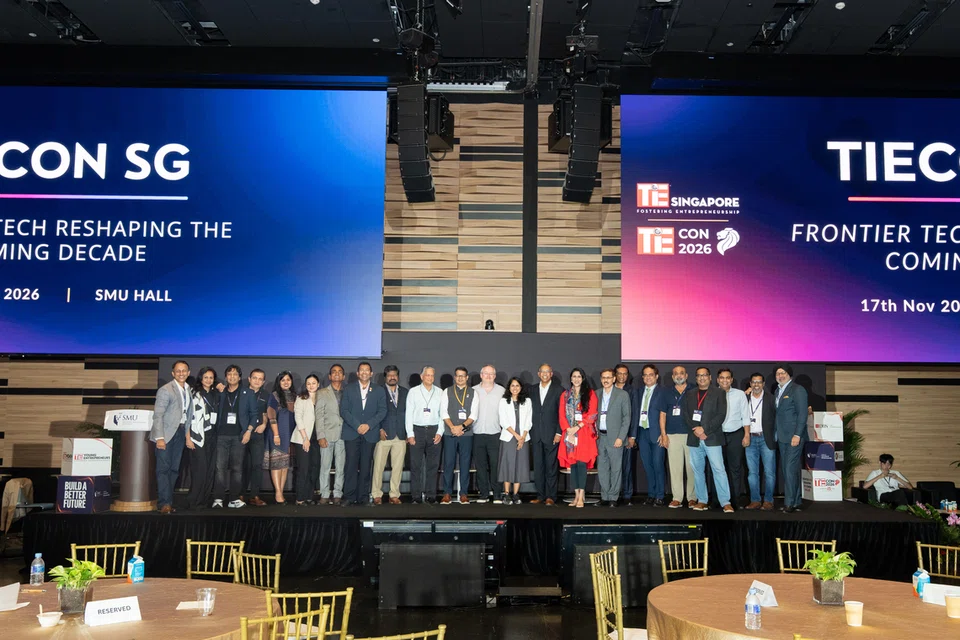
His remark was echoed by panellists and keynote speakers at TiEcon SG 2026 – a one-day conference held on Nov 17 at Singapore Management University (SMU) to commemorate the 25th anniversary of TiE Singapore, the local chapter of the global entrepreneurs’ network.
More than 350 founders, investors and business leaders attended the event, which featured fireside chats, discussions and speeches on the impact of AI, the rise of solo entrepreneurs, early start-up challenges and emerging technologies.
Freshworks founder Girish Mathrubootham noted that AI is an accelerator. Where a Software as a Service (SaaS) system made work more automated in the past, AI-based software can do part or all of the work now – increasing the opportunities for monetisation.
This advent in technology has also lowered the barriers to entry and made one-man teams or solo entrepreneurship more viable. “What used to take 10 to 20 years to hit unicorn status, now takes five years or less,” said Mr Piyush Shah, co-founder of InMobi and Glance.
He also pointed to the rising wave of younger entrepreneurs such as Ms Khushi Mittal, 22, founder of Aspera Industries, which aims to manufacture autonomous, amphibious airplanes for the future, amongst other examples.
In a notable fireside chat with SMU Chairman Piyush Gupta and Aspire co-founder Andrea Baronchelli, Pine Labs chief executive Amrish Rau noted that good talent is an important factor in choosing where to base a start-up or company.
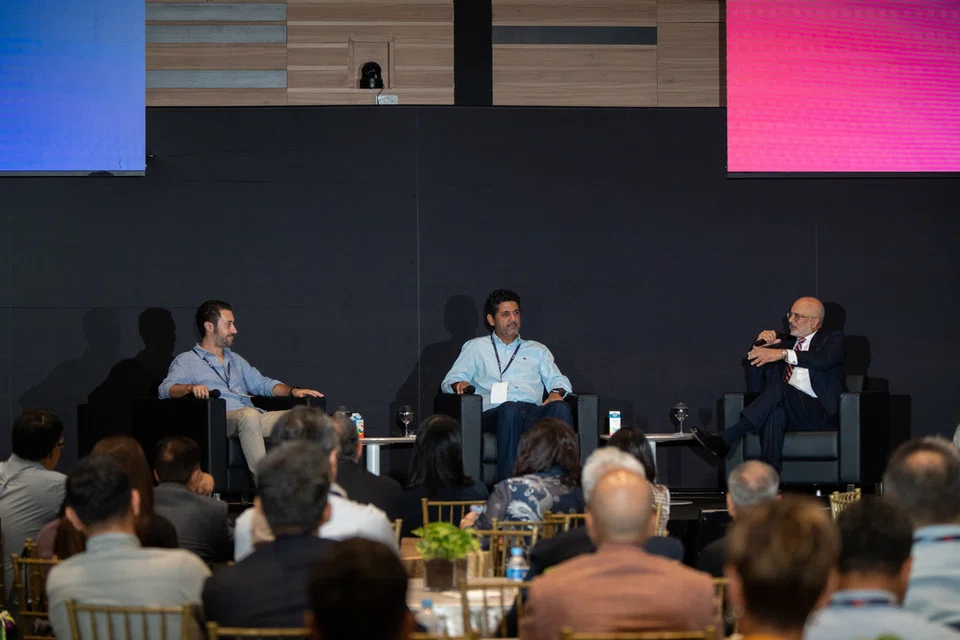
“Twenty-five to 30 years ago, Singapore and Hong Kong started to act as the Wall Street of the East. Great banking products were created, and some of the best talent from across Southeast Asia started moving to these cities,” Mr Amrish said.
“I think a similar trend is happening today with companies like ByteDance, Meta and OpenAI committing to bringing talent here (Singapore),” he added.
Getting funds is another hurdle for entrepreneurs, noted Mr Sneh Vaswani, co-founder of Miko and Inner Sky Labs.
“When we first started in 2015, deep-tech funding in India was scarcely available. The clear response I used to get from VCs (venture capitalists) was: when you raise your first invoice, come to us,” he explained.
This is no longer the case with the integration of academia and industry.
Professors from educational institutions are board members of new start-ups, and universities like the Indian Institute of Technology are working with fund-management companies to launch deep-tech funds, noted Minister Chaudhary.
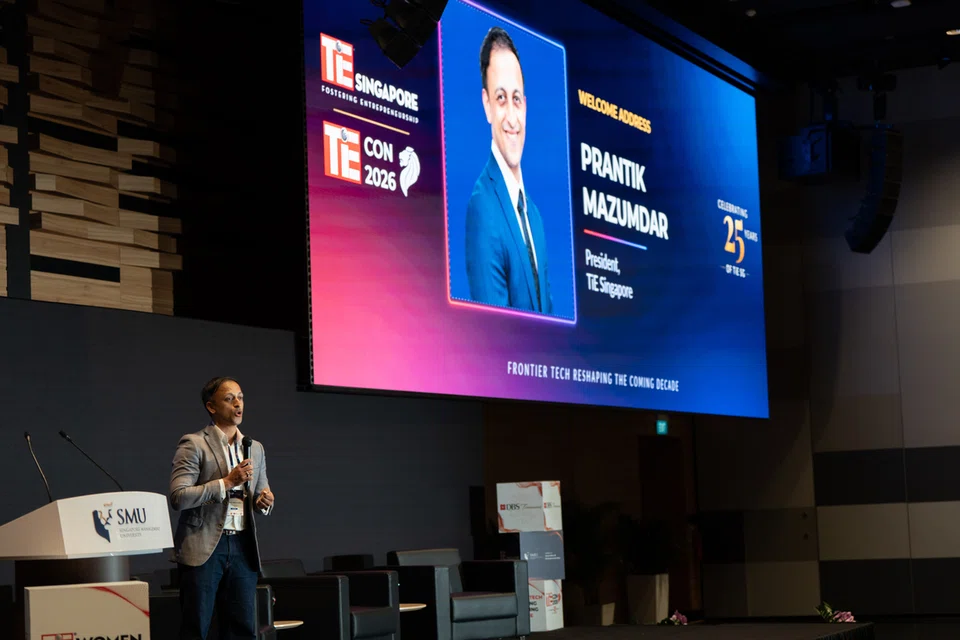
“With TiEcon 2026, we want to explore how we can harness the complementary strengths of Singapore and India to build the next generation of global technology giants from Asia,” said TiE Singapore president Prantik Mazumdar.
The conference ran alongside the Singapore-India Hackathon 2026 finals, which TiE Singapore has been a part of since the first edition in 2018.