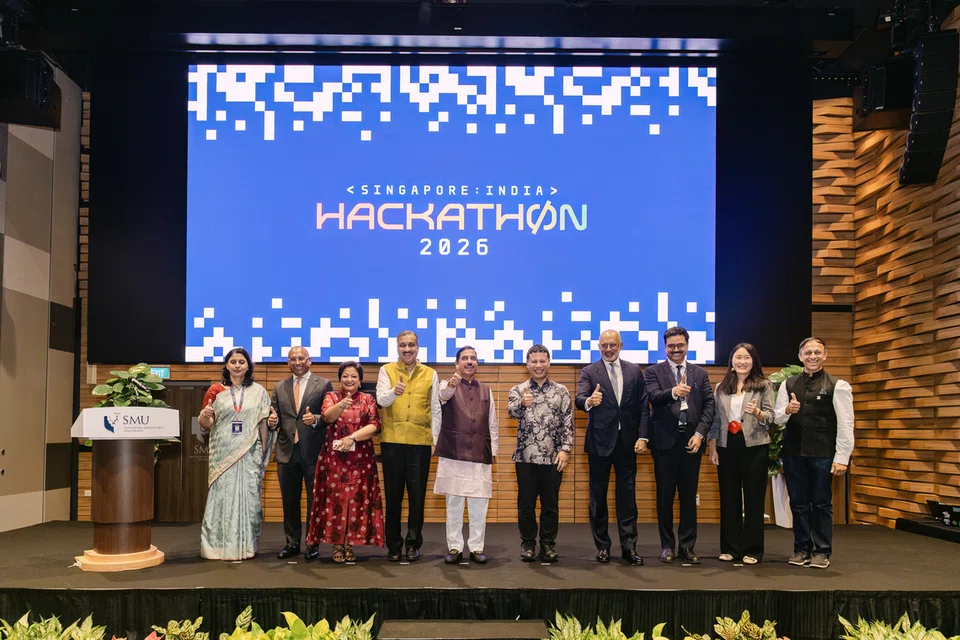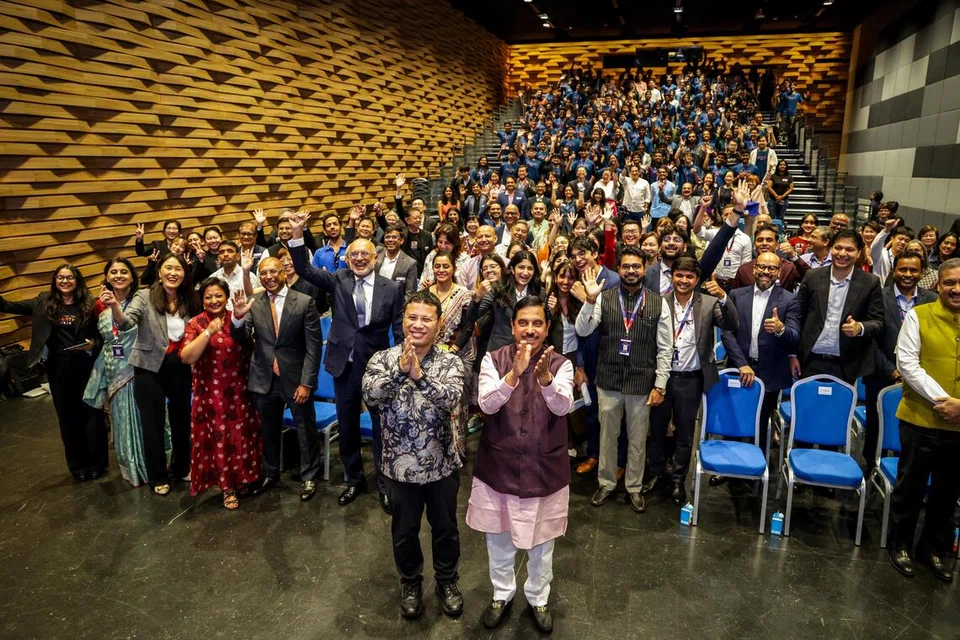
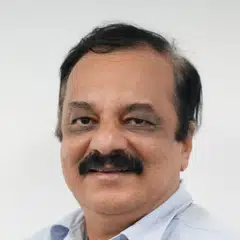
Singapore’s Minister for Education Desmond Lee and Indian Education Minister Pralhad Joshi jointly inaugurated the fourth edition of the Singapore-India Hackathon, bringing together 120 tertiary students from both countries to tackle real-world industry and societal challenges.
Themed “Build a Better Future”, the three-day hackathon is co-organised by SMU’s Institute of Innovation and Entrepreneurship (IIE), the All India Council for Technical Education (AICTE) and India’s Ministry of Education’s Innovation Cell, in collaboration with TiE Singapore.
First proposed in 2018 by Indian Prime Minister Narendra Modi to Singapore’s then-Prime Minister Lee Hsien Loong, the competition returns to Singapore after two editions in India.
Sixty students from each country, representing 55 higher education institutions, are working in 20 mixed-country teams during an intensive 36-hour innovation challenge, competing for S$88,000 in cash prizes.
At the opening, Mr Desmond emphasised the importance of cross-border collaboration, encouraging participants to embrace different perspectives and draw on one another’s strengths.
He noted that, while the competition lasts only three days, the friendships and professional networks established could become enduring bridges between Singapore and India.
He told the participants: “The next three days will be intense – your hackathon will be challenging, and you will take the time to know one another better. You will spend long hours understanding the pain points of your target audience. You will debate ideas, refine prototypes, and strengthen your solutions with your teammates and mentors. As you do so, listen to perspectives that are different from your own. Draw on each other’s strengths. Be prepared to question your assumptions, and above all, be ready to change course.
Mr Desmond added: “Good solutions are rarely developed in silos. They emerge through iteration, honest debate, and insights from people who see problems differently. Not every idea will work out. That is part of the process, as you learn, adapt and keep moving forward together.”
“This is especially important in an AI-charged world. As technology becomes more powerful, technical proficiency alone will not be enough. What will set you apart is your ability to exercise judgement, have wisdom, ask the right questions, and apply technology responsibly.”
Mr Joshi invited Singaporean universities to establish campuses in India and sought Singapore’s expertise in developing India’s proposed University Townships. He also proposed hosting the fifth edition of the hackathon in India in 2027.
The ministers subsequently discussed student and teacher exchanges, mutual recognition of qualifications and research collaboration in emerging technologies, including artificial intelligence, clean energy, fintech, and semiconductors.
Scholarships and deeper educational ties
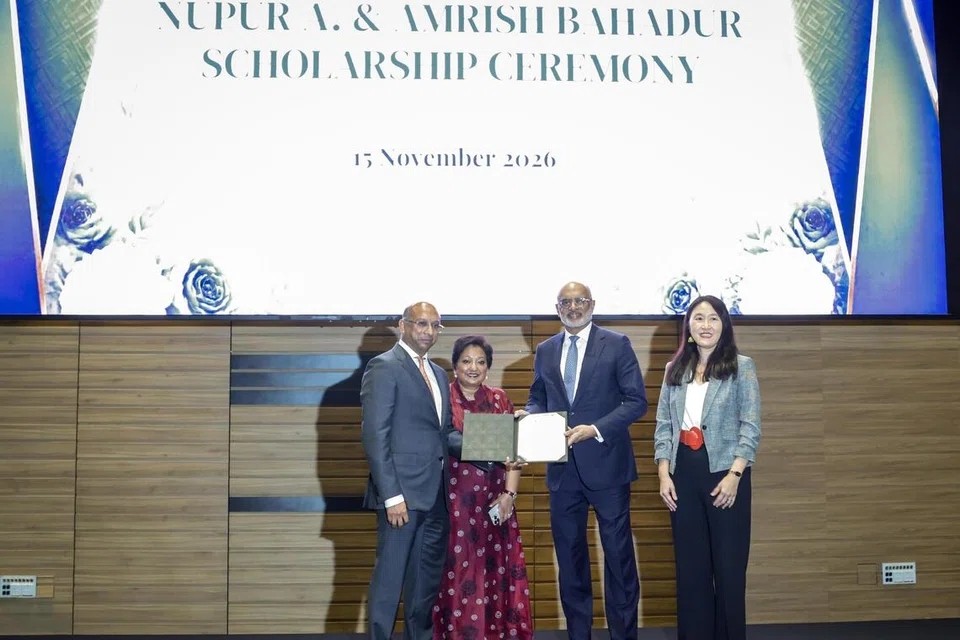
A significant announcement at the opening was the introduction of the Nupur & Amrish Bahadur Scholarship, made possible by a gift from the hackathon’s patrons, Nupur and Amrish Bahadur.
Open to participants of this year’s competition and the two previous editions, regardless of nationality, the scholarship will support four outstanding individuals pursuing postgraduate studies at SMU.
Eligible programmes include the Master of IT in Business, Master of Science in Business AI, and Master of Science in Entrepreneurship and Innovation.
“The SIH is a culmination of SMU’s efforts to deepen ties with India as we strive to equip Singapore students with a stronger understanding of India’s business environment and enterprise,” said Professor Sun Sun Lim, SMU’s Vice-President for Partnerships and Engagement.
She highlighted SMU’s business study missions to Mumbai, internships in Bengaluru, Chennai and Pune, and joint fintech courses with the Indian Institute of Management Ahmedabad.
SMU has also partnered with Bengaluru-based quantum technology company QpiAI to give researchers and students access to quantum hardware and cloud-based development tools.
“We supported the SIH because there is something powerful about bringing talented young people from both countries together to interact, learn from one another and solve problems,” said Mrs Bahadur.
Beyond the competition
Participants will gain direct access to more than 10 leading companies, including GIC, Singapore Airlines, Singtel and Temasek, through a dedicated talent networking session offering projects, internships, and career opportunities.
Promising ventures could receive further support through SMU IIE’s Business Innovations Generator, an equity-free incubator for early-stage start-ups.
The hackathon runs alongside TiE Singapore’s annual conference, TiECon 2026, featuring business leaders and entrepreneurs including SMU Chairman Piyush Gupta, InMobi co-founder Piyush Shah, Razorpay co-founder Shashank Kumar, Brahma AI founder Prabhu Narasimhan and Aspire co-founder Andrea Baronchelli.
TiE Singapore President Prantik Mazumdar said exposure to successful founders, investors and real market needs would help students develop industry understanding and relationships that could support future careers, ventures and partnerships.
Tackling real-world challenges
The competition features four tracks: Emerging Technologies, FinTech and InsurTech, Sustainability and Climate Action, and Social Innovation and Inclusive Development.
Challenges include using AI to improve enterprise sales, making climate-risk insurance more affordable, helping Indian smallholder farmers meet international buyers’ requirements and improving the wellbeing of disadvantaged seniors in both countries.
Judges include Tata Sons’ Head of Group Innovation Ravi Arora, former Securities and Exchange Board of India chairperson Madhabi Puri Buch and raiSE CEO Alfie Othman.
“When students work across disciplines, institutions and national boundaries, they encounter new ways of thinking and build an understanding of one another that can endure well beyond the Hackathon,” said AICTE Chairman Professor Yogesh Singh.
The winning teams across the four tracks will be announced at 6pm on Nov 17.