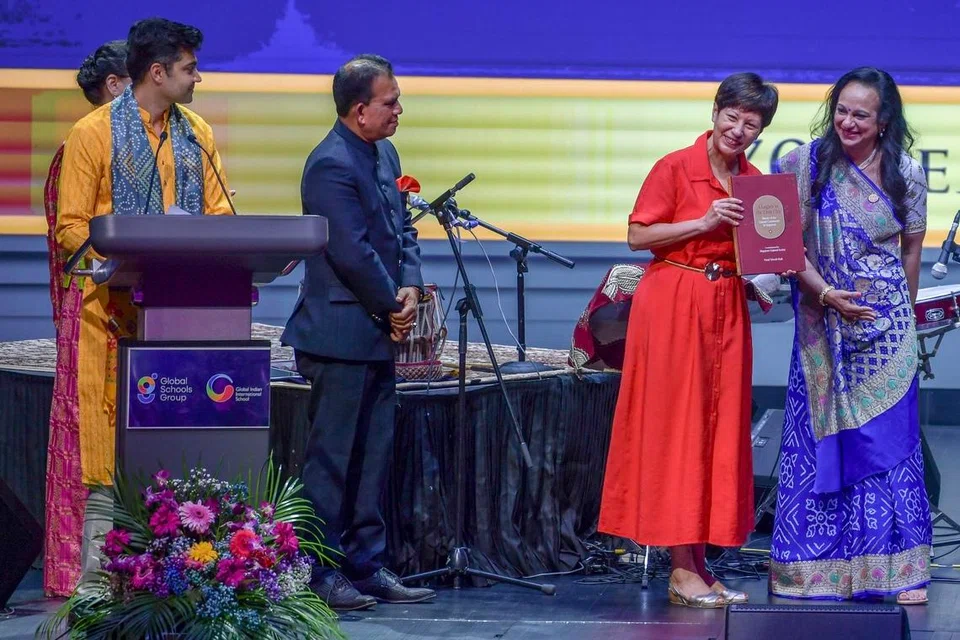

From the land of the Asiatic lion to the home of the merlion, the remarkable stories of migration, enterprise, and perseverance have been assiduously chronicled in a heritage book titled A Legacy in the Lion City: History of the Gujarati Community in Singapore.
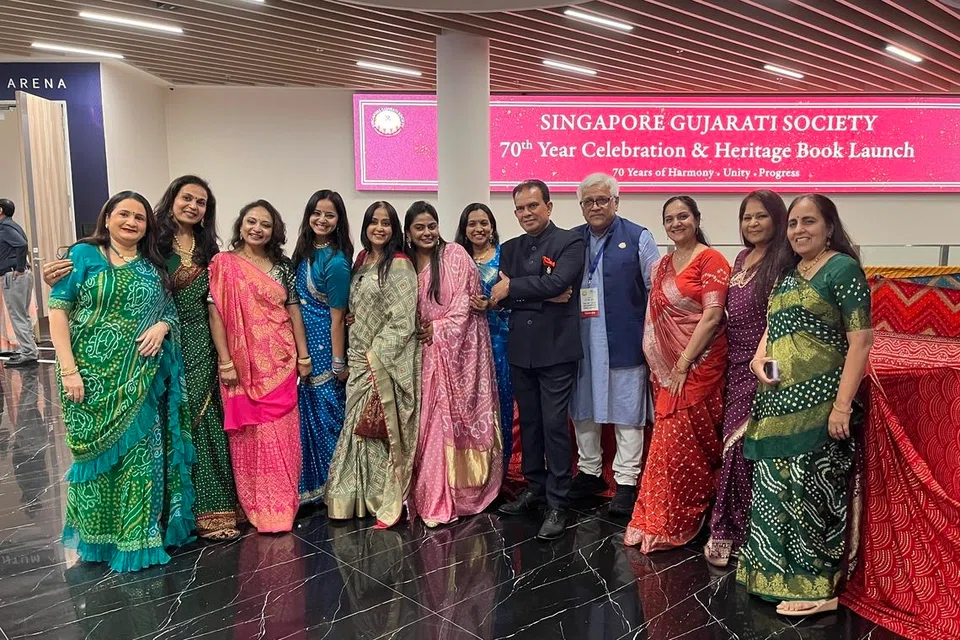
The book was officially launched at the 70th anniversary celebration event of the Singapore Gujarati Society (SGS), which was formally established in 1956. Held at the One World International School Digital Campus (Punggol) on Feb 28, the event drew around 700 attendees.
In her speech, SGS president Sharmila Patel explained how the first Gujarati settlers in Singapore arrived over a century ago via steamships, carrying their identity into a new land. “They came together to uphold traditions, and support one another,” she said.
“From this humble spirit of togetherness, the Singapore Gujarati Society was formed. Today, SGS is a vibrant society that embodies harmony, unity, progress, bringing together generations, and enriching Singapore’s multicultural fabric,” Ms Sharmila added.
In the spirit of giving back, SGS presented Community Chest Singapore with a cheque for S$15,071. The amount was deliberate so as to represent 70 years of the society and one dollar for good luck in the Indian cultural tradition.
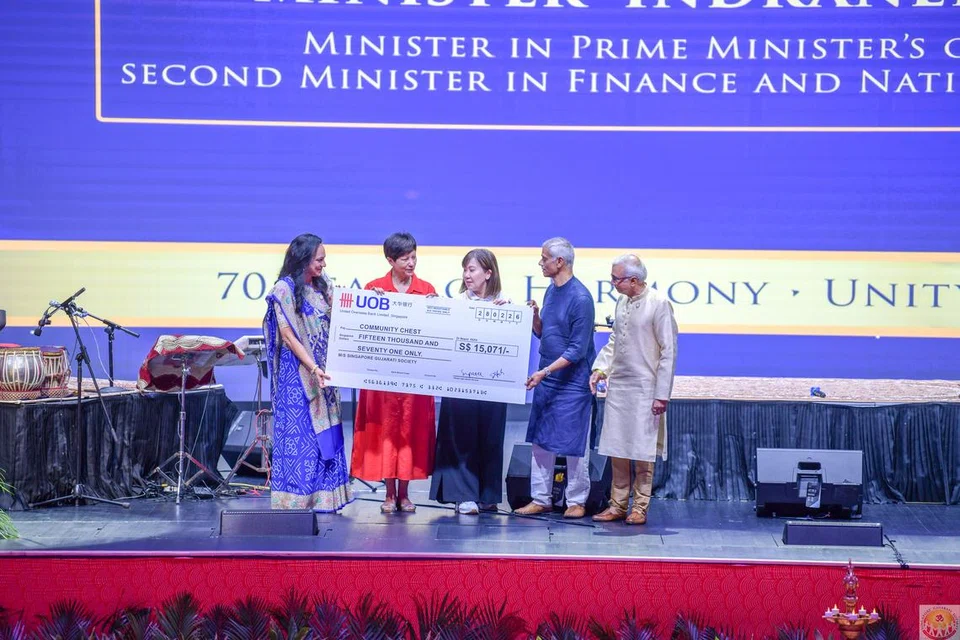
Minister in the Prime Minister’s Office, and Second Minister for Finance and National Development Indranee Rajah graced the occasion as the Guest of Honour.
“While early generations were closely associated with trade and commerce, many Singaporean Gujaratis today contribute across a wide range of value-adding fields, including banking, law, academia, research, entrepreneurship, and public service,” Ms Indranee said.
The minister also highlighted SGS’s important role in strengthening social cohesion through partnering with grassroots organisations, such as the Katong Community Centre, collaborations with organisations like the Singapore Indian Development Association (SINDA), and shared community events.
“This unity and resilience is thoughtfully captured in ‘A Legacy in the Lion City’. It reminds us that communities can remain rooted in their heritage while building bridges across cultures and contributing meaningfully to our shared national story,” Ms Indranee added.
Also in attendance were the Indian High Commissioner to Singapore Shilpak Ambule and the British High Commissioner to Singapore Nikesh Mehta, who is of Gujarati descent.
Approximately 200 people were interviewed for the heritage book by author and researcher Mdm Parul Trivedi-Shah. The entire endeavour took around 12 years to complete, and received the National Heritage Board’s Major Project Grant in 2023.
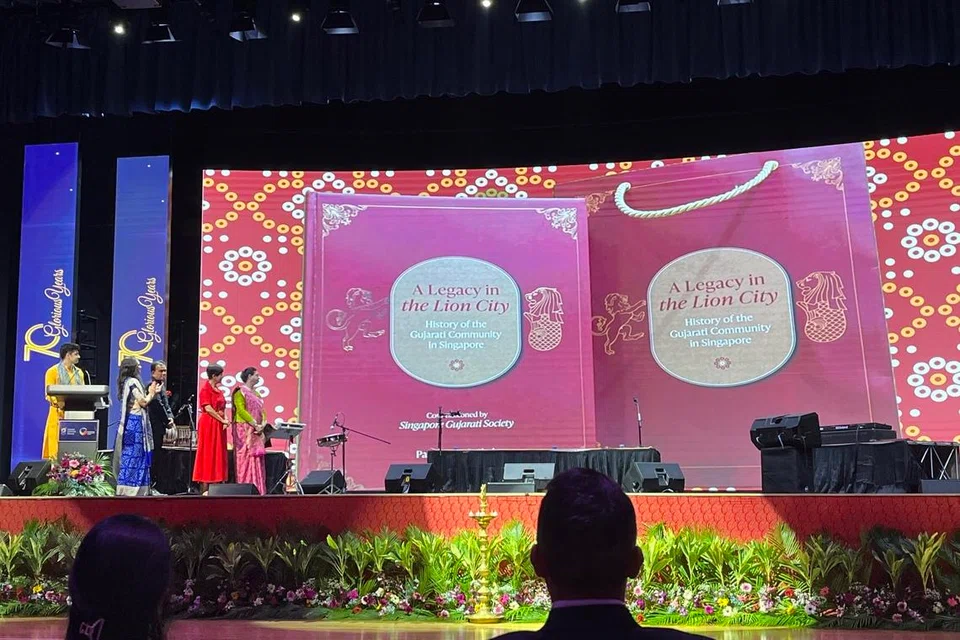
“I am so grateful for this opportunity to interact with wonderful people who opened up their hearts, and shared their family’s journeys with me,” Mdm Parul said in her speech.
She also recalled a poignant moment when one of the interviewees had asked her, “Will this book be published while I am still alive?”
Mdm Parul told tabla! that some of the community members featured in the book have since passed away. “Their stories will not only enrich us, but help us understand how the local Gujarati-speaking community has evolved since the 19th century,” she added.
One of the book’s contributors and longtime SGS member Mr Chetan M Parikh, 69, shared how he combed through stacks of family albums for old photographs that could help to corroborate and illustrate the stories of a bygone generation.
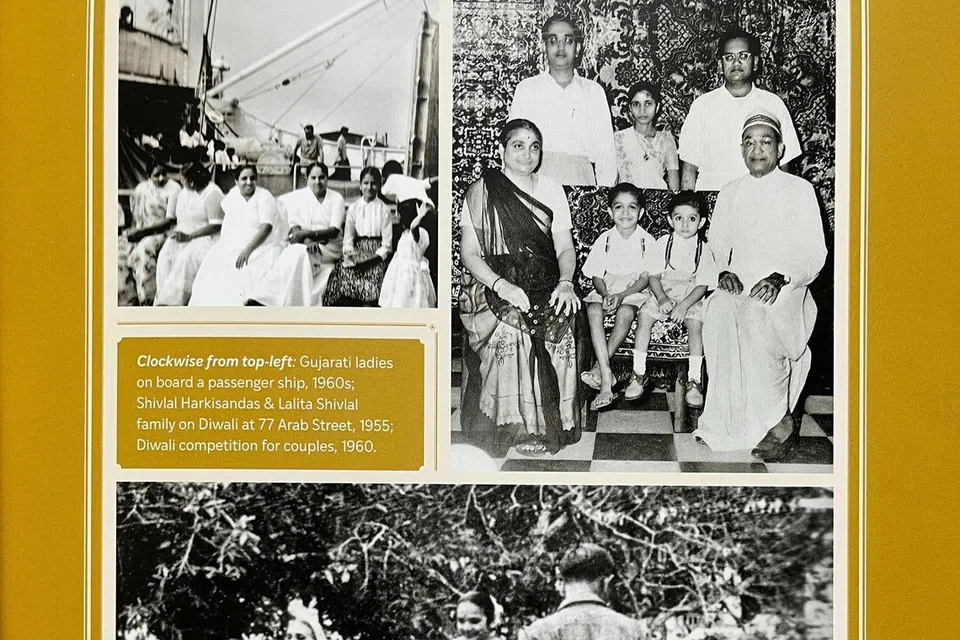
“I’m too young to be featured, but my parents and uncles are part of the book,” he explained, adding that this documentation of Gujarati history in Singapore is also necessary to educate the younger generation about the origins of the community.
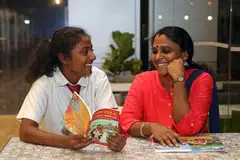
Ms Heer Sheth, 20, a polytechnic graduate, and Ms Shruti Gaglani, 25, a marketing professional, are part of the SGS YUVA’s management committee, the society’s youth wing, which organises monthly events and activities for members aged 15 to 30.
“SGS has been a very important part of my life,” said Ms Heer, who has been attending the society’s events since young. Over the years, she became more actively involved and was an emcee for one of the yearly Navratri celebrations organised by SGS.
“Unfortunately, the younger generations don’t value tradition and culture as much as our parents and grandparents used to,” Ms Shruti said. “I think the heritage book is a good way to celebrate who we are, and showcase our ancestry.”
Mr Chetan also emphasised that though “our forefathers came from Gujarat in India, we are Singaporeans first. We want to tell our children and grandchildren, look, this is where you came from, but this is your future out here.”