
Singapore and India are happy with the progress made since the last roundtable in strengthening bilateral ties across six key pillars, Deputy Prime Minister and Minister for Trade and Industry Gan Kim Yong said on Aug 20.
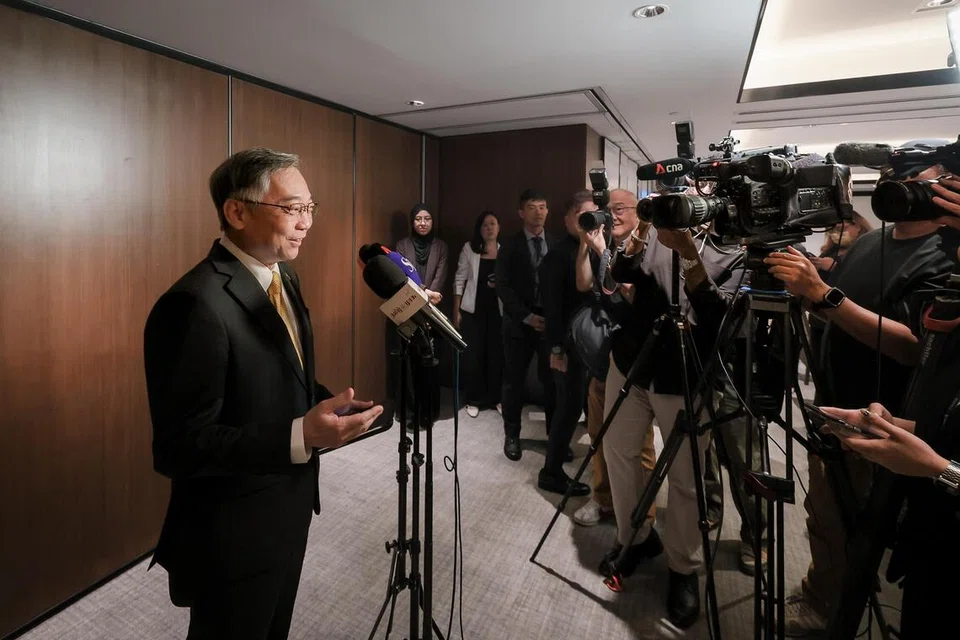
Speaking to reporters after the fourth India-Singapore Ministerial Roundtable (ISMR) in Singapore, Mr Gan described the high-level meeting as “very useful and productive,” noting that it has facilitated progress in bilateral collaboration.
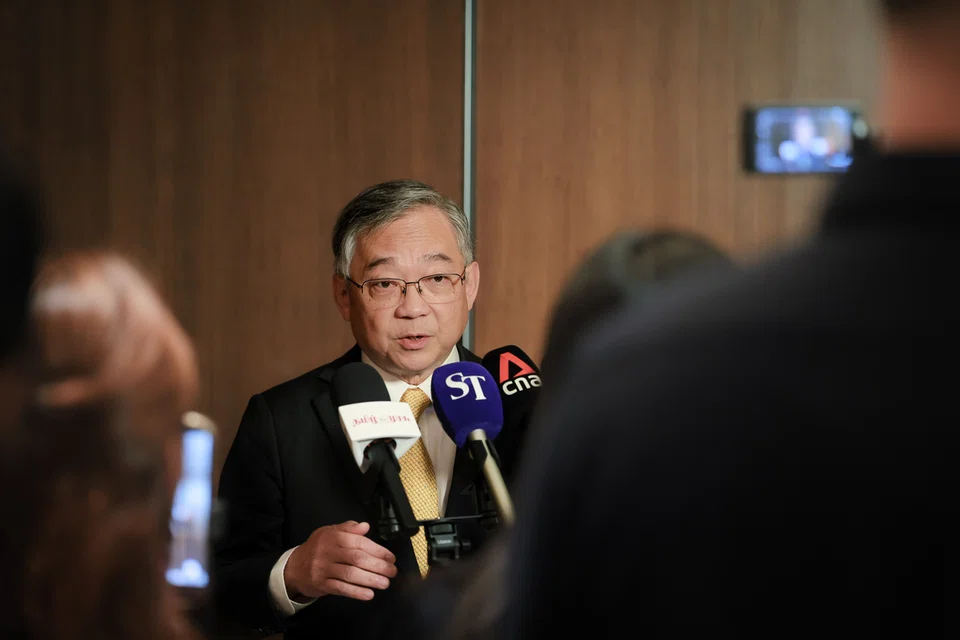
He attributed this progress to the roundtable’s unique format, which allows ministers and officials from both sides to engage in deep, open discussions. “The most important value of this platform is that it’s not just across the negotiating table, but we develop trust and relationships with one another that will help to strengthen bilateral collaboration between (the) two countries,” Mr Gan said.
The roundtable brought together senior ministers from both nations to advance the Singapore-India Comprehensive Strategic Partnership Roadmap. The roadmap was jointly launched during Prime Minister Lawrence Wong’s official visit to India in September 2025.
Singapore is India’s largest source of Foreign Direct Investment (FDI). Over the past two decades, cumulative FDI from Singapore into India has surpassed US$170 billion (S$216 billion), consistently accounting for roughly 20-25 per cent of all foreign direct investment flowing into India.
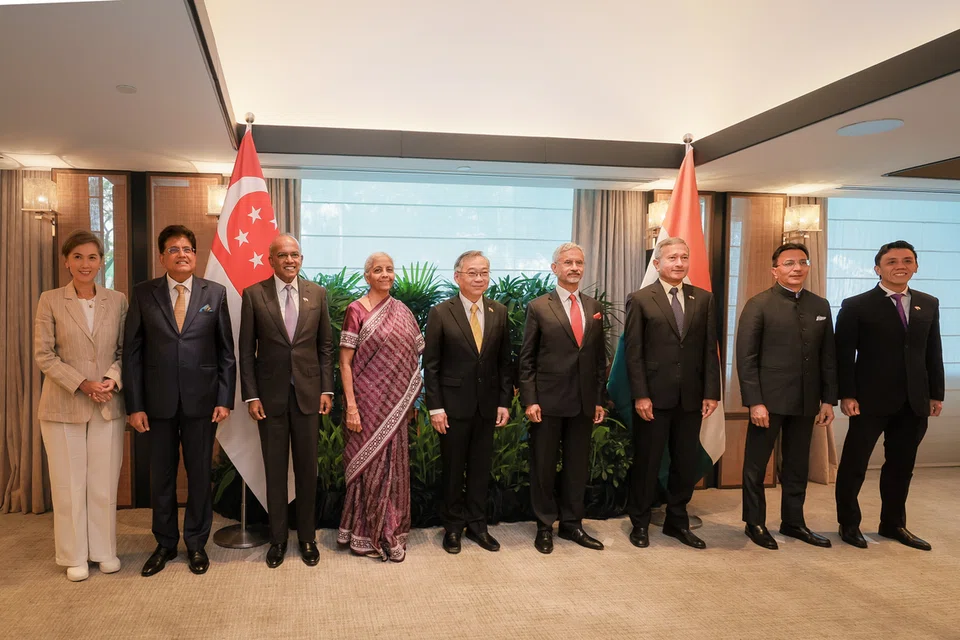
The Singapore delegation led by DPM Gan included Senior Minister, Coordinating Minister for National Security and Minister for Home Affairs K Shanmugam, Minister for Foreign Affairs Vivian Balakrishnan, Minister for Digital Development and Information and Minister-in-charge of Cybersecurity and Smart Nation Group Josephine Teo and Minister for Transport Jeffrey Siow.
The Indian delegation comprised Minister of Finance and Corporate Affairs Nirmala Sitharaman, Minister of External Affairs S Jaishankar, Minister of Commerce and Industry Piyush Goyal, and Minister of State for Commerce and Industry and Electronics and Information Technology Jitin Prasada.
During their visit, the Indian ministers made a joint call on Prime Minister Lawrence Wong and were hosted to lunch by DPM Gan.
Progress across key pillars
Mr Gan gave an update on the discussions across the six key pillars of collaboration: advanced manufacturing, skills development, digitalisation, connectivity, sustainability, and healthcare and medicine.
On advanced manufacturing, Mr Gan said several semiconductor manufacturers have invested in India since the signing of the India-Singapore Semiconductor Ecosystem Partnership Memorandum of Understanding (MOU) in 2024. He noted these firms are looking to bring in their suppliers, including Singapore small and medium-sized enterprises (SMEs), to create an integrated ecosystem.
Under the skills development pillar, DPM Gan said Singapore is working with India to establish the National Centre of Excellence for Advanced Manufacturing in Chennai. To support workforce training needs, Institute of Technical Education Education Services will conduct a needs assessment in September.
Regarding digitalisation, Mr Gan pointed out that the UPI-PayNow linkage recorded close to S$21 million in transaction value in the first half of 2026, marking more than a sixfold increase compared to the first half of 2025. He expressed hope that Project Nexus, a multilateral payment platform involving ASEAN partners, will be implemented by 2027.
He added that the Singapore Exchange is exploring collaboration with the National Stock Exchange of India to expand capital markets, while Indian authorities assist Singapore firms interested in a sustainable industrial park in Rajasthan.
On connectivity, Mr Gan shared that both sides discussed creating a green digital shipping lane and expanding their Air Services Agreement. Separately, the two nations have concluded a cooperation agreement for aviation Maintenance, Repair, and Overhaul (MRO) capabilities.
On sustainability, both nations are finalising a food supply chain resilience arrangement for staples like rice, while exploring agricultural R&D and food processing investments.
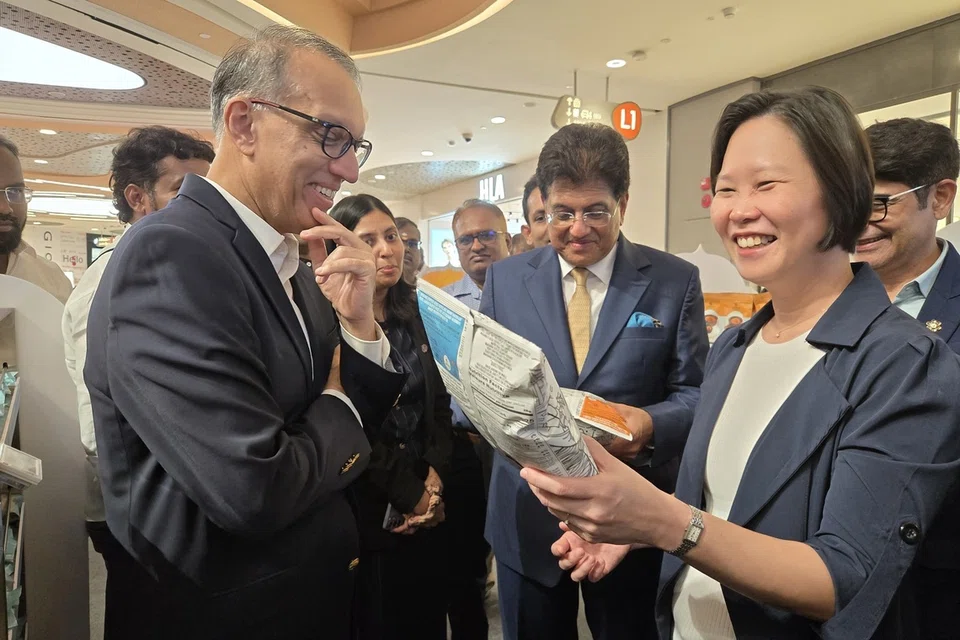
As a direct outcome of this sustainability pillar, the Indian Food Roadshow, themed ‘Produce of India for the World,’ is taking place at City Square Mall from August 17 to 23. Visited by Minister of State Gan Siow Huang and Indian Minister Piyush Goyal on Aug 20, the event features more than 160 products ranging from fresh produce to organic food items from 18 Indian exporters, aiming to connect them with Singapore distributors and retailers.
In healthcare and emerging sectors, Mr Gan acknowledged good progress in Indian nursing training programs to support Singapore’s healthcare sector, alongside advancing talks on Ayurvedic medicine. He added that the ministers explored space technology collaboration between the National Space Agency of Singapore and India’s IN-SPACe, knowledge sharing on small modular nuclear reactors, cybersecurity cooperation, and plans to bring an Indian startup innovation platform to Singapore.
New partnerships on food safety and marine heritage
On the sidelines of the roundtable, Singapore and India institutionalised their cooperation by exchanging two MOUs and a Letter of Intent (LOI).
The MOU between the Singapore Food Agency and the Food Safety and Standards Authority of India aims to strengthen technical collaboration and support agri-food trade between the two countries.
The agencies will share technical information on food safety matters, including labelling requirements, import procedures, product recalls, emergency notifications, as well as consignments detained or rejected at the border.
A second MOU, signed by Singapore’s Ministry of Culture, Community and Youth (MCCY) and India’s Ministry of Ports, Shipping and Waterways, will promote exchanges of information and expertise on maritime heritage.
The agreement will facilitate training and knowledge sharing, as well as encourage participation in international engagements. It reaffirms the broad-based bilateral relationship between Singapore and India and their commitment to continued cultural cooperation, according to an MCCY factsheet.
The two countries also signed an LOI on cooperation in telecommunications and broadcasting. The agreement will encourage the sharing of information, experiences and best practices, with areas of cooperation including consumer protection and broadcasting regulations.