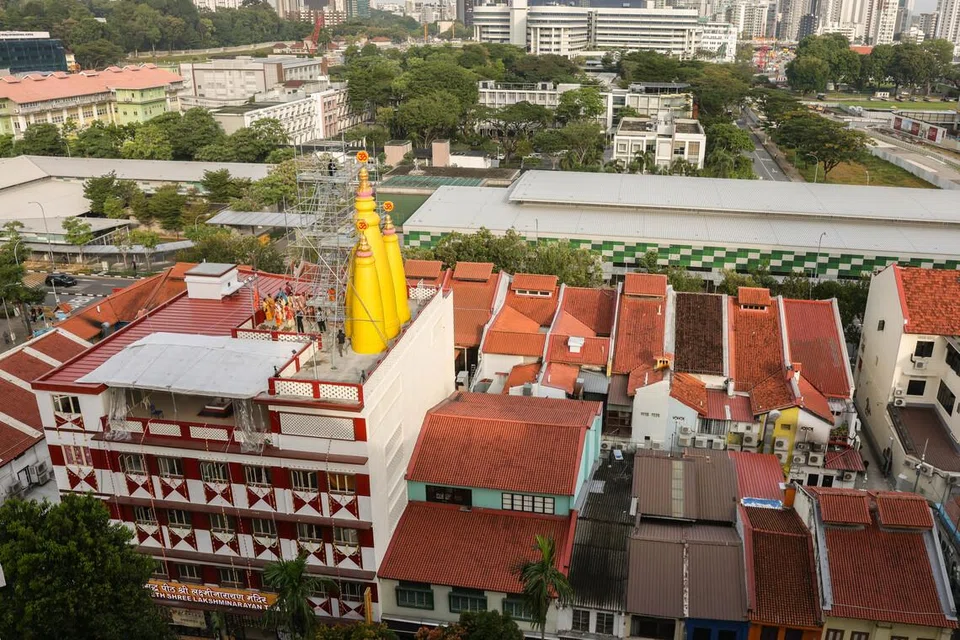

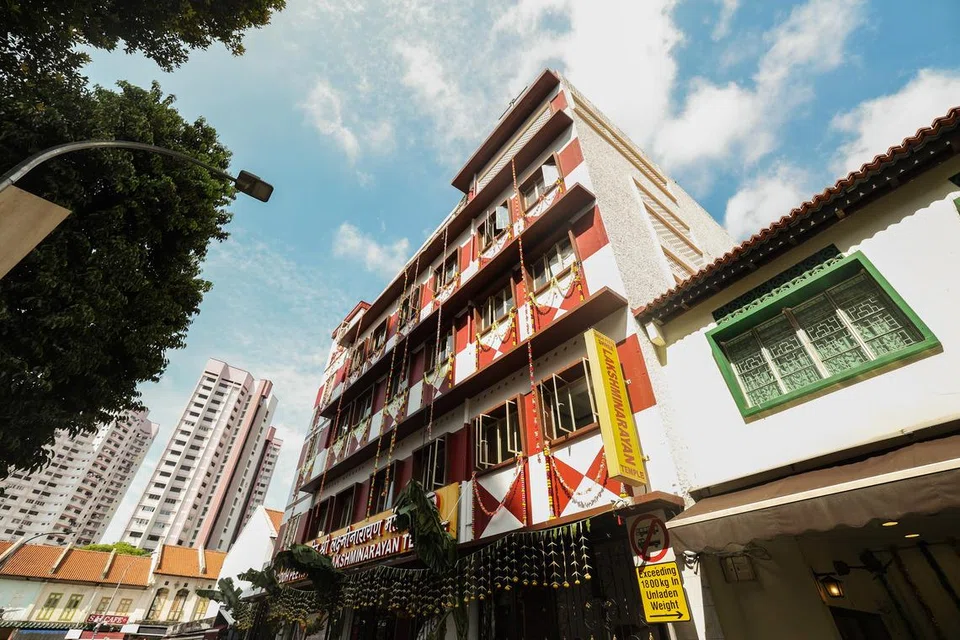
The air at 5 Chander Road reverberated with the sound of sacred chants on Feb 25, as the Siddh Peeth Shree Lakshminarayan Temple (SLNT) celebrated its first consecration ceremony in 56 years.
The rare spiritual milestone follows an extensive seven-year renovation and expansion project.
Costing close to S$3 million – funded entirely by community donations – the upgrade added 4,000 square feet of space to the historic temple to accommodate Singapore’s growing North Indian Hindu population.
Established in 1969 and gazetted as a heritage site by the Urban Redevelopment Authority in 1989, SLNT is a spiritual anchor for the North Indian Hindu community in Singapore.
Unlike South Indian temples, which typically undergo a Kumbhabhishekam or consecration every 12 years, North Indian traditions do not usually require frequent re-consecration.
However, the scale of the recent renovations necessitated a spiritual “re-energising” of the space, noted SLNT president Prof Balram Chowbay.
“During the renovations, we had to remove some of the deities and reinstall them,” said Mr Balram. “To do so, we have to re-energise the deities. That is why we had to consecrate the temple.”
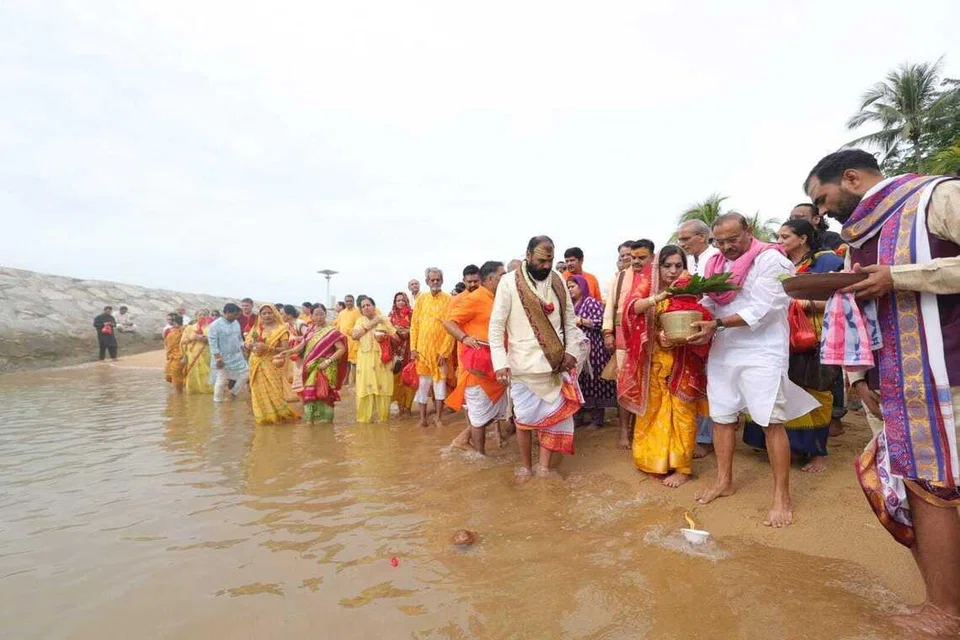
Preparations for the ceremony began on Feb 20, when retired Colonel Perdit Tiwari, a second-generation trustee and the Mukya Yajman (the patron designated to perform a ritual), led a group of devotees to the East Coast beach.
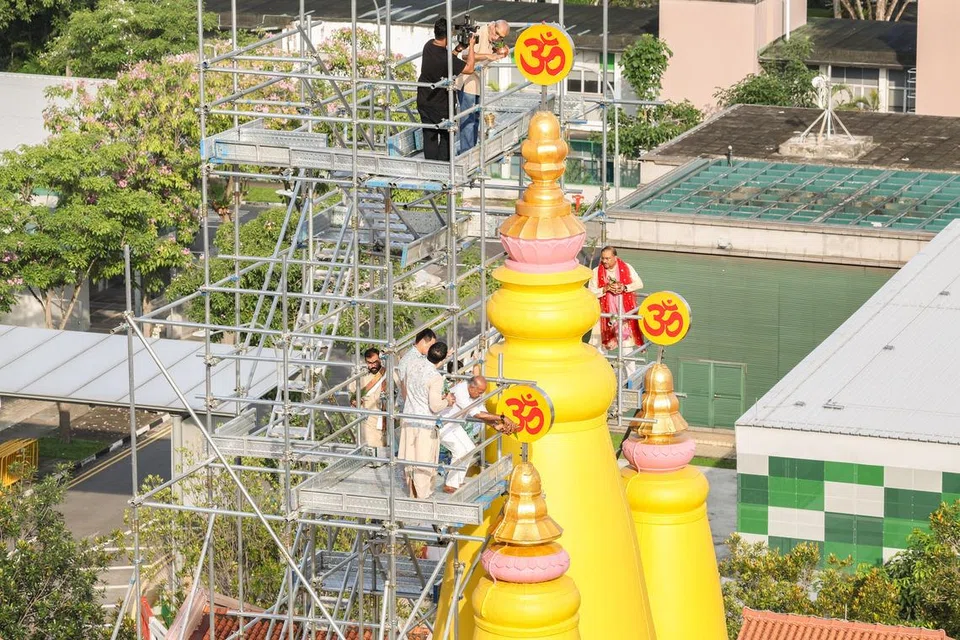
The group collected seawater, which was later purified through specialised prayers. This sacred water played a central role in the consecration rites, where it was poured over the temple’s shikharas (sacred spires) to symbolise spiritual renewal.
The consecration event drew an estimated 1,500 attendees throughout the day, including high-profile figures from Singapore’s corporate and political spheres.
Former DBS CEO Piyush Gupta, who was among the devotees, said he wanted to witness the ceremony first-hand for its “profound cosmic energy” and spiritual atmosphere.
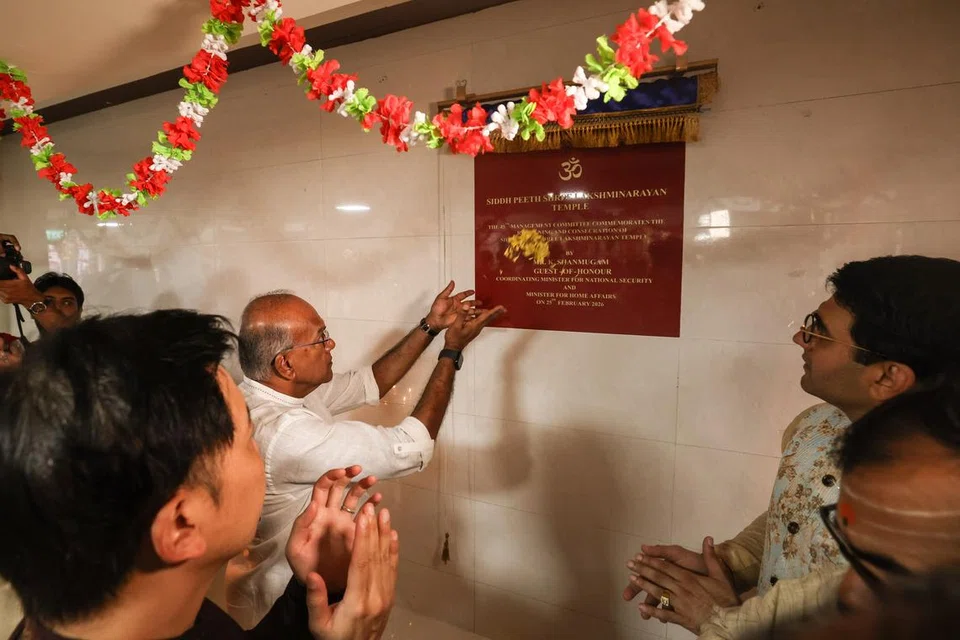
The ceremony was officiated by Minister K. Shanmugam, Coordinating Minister for National Security and Minister for Home Affairs, who unveiled a ceremonial plaque commemorating the temple’s grand reopening.
He then joined the SLNT leadership on the rooftop to perform the pouring of holy water over the temple’s sacred spires.
Mr Alvin Tan, Minister of State for National Development and for Trade and Industry, also attended the event.
Artistry from Jaipur
The timely renovations were not merely structural, but also an exercise in craftsmanship.
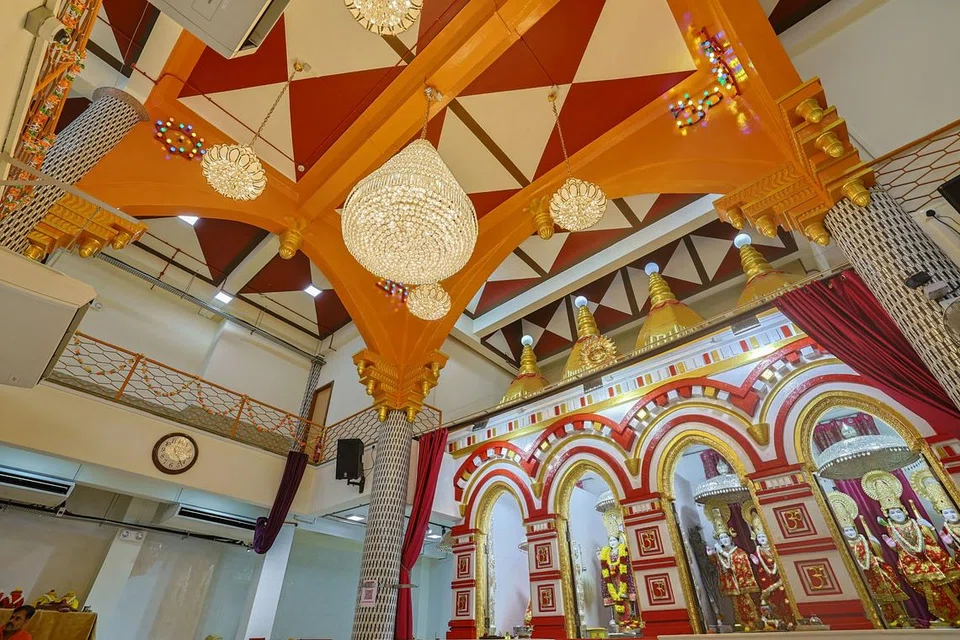
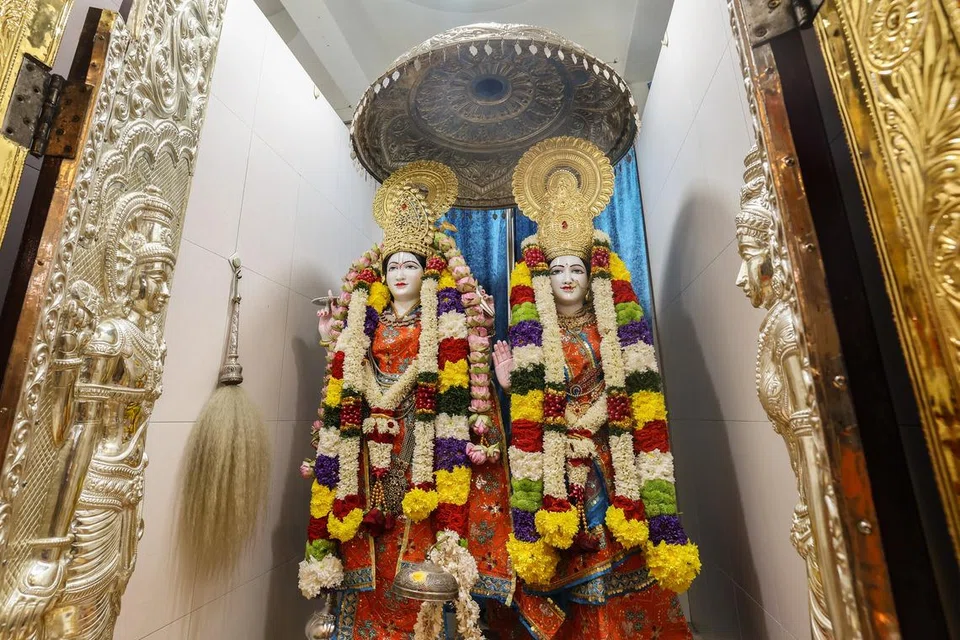
The main temple renovations occurred in the prayer hall on the ground floor. Artisans were brought in from Jaipur, India, to retouch the deities and polish the marble surfaces. The inner sanctum doors were fitted with gold-plated rims, and silver umbrellas were installed over all the deities.
The additional 4,000 square feet also ensures the temple can comfortably host larger congregations during major festivals such as Janmashtami and Deepavali.
Unity in Little India
In a show of Singapore’s multi-religious harmony, chairmen and volunteers from neighbouring “sister temples” in Little India attended and assisted with the consecration ceremony.
There are more than 30 Hindu temples in Singapore, and five are within the same vicinity, noted Mr Rajakanth R., chairman of Sri Veeramakaliamman Temple. “It’s only right that we support each other. We have a good relationship with SLNT’s management and have future projects lined up where they will be involved with us as well.”