

“I do not feel at home anywhere, but the idea of home follows me wherever I go,” said the late Zarina Hashmi, known more mononymously as Zarina, an Indian-origin print and sculpture artist.
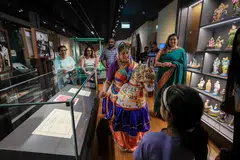
Over 50 of her pieces are on display at Zarina: Directions To My House, an exhibition at the Singapore Tyler Print Institute (STPI) Creative Workshop and Gallery in Robertson Quay.
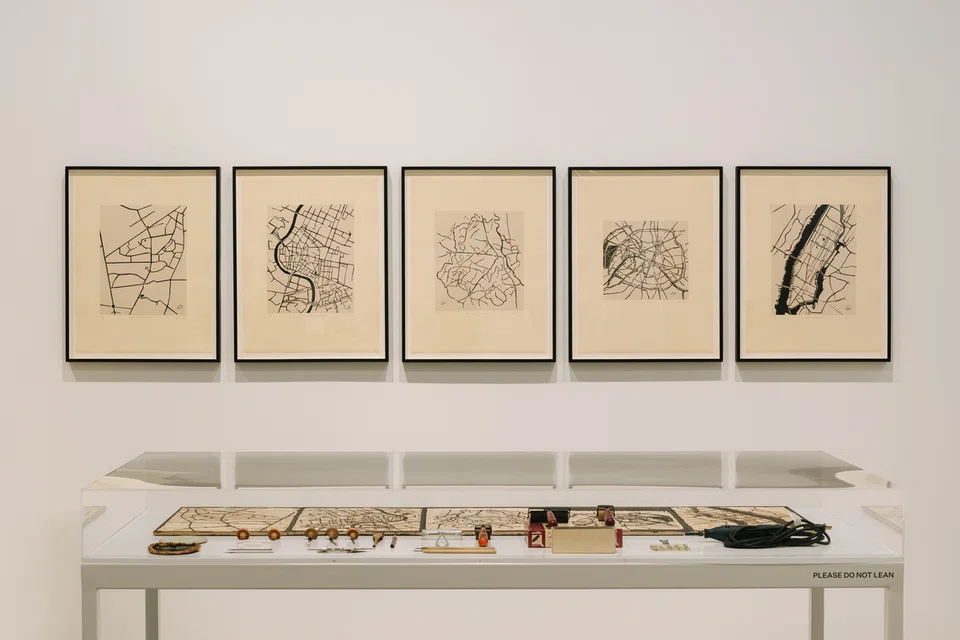
The exhibition is on till Aug 1 and is free to enter, featuring some of Zarina’s original print blocks and printmaking tools on display for the first time.
Zarina was born and grew up in Aligarh, Uttar Pradesh, until she married a diplomat and went on to live around the world in Thailand, America, and Japan.
She weaves themes of cultural and linguistic identity, political issues, and belonging in black-and-white house plans and cartography, following her cosmopolitan life of making a home every few years in a new country or city.
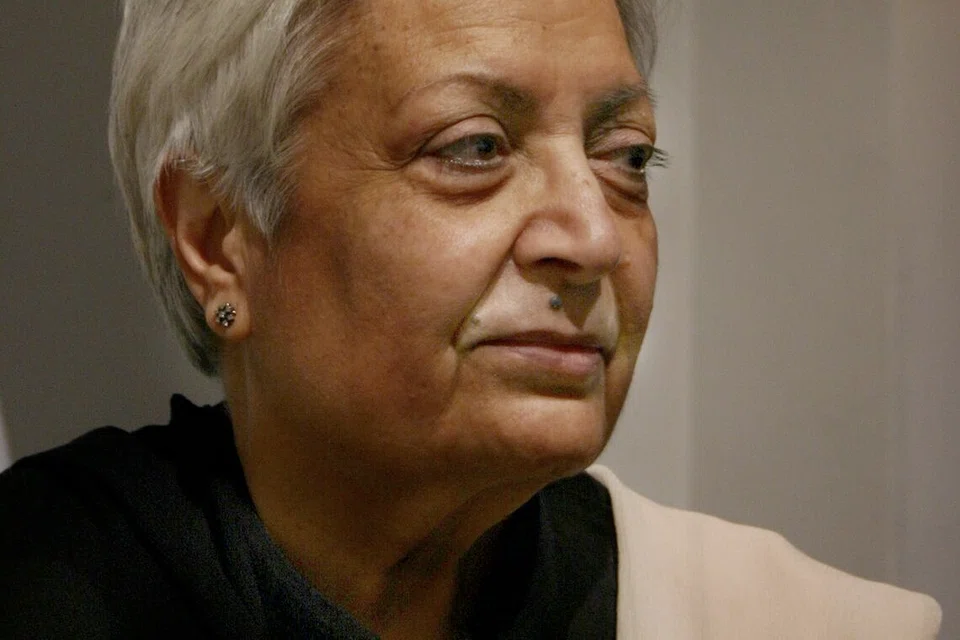
“Zarina’s work has been shown extensively in India and the United States, but this is her first institutional presentation in Southeast Asia, which feels very meaningful,” the exhibition’s curator, Ms Sarah Burney, 40, said.
“Singapore is such a multicultural and transnational place, and many people here are navigating questions of home, belonging, language, and movement,” she added.
Ms Rhea Chalak, a final-year literature undergraduate at Nanyang Technological University, has followed Zarina’s work closely in her studies, even writing papers on her.
“She’s very unique when it comes to South Asian artists because she has such a minimalistic style compared to other artists from the region who have more vibrant styles. She can express the same anxieties they have, but in her own way,” said Ms Rhea, 24.
“It’s surreal to see these pieces in person compared to just museum websites,” she noted. Pieces like The Great Divide and Rohingyas: Floating On The Dark Sea featured geopolitics heavily, especially after the partition of India, leading her family to eventually flee to Pakistan, and the rise of Islamophobia following the 9/11 attacks, as she was living in New York at the time.
Mdm Manju Melwani, 65, a counsellor who attended the exhibition, said: “Zarina’s art resonated with me, because in my own family the history of the line of control was carried through generations”.
As attendees walk through the space, they are enveloped not only in the global issue of displacement but also in the artist’s own displacement from her family.
The recreated fragments of Mughal palaces that her father used to take her to and the Letters From Home artwork, featuring Urdu letters her elder sister wrote but never sent, not wanting to worry her little sibling with home troubles, are examples.
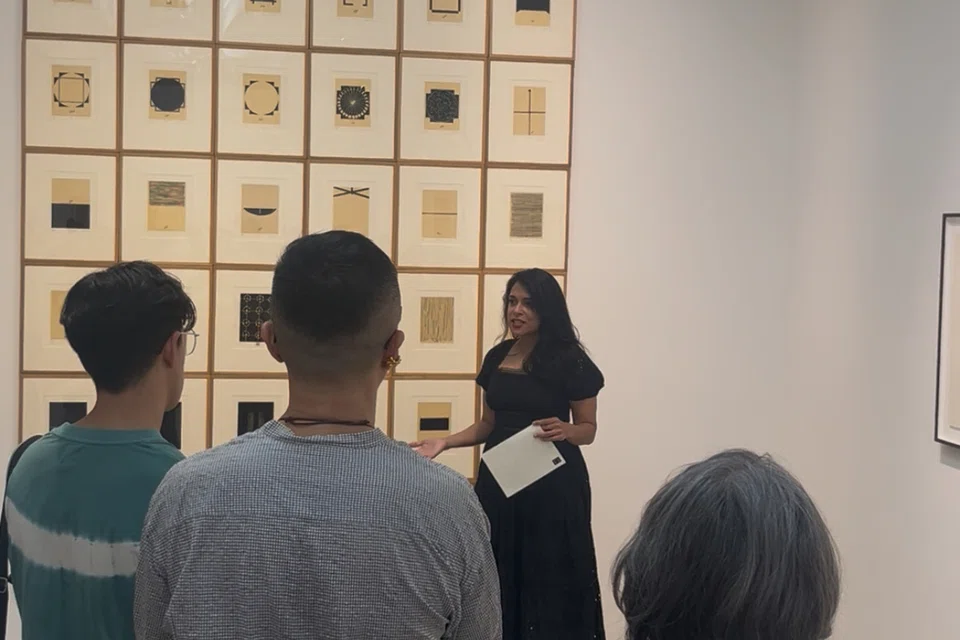
So often, Zarina had to not only make a home away from home but also cultivate a family. In her studio-cum-apartment in New York, where she spent most of her life, she would often invite people over for tea ceremonies, including Ms Burney, who worked as Zarina’s studio manager in New York for over six years.
“Before the first curator’s tour here, I had to sit in my hotel room and cry a little bit,” Ms Burney said. “She was kind of a parental figure to me, the only person I could speak Urdu with in New York, since my family was so far away. So much so that I even gave Zarina as my daughter’s middle name.”