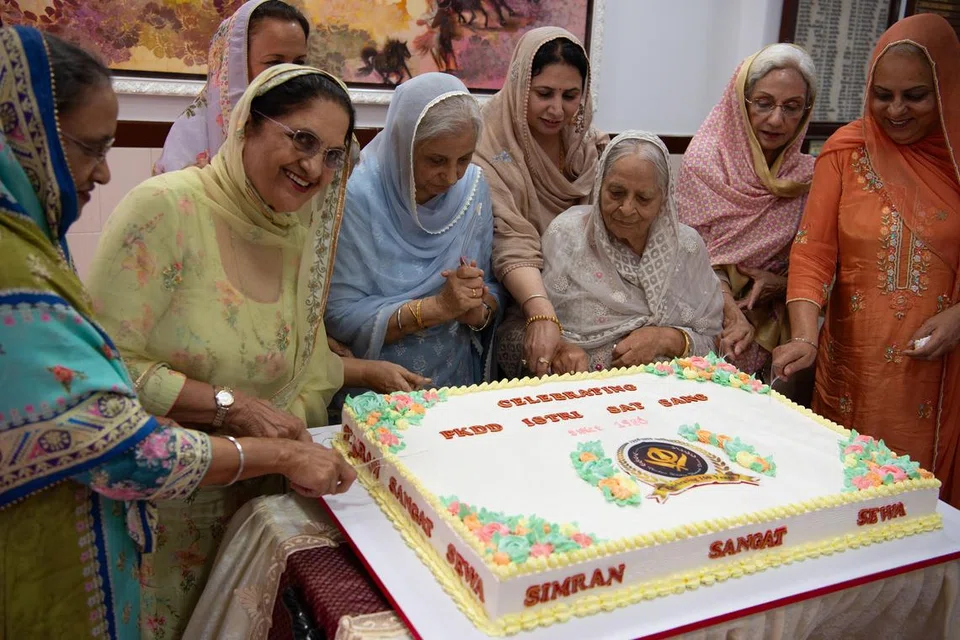

In 1926, a group of Sikhs originating from the Doaba region of Punjab founded the Pardesi Khalsa Dharmak Diwan (PKDD). The gurdwara at 9 Lorong 29 Geylang marked its 100th anniversary with a series of celebratory events.
One of these events was on March 15, in honour of the Pardesi Khalsa’s Istri Satsang or Women’s Congregation, with a programme that emphasised the teachings of Guru Nanak Dev Ji, who championed the equality and dignity of women.
Around 400 members of the Sangat from across Singapore and other gurdwaras came together to participate in Simran, Sewa, and Naam Simran (core pillars of Sikhism), reflecting the spirit of unity and devotion within the local Sikh community.
The programme began with Sukhmani Sahib Paath, followed by Kirtan (hymns) performed by the ladies, and Katha (sermon) delivered by PKDD Gianis.
In their discourse, the Gianis highlighted the timeless Sikh principle that women and men are equal and that both play essential roles in society and spiritual life.
After the prayers, tokens of appreciation were presented to the presidents of the respective Istri Satsangs from various local gurdwaras, recognising the dedication and service of the women who have played a vital role in nurturing the Singaporean Sikh community.
Pardesi Khalsa’s Istri Satsang movement began in the mid-1960s, when a handful of ladies would make weekly house visits to fellow members to recite Paath and practice Kirtan together.
By the 1980s, the movement had gained momentum, and the congregation grew, resulting in scheduled weekly meet-ups in the gurdwara’s diwan every Tuesday, a practice that continues to-date.
Mdm Malkit Kaur, 80, a housewife, took over as head of Pardesi Khalsa’s women’s congregation in 2009 and has been an active member for the past 20 years.
She shared how the women are heavily involved in the preparation of langar (the Sikh tradition of a community kitchen serving vegetarian meals in gurdwara), especially during busy periods in the year.
“The ladies will voluntarily step in to assist in the operations of the community kitchen, from buying rations and preparing ingredients to cooking at scale and serving the congregation,” Mdm Malkit said.
In Sikhi practice, there is a continuous prayer known as ‘Akhand Paath’, which takes approximately 72 hours to complete when recited non-stop.
“It is typically performed during significant occasions, and it certainly is a demanding undertaking. The ladies take turns to ensure the uninterrupted recitation, completing it in the spirit of Sewa and devotion,” explained Mdm Malkit.
These examples highlight the equal role that women play in the Sikh community, given that most of these roles were predominantly carried out by males, she added.