
A grandmother’s gold bangles, a mother’s wedding earrings, a treasured silk saree and a contemporary lehenga. What happens when these timeless pieces meet the imagination of today’s Indian woman?
The result is a fascinating celebration of heritage, individuality and modern elegance.
That was the inspiration behind “The New Heirlooms – Tradition, Reinvented”, the theme of tabla!’s Deepavali Fashion Special 2026, which brought together nine women from different generations and professional backgrounds for a colourful photoshoot at the Singapore Swimming Club.
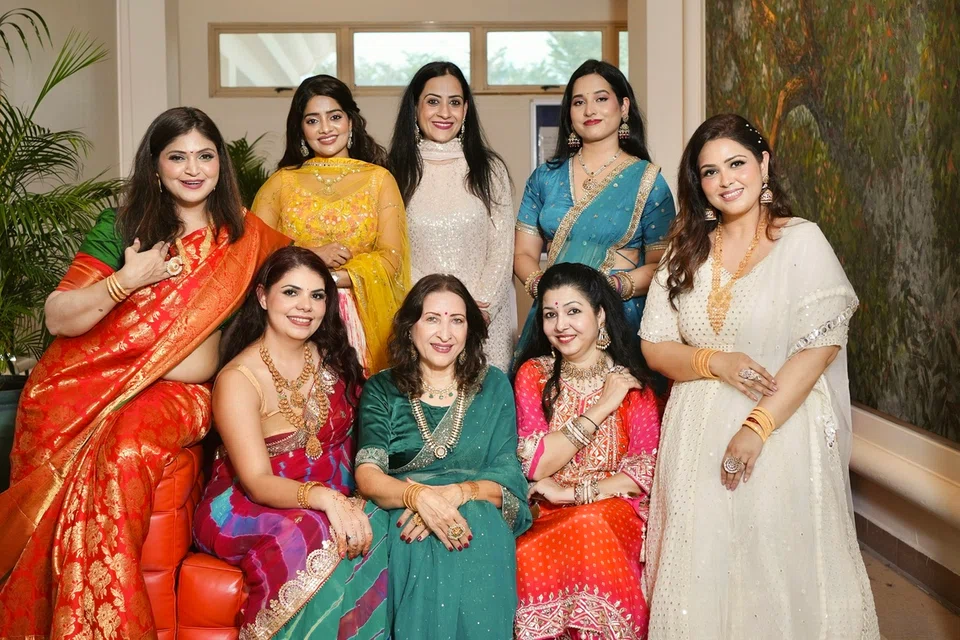
With the club beautifully decorated for Deepavali, the setting provided a festive backdrop for a fashion story that went beyond clothes and jewellery.
The idea was to demonstrate how Indian festive dressing has evolved from strictly traditional attire into an exciting blend of sarees, lehengas, Indo-Western ensembles and contemporary accessories.
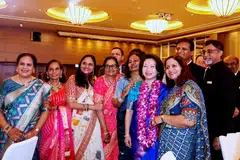
The group photographs captured this diversity, with the women presenting different interpretations of Indian elegance.
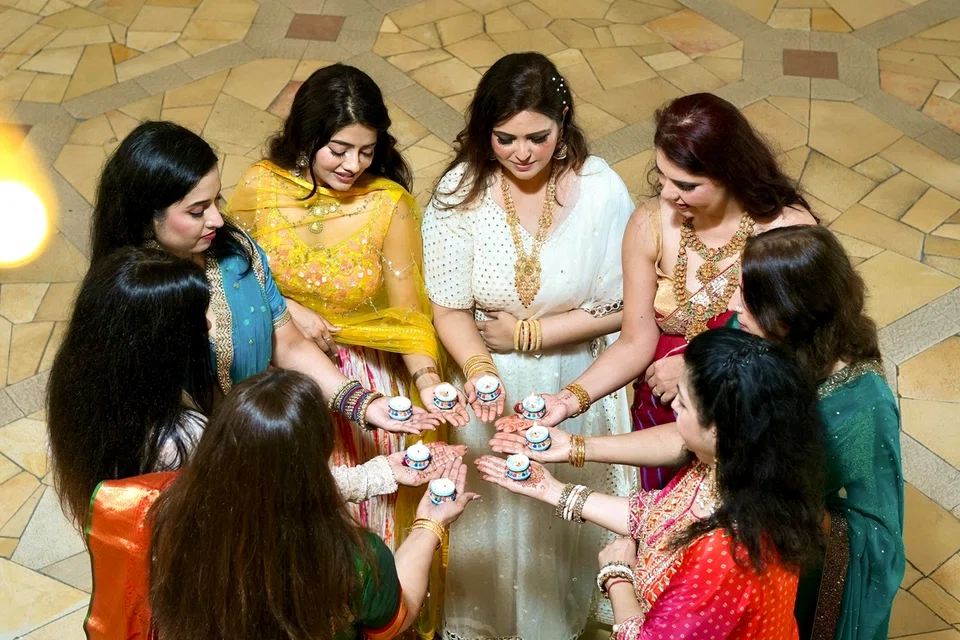
Bringing the theme to life was Isha Chaudhari, who coordinated and styled the photoshoot while also participating as a model. An engineer by profession, Isha is also a media artist, content creator and events coordinator.
For Isha, the concept of The New Heirlooms reflects her own fashion philosophy: celebrating India’s rich craftsmanship while embracing the confidence and individuality of the modern woman.
“I love my tradition and culture, but at the same time, I am a modern woman with a wide spectrum of interests. A combination of traditional and contemporary fashion showcases my personality through my attire,” she said.
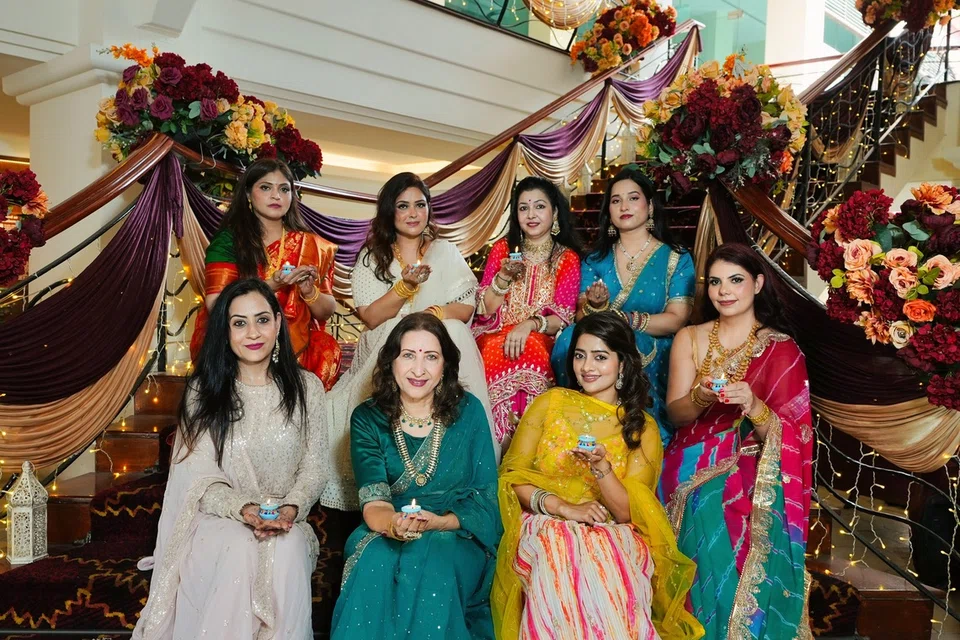
Her strongest fashion inspiration comes from her mother’s wardrobe. Despite changing trends, Isha still prefers wearing her mother’s old sarees for festivals and weddings.
“No matter what, sentiments look more confident on you than any trend,” she said.
Among her most treasured possessions is her mother’s wedding gold necklace, originally gifted by her grandmother. She also enjoys pairing her mother’s delicate gold waist belt with contemporary outfits.
Living in multicultural Singapore has broadened her styling choices. She particularly enjoys combining a traditional kebaya with Indian jewellery, bringing different cultural influences together.
However, Isha believes younger women should understand the cultural significance of traditional clothing even as they experiment with modern silhouettes.
“Fashion is all about expressing yourself, not following rules,” she said.
For Isha, that freedom to experiment, while respecting the memories and craftsmanship behind inherited pieces, captures the spirit of the entire photoshoot.
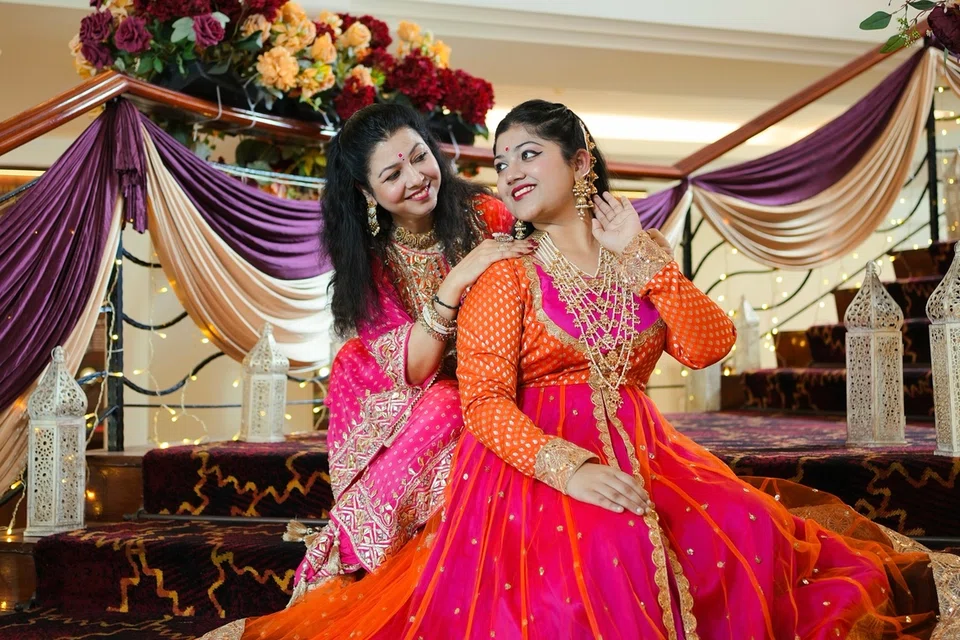
The mother-daughter pairing of chartered accountant and writer Shweta Verma Singhal and Raffles Institution student Kashish Singhal was particularly meaningful, illustrating how traditions can be inherited without limiting individual expression.
For Shweta, Deepavali dressing is closely connected to family memories.
“My mother’s beloved gold bangles, which she lovingly passed on to me, are especially close to my heart,” she said.
She hopes to pass them on to Kashish, together with the memories and values they represent.
Kashish, a Kathak dancer and Hindustani classical vocalist, enjoys combining traditional jewellery with contemporary outfits.
“I love pairing traditional family heirlooms, especially Polki and Kundan jewellery, with contemporary outfits,” she said.
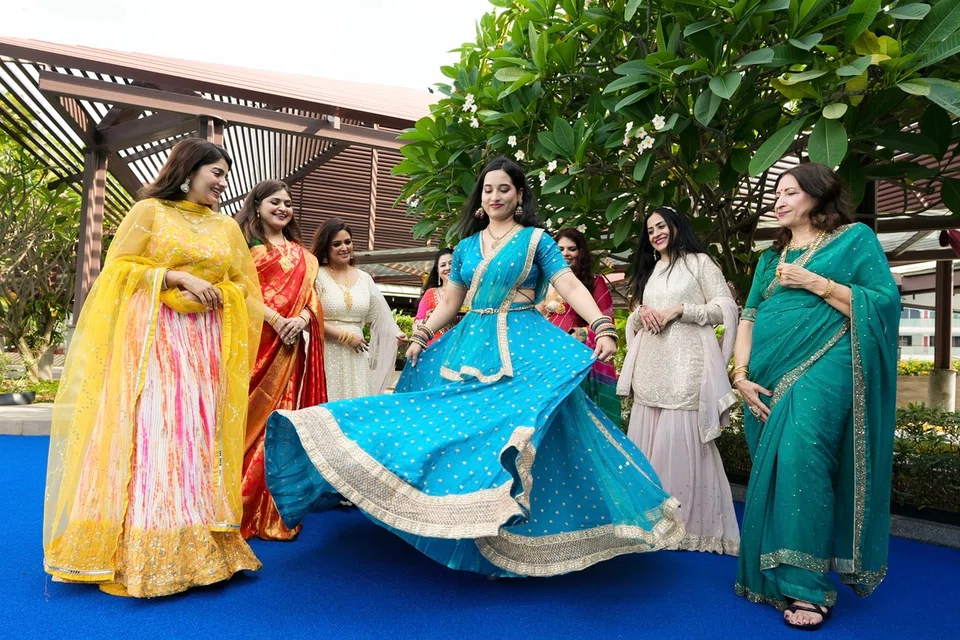
Content creator and digital marketing professional Divya Sharma similarly believes inherited jewellery deserves to be worn beyond weddings.
She has paired her mother’s necklace with a simple dress and enjoys wearing lehenga skirts with shirts for festive gatherings.
Content creator and digital marketing professional Divya Sharma similarly believes inherited jewellery deserves to be worn beyond weddings.
She has paired her mother’s necklace with a simple dress and enjoys wearing lehenga skirts with shirts for festive gatherings.
Content creator and digital marketing professional Divya Sharma similarly believes inherited jewellery deserves to be worn beyond weddings.
She has paired her mother’s necklace with a simple dress and enjoys wearing lehenga skirts with shirts for festive gatherings.
Content creator and digital marketing professional Divya Sharma similarly believes inherited jewellery deserves to be worn beyond weddings.
She has paired her mother’s necklace with a simple dress and enjoys wearing lehenga skirts with shirts for festive gatherings.
Content creator and digital marketing professional Divya Sharma similarly believes inherited jewellery deserves to be worn beyond weddings.
She has paired her mother’s necklace with a simple dress and enjoys wearing lehenga skirts with shirts for festive gatherings.
For her, fashion should reflect personality rather than follow fixed rules.
This generational connection was central to the photoshoot’s message: Indian fashion is not being replaced by modern styles. It is being reinterpreted.
Tradition with a contemporary twist
Fashion designer and model Ambica Doerr, founder of A-Doerr, believes traditional Indian fashion remains relevant because younger women are increasingly willing to experiment with it.
“Old is gold! I believe younger generation are open to embracing traditional fashion and add their own modern twist or creativity,” she said.
Having lived in six countries outside India and modelled in Dubai, Zurich and Singapore, Ambica has maintained a strong attachment to Indian clothing.
Her grandmother’s ivory organza saree with gold zari remains particularly precious, while four inherited gold bangles are part of her everyday jewellery.
Despite experimenting with new designs, she continues to favour sarees, bangles and jasmine flowers.
For Ambica, comfort is equally important. She prefers avoiding heavy embellishments and synthetic fabrics, showing that contemporary festive fashion can be elegant without being cumbersome.
Actor, singer, writer and former Indian Women’s Association president Madhu Suri shares that appreciation for tradition.
Around 70 per cent of her saree collection came from her elder sister, while her jewellery includes inherited gold, diamonds and kundan pieces.
The long necklace she wore for the shoot was gifted by her mother-in-law, who had received it from her own mother upon marriage.
Madhu believes the saree remains one of the most versatile garments.
“It can look traditional or modern, depending on the type of blouse you pair it with,” she said.
And she rejects the notion that women should dress according to their age.
“Wear what you love and feel comfortable and confident in.”
Memories woven into fashion
For Ronia Godwin, a senior software engineer at Citi and digital content creator, traditional clothing provides a strong connection to India.
Her most treasured possession is a pair of gold jhumkas worn by her mother at her wedding and subsequently gifted to Ronia on her own wedding day.
Although sarees remain her favourite, she increasingly experiments with accessories and creative styling.
She also advocates repeating outfits rather than constantly buying new ones.
“Real fashion is all about getting creative and finding different ways to wear and restyle what you already own,” she said.
Content creator and digital marketing professional Divya Sharma similarly believes inherited jewellery deserves to be worn beyond weddings.
She has paired her mother’s necklace with a simple dress and enjoys wearing lehenga skirts with shirts for festive gatherings.
As a mother, she now prioritises comfortable fabrics and footwear over elaborate outfits.
Monika Bassi, an events promoter and fashion model, sees Deepavali dressing as a celebration of cultural identity.
A pair of earrings gifted by her mother holds special significance, while Singapore’s multicultural environment has encouraged her to experiment.
Her favourite approach is “mixing tradition with a little modern drama”.
Freelance model and singer Mugdhaa Godbole draws inspiration from her Maharashtrian heritage, particularly the traditional Paithani saree and nath nose ornament.
She enjoys mixing Indian and Indo-Western styles, even breaking conventional jewellery rules by wearing silver and gold together.
For her, festive dressing is about confidence and individuality.
Fashion without boundaries
The photoshoot also celebrated the influence of Singapore’s multicultural environment.
For Madhu, who arrived in Singapore in 1980, joining the Indian Women’s Association in 2011 transformed her confidence in wearing traditional Indian attire.
For Kashish, growing up in Singapore has encouraged an appreciation of different cultures while strengthening her connection to Indian traditions.
And for Divya, Deepavali celebrations involving friends from different communities make wearing Indian clothes even more meaningful.
The group portraits, individual looks and mother-daughter photographs collectively captured the essence of the theme.
Ultimately, “The New Heirlooms” is not simply about combining old jewellery with new clothes.
It is about preserving memories while creating new ones, celebrating craftsmanship while embracing personal expression, and recognising that Indian fashion can evolve without losing its soul.