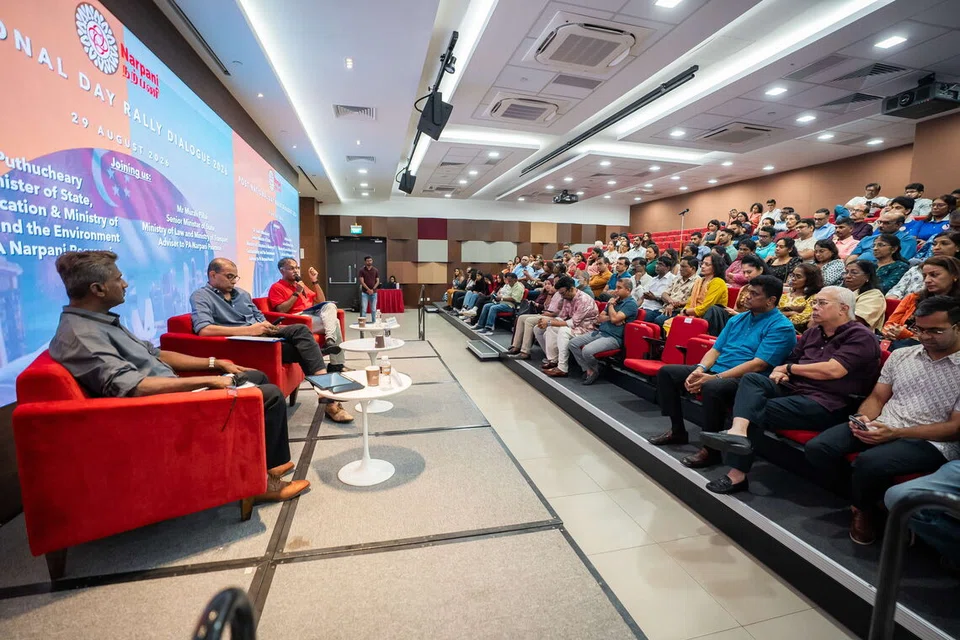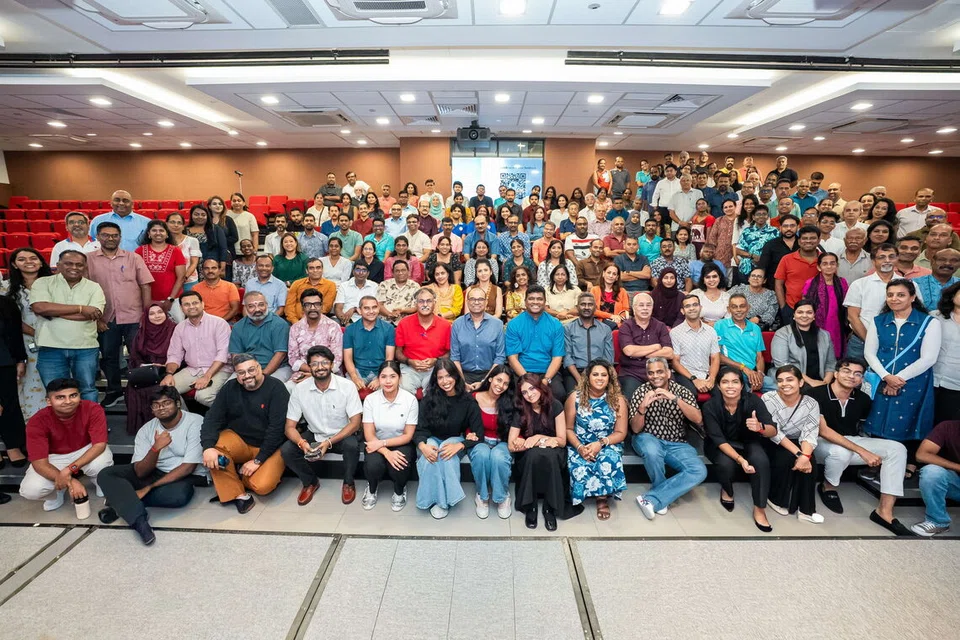

The impact of increased childcare leave, youth’s anxieties about their future in a tumultuous world and the push for a healthier lifestyle were several focal points raised by around 200 Indian community leaders in a post National Day Rally (NDR) dialogue on Aug 29.
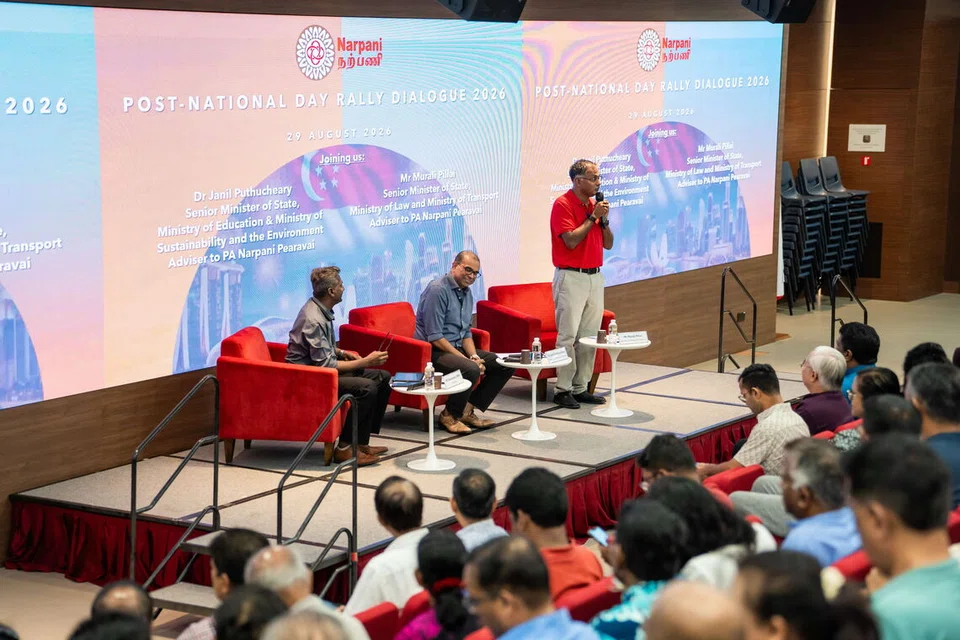
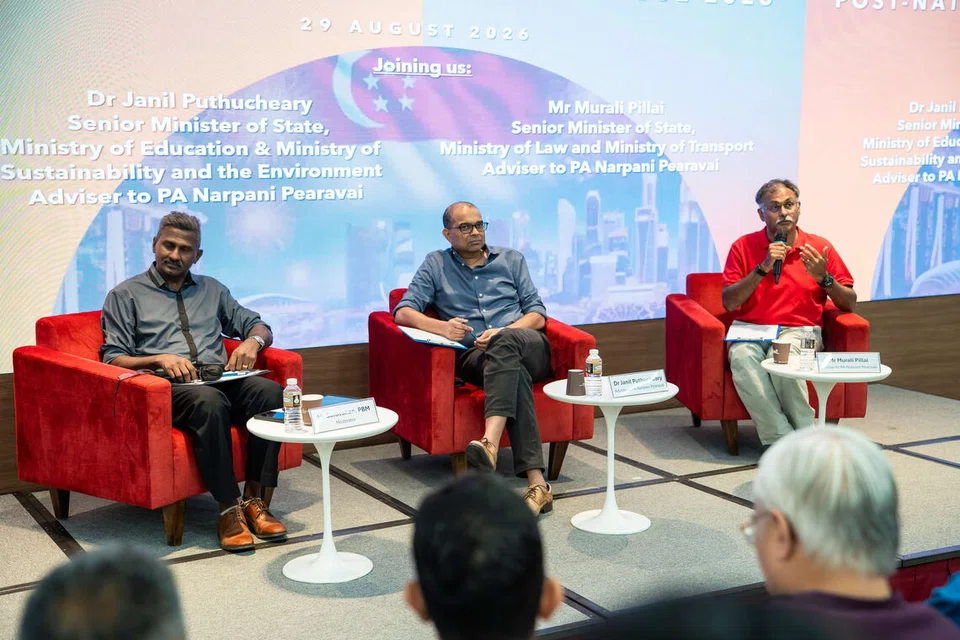
Organised by the People’s Association (PA) Indian Activity Executive Committees Council (Narpani Pearavai), the dialogue was chaired by their two advisors, Senior Minister of State for Education and for Sustainability and the Environment Janil Puthucheary and Senior Minister of State for Law and Transport Murali Pillai.
In his opening remarks, Mr Murali reflected on the evolving responsibilities of an Indian community leader in Singapore – from mostly organising cultural events to now becoming the “eyes and ears, looking out for vulnerable families in our respective constituencies”.
The dialogue began with a participant asking about the offset impact of increased childcare leave as part of the enhanced support for families that was announced during NDR 2026.
She recounted that her employer had criticised her for taking time off to look after her young daughter who was unwell.
Now all grown up, her daughter’s priorities are to attend university and build a career because she wants to be financially secure before having her own kids.
The mother then asked the panellists how Singapore can change its career-driven workforce into a more family-oriented one.
Her concern was echoed by another participant who added that young parents these days also take into account the opportunity cost (as opposed to just cost of living), especially when it comes to deciding whether to have more than one child.
He explained that couples or singles who are looking after their aged or disabled parents might also feel sidelined by the additional leave for families with children.
On the health front, a source of concern was that Indians are predisposed to medical conditions such as diabetes.
In response, a participant said that she frequents the ActiveSG gyms thanks to the highly subsidised entry fees for seniors but observed that she has not seen other Indians around when she is there.
She also enquired if the ActiveSG credits can be increased as the current amount of S$100 is not enough to cover health screenings such as body composition tests or knee assessments, which costs S$48 according to the website.
One of the community leaders then suggested an initiative where selected members from the various Indian Activity Executive Committees (IAEC) can be certified as a healthy life trainer, so they can conduct exercise classes for their residents.
Many youths also stepped forward to voice the pressures they feel within the country’s education system and after they enter the work force.
One participant shared that a lot of entry level jobs require prior work experience while another said that employers still hire based on paper qualifications.
The latter was addressed through the notion of up-skilling, with panellists noting that the confidence to learn a new skill throughout one’s life is ever important, given the AI-driven changes and more in a volatile world.
They also explained that for the employer, requiring certifications provides assurance that an employee can perform the tasks they are paid to do.
With platforms such as SkillsFuture, youths can get certified for skills they might have missed out on while in polytechnic or university but picked up later on in life through work or hobbies.
“The panellists did manage the questions really well,” Ms Charu Yuvaraj, 21, a member of Bishan IAEC, told tabla! after the dialogue session.
The pre-reg nursing student at the Singapore Institute of Technology (SIT) personally related to the point brought up on younger children’s self-worth and identity being tied to their grades in reference to the Primary School Leaving Examination (PSLE).
“You can start off really strong in education at a young age, but once you grow up you realise that, wait, there’s so much more I could have explored as a child,” Ms Charu added.
Looking towards the future, one point Ms Nava Neetha, 32, felt could have been addressed is the under-representation of women and youth in leadership spaces, particularly within the Indian community.
The founder and chief impact officer of the non-profit Togather for Good cited that nowadays a lot of women, like her, are educated and board-trained.
“What we’ve seen is that women on boards tend to invest more into the community as well,” she noted in hopes that more discussions on this topic will eventually translate into actual physical representation.
The dialogue’s moderator and Pasir Ris IAEC chairman Saravanan Govindasamy explained that such on-the-ground feedback provides balanced insights with which the Indian community can work on.
Dr Janil told tabla! he was pleased that many of the attendees not only asked questions but have already taken action, in relation to the various initiatives they have started on their own.
“As seen in many cases today, they are standing up and saying my association or my community group is already doing this. You come and you join me,” Dr Janil said.