The start of a new year brings the promise of new beginnings. For the Tamil community, it is Chithirai Puthandu; for Sikhs, Vaisakhi; and for Malayalees, Vishu. While the names vary, the common thread is a shared sense of celebration and joy.
Embracing this spirit, the Indian Heritage Centre (IHC) recently hosted a vibrant festival on April 18 and 19, celebrating this rich diversity of cultures and traditions.
Following a successful turnout last year and public requests to scale up, this year’s festival expanded its offerings under the theme of “Renewal,” said Nanddika Singaravelan, IHC’s Marketing and Communications Manager.
“New year means new beginnings. In line with this theme, we have organised many cultural showcases and workshops,” said Ms Nanddika.
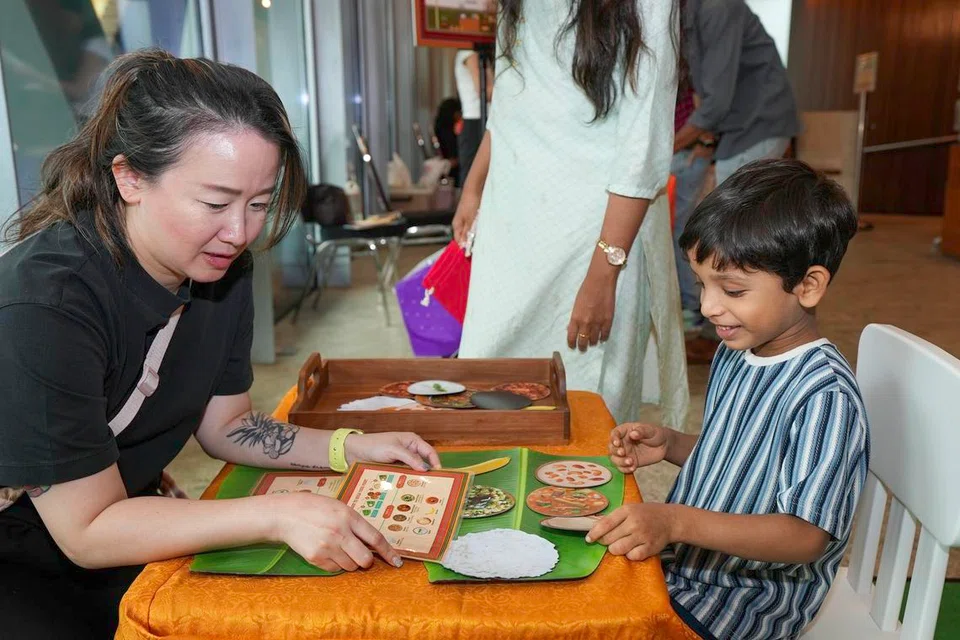
The festivities included interactive guided tours of Little India, where visitors explored the precinct’s heritage sites. Following the tour, participants enjoyed a traditional meal served on banana leaves, offering an authentic taste of Indian culinary customs.
The festival was also a visual feast, featuring performances by Banupriya Ponnarasu, a recipient of this year’s Outstanding Youth in Intangible Cultural Heritage (ICH) Award, and fellow awardee and accomplished flautist Niranjan Pandian.
A dance student at Sakthi Fine Arts, Pragathi, 8, who also performed at IHC’s celebrations, had learnt Oyilaattam – a dance form originating from Madurai, Tamil Nadu – for the first time. She noted that she was grateful for the opportunity to learn traditional folk arts.
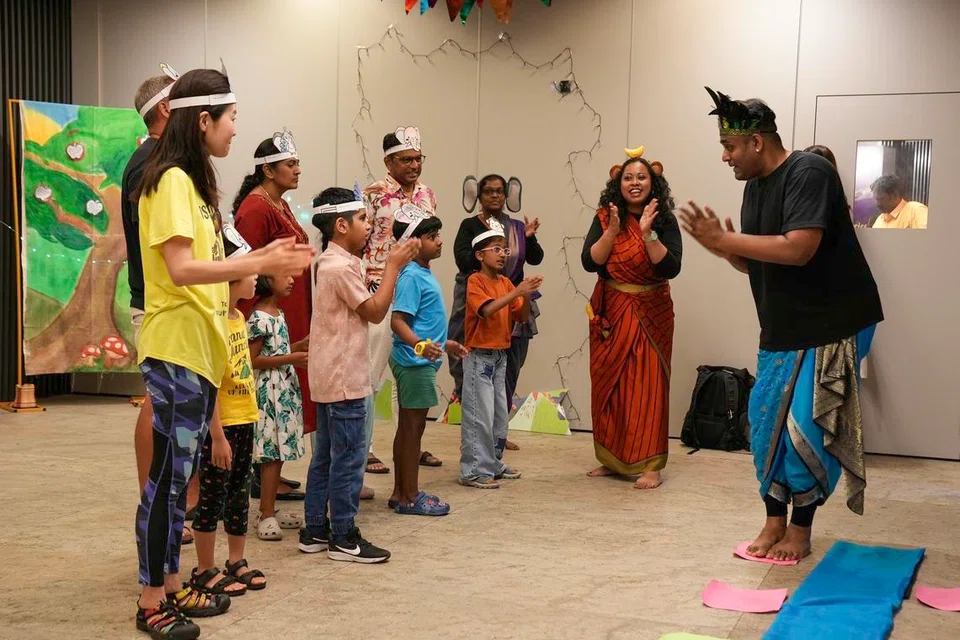
For younger visitors, an engaging storytelling session brought the book The Garden of New Beginnings to life through song and interactive play.
Beyond performances, the festival served as a platform for 15 small businesses, showcasing everything from handmade crafts to traditional attire and jewellery.
It also offered the public a glimpse into ancestral art forms. Tamil Nadu-based Tholpaavai (shadow puppetry) artists Muthuchandran and Muthumurugan shared the intricacies of their craft with eager audiences.
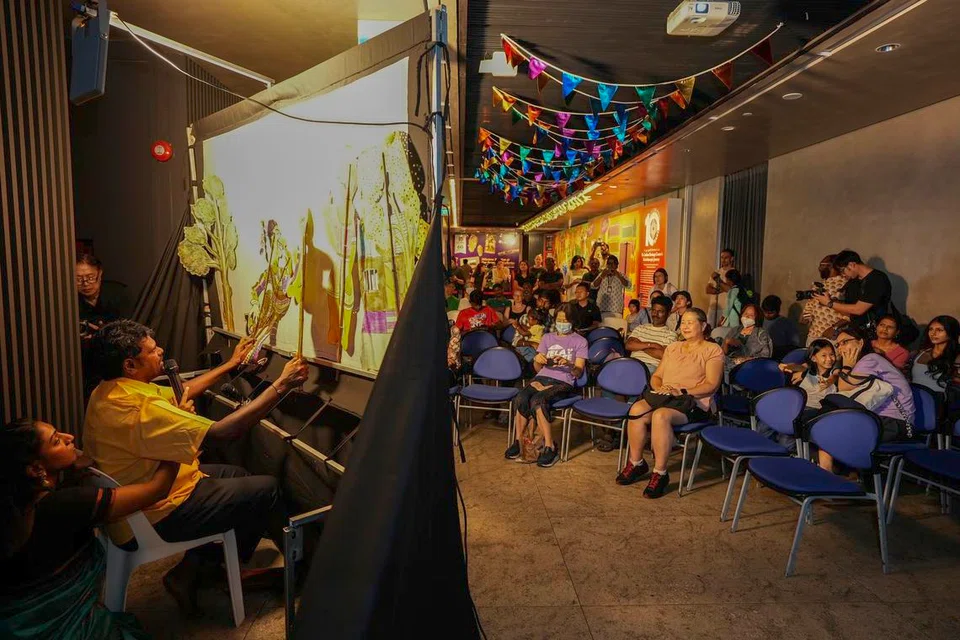
“We are the sixth generation of artists who have been involved in Shadow Puppetry. This art form temporarily stopped with the fifth generation. However, we revived it with much effort. So, to see Singaporeans learning about our art form with much enthusiasm is really heartwarming,” Mr Muthuchandran noted.
The event brought together people of many races, reflecting Singapore’s multicultural fabric.
“Apart from Indians, there were many people from other races who came down to learn about our Indian culture and traditions. It was very touching to see not just tourists but also our locals engaging in the celebration,” Ms Nanddika shared.
Having taken part in IHC’s Pongal celebrations before, 32-year-old Linusha Sunil knew she had to bring her son along for the Indian New Year celebrations as soon as the event poster appeared on her social media feed.
“There were many interesting activities here, and many shared unique facts about the new year which I had not known before,” she noted.
For others, the festival served as a bridge to build understanding.
Will Ji, 38, mentioned that his daughter would often come home from school with many questions about Indian traditions. With the aim of helping her understand better, he brought her to IHC’s event.
“She had the chance to learn in depth about the various cultural nuances and traditions. She thoroughly enjoyed herself here,” Mr Will noted.