
Sometimes referred to as the “Northern Sikhs”, the close-knit Sikh community in Yishun and Sembawang has carved out an identity for itself, exemplified by the committed and resilient nature of the Gurdwara Sahib Yishun (GSY) sangat.
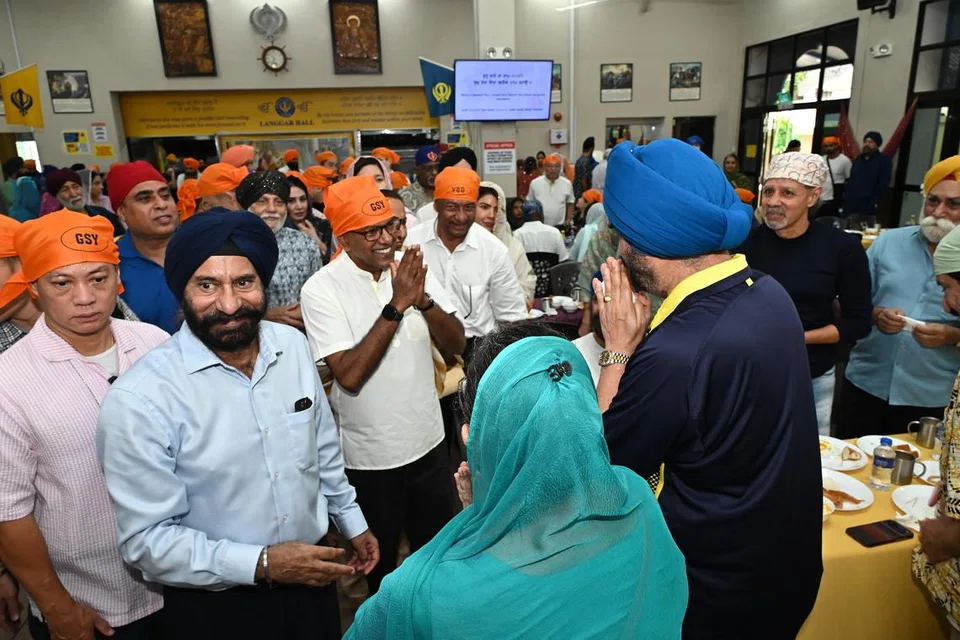
These observations were made by the Coordinating Minister for National Security and Minister for Home Affairs K. Shanmugam, who was the Guest of Honour at GSY’s centennial celebration event on April 12, which drew around 400 attendees.
GSY’s storied history dates back a century to colonial Singapore, when the British brought in Sikh migrants from Punjab, the majority of whom were policemen or held other security-related roles, to work at the former British Naval Base and Seletar Air Base.
To serve the spiritual needs of Sikh policemen in northern Singapore, two gurdwaras were established at each base: the Naval Police Gurdwara in 1925 and the Jalan Kayu Gurdwara in 1928.
As Sikh civilians who resided nearby and worked as shopkeepers or entrepreneurs were not permitted to enter the “police gurdwaras” due to security restrictions, except on rare festive occasions, the Gurdwara Guru Khalsa Sabha was founded in 1936.
It was situated outside the Naval Base in Chong Pang, and acquired all assets of the Naval Police Gurdwara when the British withdrew from the region in 1971. The gurdwara was later renamed the Sembawang Sikh Temple in 1984.
Mdm Gulwant Kour, 67, a retired banking professional and longstanding GSY member, reminisced about her childhood at the Naval Police Gurdwara, back when it was situated at Bukit Rimau (View Road).
“As kids, we used to learn the kirtans and go for Punjabi classes taught by the priests every Saturday. There used to be a hill, so we would just walk down and play around while our mothers chit-chatted with one another,” she recalled.
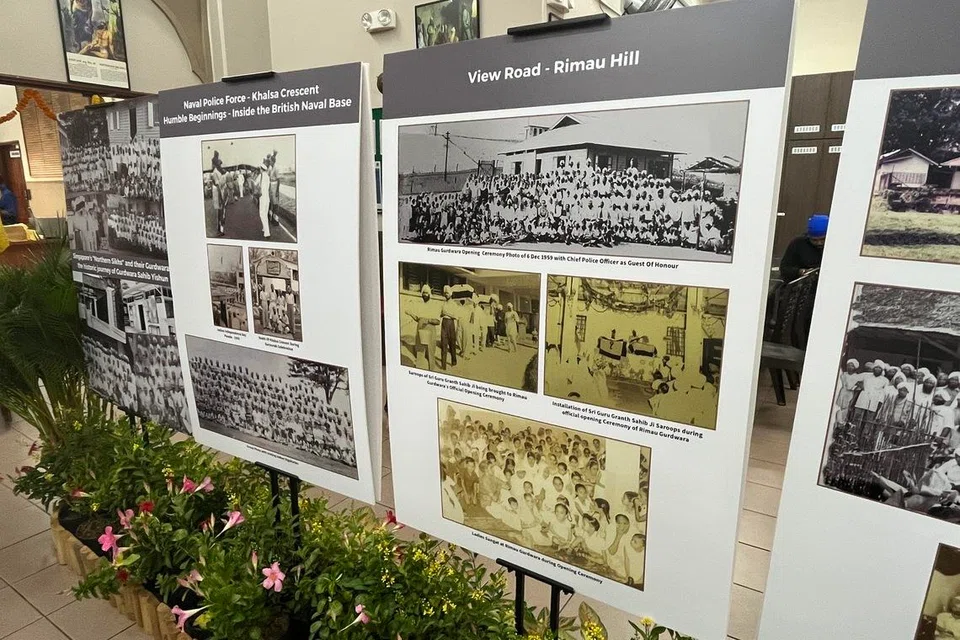
This sense of unity or “kampung spirit” remains GSY’s defining characteristic. “I just hope the younger generation will come forward and carry on what we’ve done,” Mdm Gulwant said.
In line with Singapore’s redevelopment plans to build new residential towns in the 1990s, the Government made a joint relocation offer to the two remaining gurdawas in the north, both of which sat on state land, for a common site at Yishun Ring Road, close to Khatib MRT station.
The Sembawang Sikh Temple and the Jalan Kayu Gurdwara merged to become GSY, Singapore’s only Sikh Temple in the north to date, which broke ground in 1993 and officially opened on Aug 27, 1995.
“I visited the old gurdwara in Chong Pang, after first entering public service, and have engaged with its leaders over many years. It is heartening to see some of the familiar faces here,” Minister Shanmugam said.
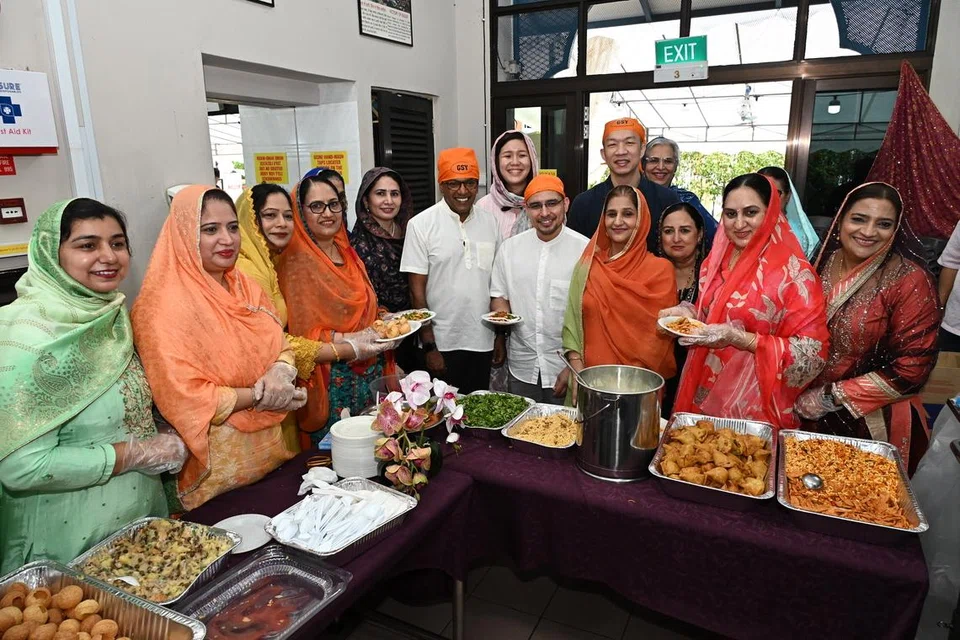
He also noted that gurdwaras, like all religious institutions, are sited on state land with a 30-year lease. “The Sikh community is relatively small. You came together and successfully raised funds for another 30-year lease,” he added.
“It has been challenging, but with the Almighty’s grace, we have been able to raise funds not just for the lease extension, but also the renovations necessary for the ageing building,” said GSY president Jaspreet Singh Chhabra.
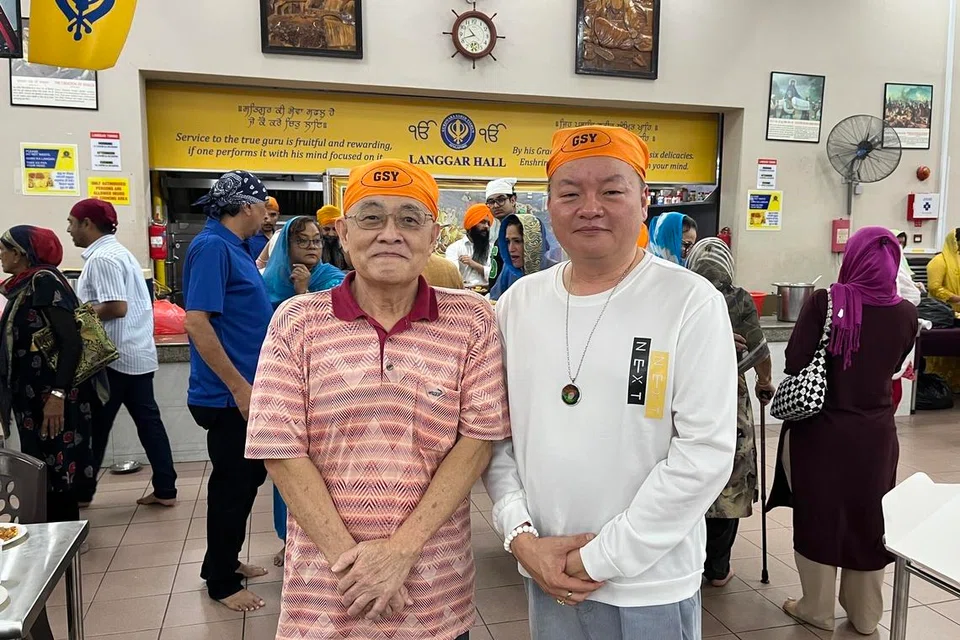
As part of the Nee Soon South’s Racial and Religious Harmony Circle, GSY has taken part in the Kew Ong Yah Temple’s annual processions, Masjid Ahmad Ibrahim’s Hijrah Night Cycling events, and Sree Maha Mariamman Temple’s chariot processions over the years.
Representatives from these neighbouring places of worship were also present at the 100th anniversary event, along with several Members of Parliament from Nee Soon GRC.
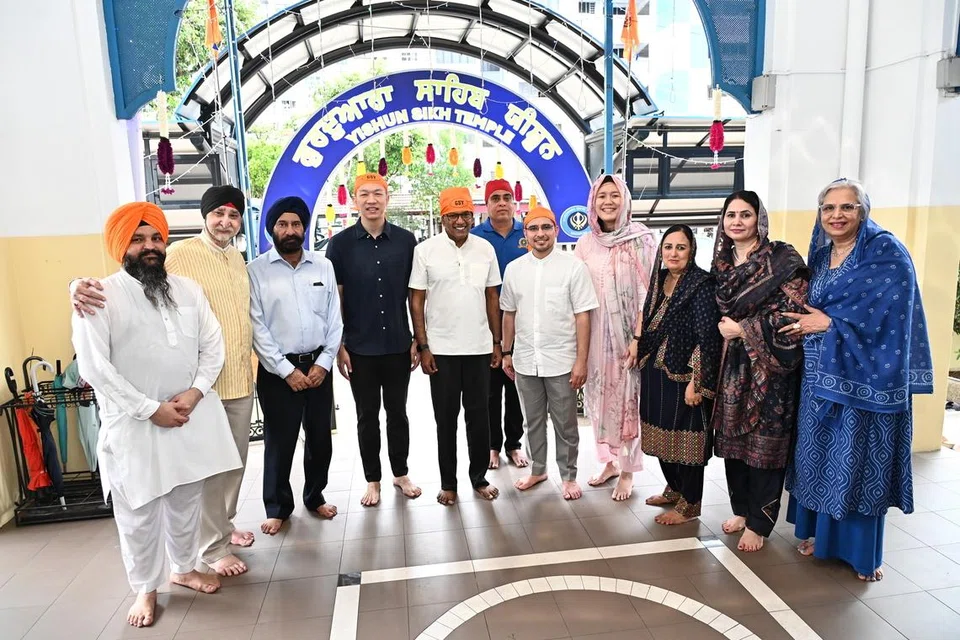
Established in 1907, the Kew Ong Yah Temple also relocated to Chong Pang in 1995 due to resettlement plans. “We just renewed our 30-year lease too,” said the temple’s chairman, Mr Toh Hong San, 64.
“It’s really amazing that we received a very warm welcome from this particular Sikh temple,” Mr Max Lee, 55, Kew Ong Yah Temple’s assistant secretary, said. He acknowledged that interfaith collaboration is important for understanding each other’s cultures and customs.
For example, visitors are expected to cover their heads and remove their footwear before entering a Sikh temple. “They will explain to us that ‘this is part of our practice’ so we learn to accept, respect, and understand why they do certain things,” Mr Lee added.