Enduring peace does not happen by chance, but requires collective action from everyone to ensure it is maintained.
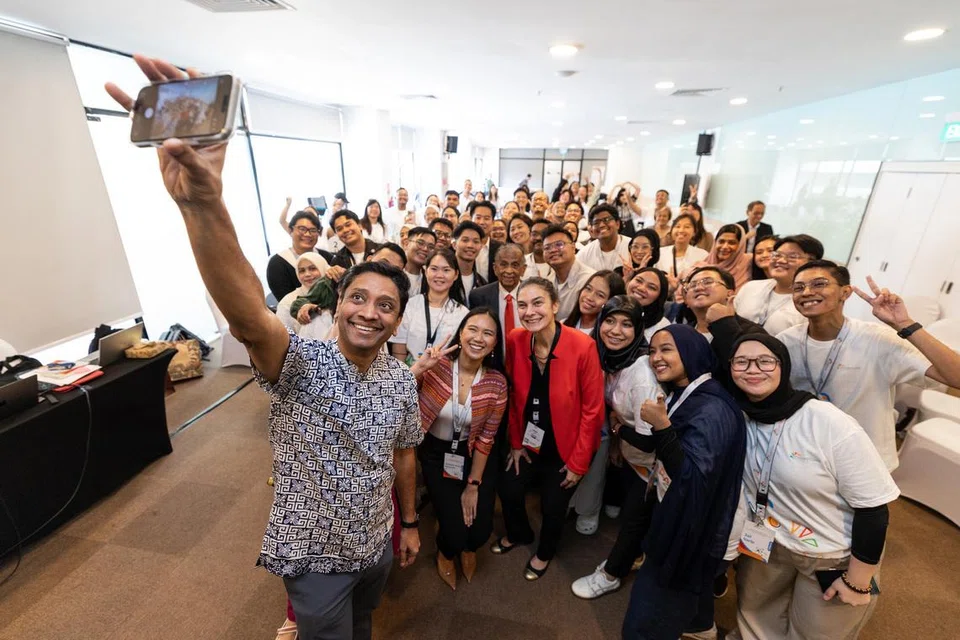
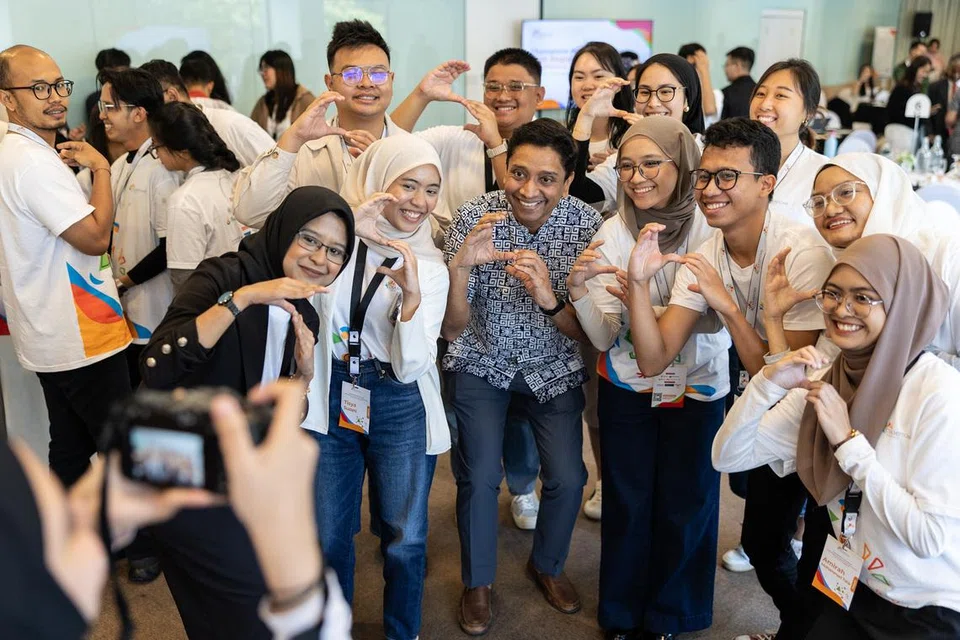
This was the central message delivered by Minister of State for Culture, Community and Youth, and Manpower Dinesh Vasu Dash at the inaugural Champions for Peace Regional Workshop on Jan 26.
Speaking to an audience comprising 50 youth leaders from various Southeast Asian countries, Mr Dinesh emphasised the importance of multiculturalism in supporting peace and stability.
He outlined three key ideas for the delegates to consider: The importance of mutual respect for those who may not look the same, the need to build understanding through networks of trust and the necessity for effective dialogues to translate into tangible actions.
Organised by the local harmony group hash.peace, in collaboration with KRIS for Peace Philippines and the Kofi Annan Foundation, the programme aims to train young delegates from Indonesia, Malaysia, Philippines, Singapore, and Thailand, equipping them to build resilience within their respective communities.
Strengthening the capacities of at least 600 young people in Southeast Asia to promote harmony, the project aims to support 20 youth-led initiatives, mobilising 1,000 young people across the region.
Reflecting on Singapore’s approach to social cohesion, Mr Dinesh referenced the country’s first Prime Minister Lee Kuan Yew, who stated that Singapore would not be a Chinese, Malay or Indian nation – despite the Chinese being a supermajority – but a country for all Singaporeans.
“He has highlighted the fact that we do need to have mutual respect for one another, because it wouldn’t be one race governing the other,” Mr Dinesh said.
He further explained that Singapore’s model involves “tough policy”, such as the Ethnic Integration Policy in public housing estates, which ensures resident distribution mirrors the national population to prevent the formation of enclaves.
He also pointed to schools open to all races and National Service as policy levers that ensure Singaporeans work together as cohesive teams.
Complementing these policies are self-help groups like CDAC, Mendaki, and SINDA, as well as the Racial and Religious Harmony Circles, which serve as a bridge between policy implementation and ground-up community initiatives.
Mr Dinesh also highlighted the International Conference on Cohesive Societies (ICCS), founded in 2019, noting that the 2025 conference attracted about 3,000 leaders and practitioners from 52 countries.
He expressed hope that youth leaders would take ownership of social issues. Noting the immense diversity of Southeast Asia, he warned that it is “not very difficult to break it apart” and urged the youths to form tight links regardless of race, language, religion or nationality.
“I encourage you to have more of such chat groups, because it builds bridges among each other,” Mr Dinesh said, suggesting that a solution to a problem faced in one country might be found in a different part of Southeast Asia.
Hash.peace general-secretary Far’ain Jafar highlighted the importance of ground-level connections in fostering regional peace.
“Peace does not begin in conference rooms or policy papers. It begins in conversations, in courage, and in community. Peace is not passive, it is something we actively build,” she said.
Mr Devan Tamilselvi, director of the youth mental health advocacy group Mental ACT and a mentor at hash.peace, hopes to bring his expertise on mental health to the expanding regional project.
He told tabla! that stability of individual minds paves the way for societal benefits such as unity and harmony.
“Only those who feel mentally safe are ready to build bridges for harmony. When there is a lack of safety, conflicts arise. Therefore, I am engaged in teaching youths to provide mental health support to others,” Mr Devan said.
Singapore University of Social Sciences first-year accountancy student Nizanth Durai Manickam, 21, who was among the participants at the event, told tabla! that the programme offered him opportunities to foster meaningful relationships with peers from other Southeast Asian countries.
“Singapore’s unity and peace are its greatest strengths. Yet, when we look at the region, we observe unrest and armed conflict in several instances. We are lucky in many ways. To sustain this peace that we have, we ought to put in effort, and I felt that I had to do my part,” he said.
janark@sph.com.sg