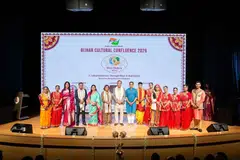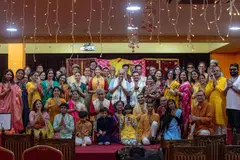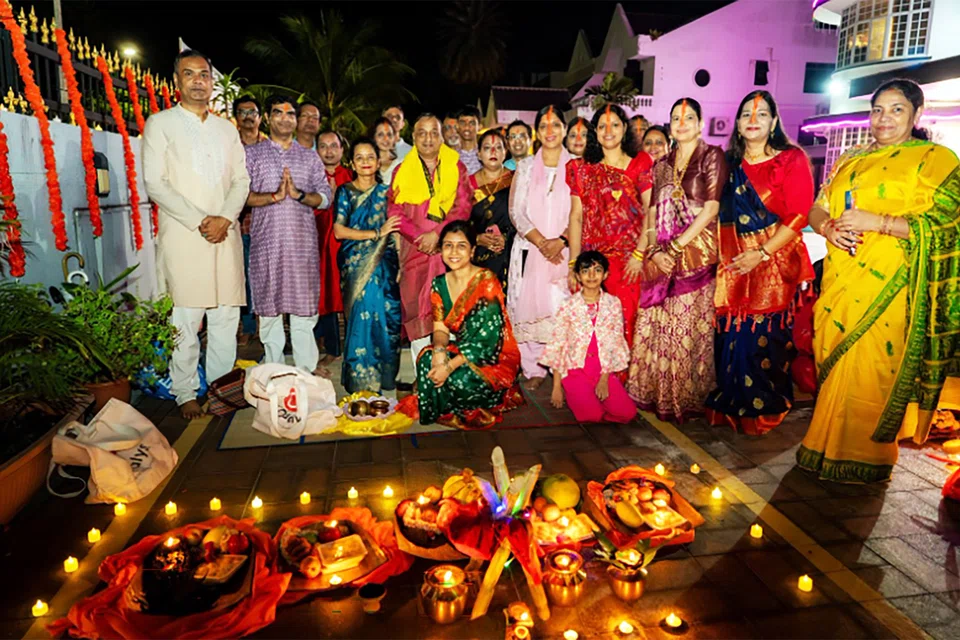
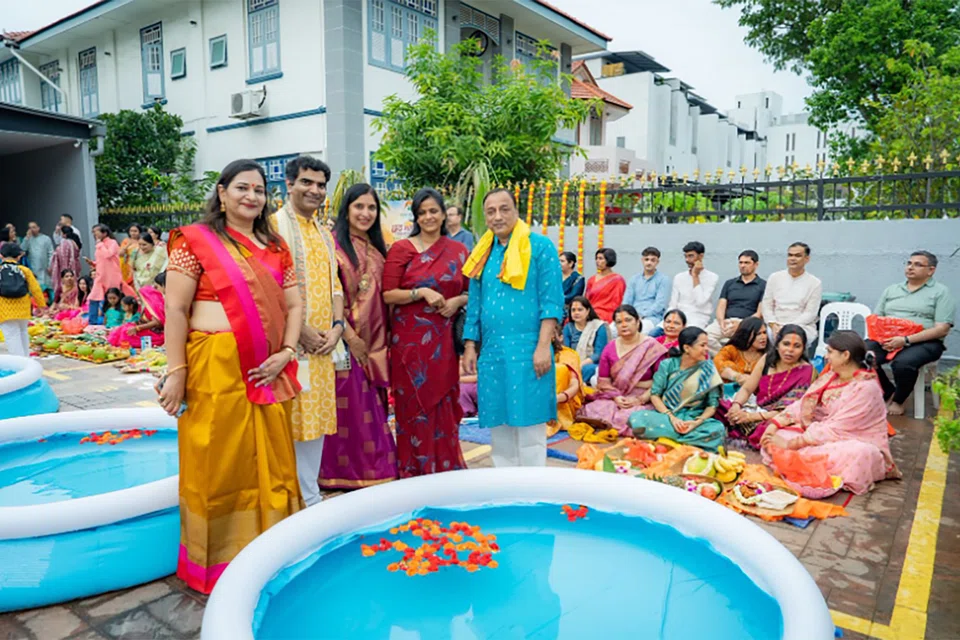
As the evening sun descended over Singapore on Nov 15, hundreds of devotees gathered at Sindhu House on Mountbatten Road, holding traditional bamboo baskets filled with fruits and offerings as devotional songs evoked memories of their ancestral homeland.
For a few precious hours, the premises of the Singapore Sindhi Association were transformed into a vibrant centre of faith, cultural heritage and community bonding.
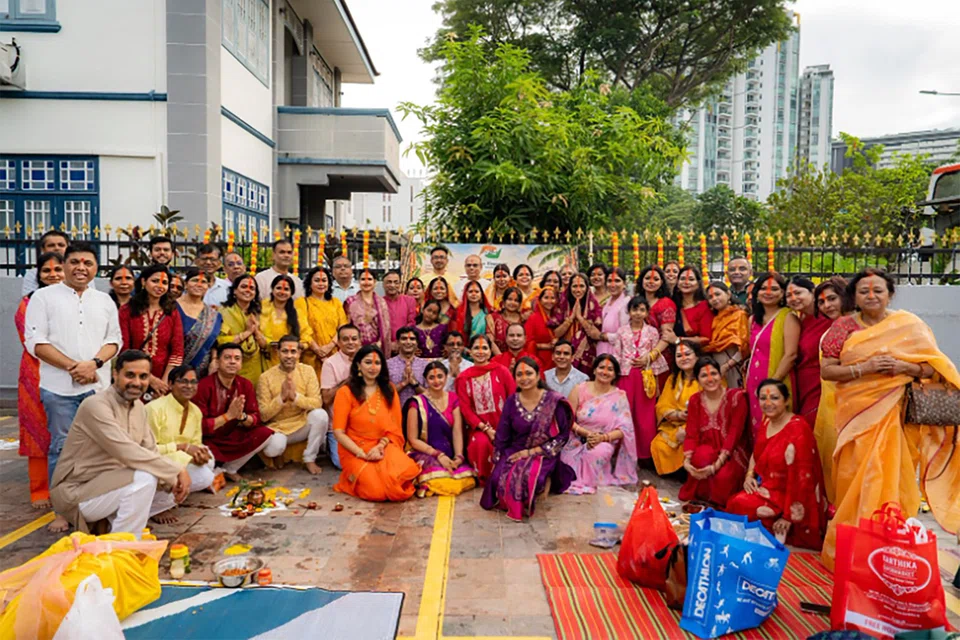
Organised by BiJhar Singapore, an association founded in 2006 representing people with roots in Bihar and Jharkhand, this year’s Chhath Puja celebrations brought together around 450 devotees, including eight fasting participants known as vratis.
India’s Deputy High Commissioner to Singapore, Sudhi Choudhary, attended the evening gathering, interacting with devotees and learning about the festival’s traditions.
Dedicated to Surya Dev (the Sun God) and Chhathi Maiya, Chhath Puja is a four-day festival expressing gratitude to the natural forces that sustain life.
Its distinctive rituals involve offering arghya (prayers with water) to both the setting and rising sun, symbolising gratitude, renewal and hope.
Traditional offerings of seasonal fruits, sugarcane, coconuts and thekua, a homemade delicacy, along with bamboo baskets, reflect the festival’s deep connection with nature and environmental sustainability.
The celebrations also emphasise social equality, bringing together people regardless of caste, gender, age or economic status. Devotees perform the central rituals themselves without requiring a priest.
This year’s observance began on Nov 13 with Nahay Khay, involving cleansing rituals and specially prepared meals. Women members of BiJhar Singapore assisted participating families with preparations.
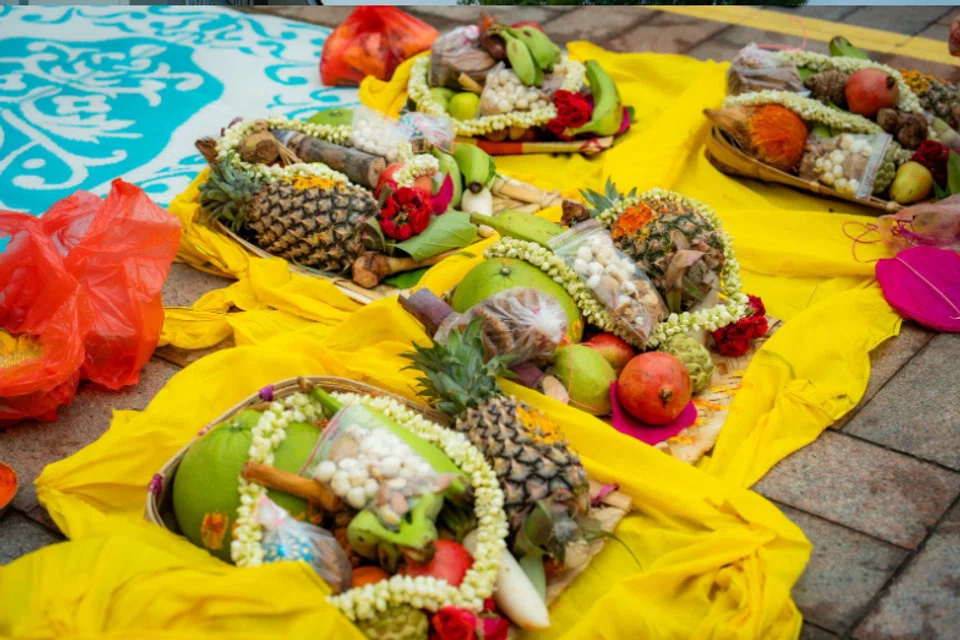
The following day, known as Kharna, devotees observed a day-long fast before offering prayers and preparing traditional prasad.
The main gathering on Nov 15 featured Sandhya Arghya, the evening offering to the setting sun, while the celebrations concluded with Usha Arghya, prayers to the rising sun, on Nov 16.
The eight vratis were Vishakha Shree, Rakhee Singh, Shipra Jha, Mamta Mandal, Payal Priya, Amar Kumar, Spradha Sinha and Aradhana Sharma.
BiJhar Singapore President Shiwani Khirwal highlighted the festival’s emotional and cultural significance.
“Chhath is a festival close to our hearts, an occasion to express gratitude to Surya Dev for blessing us with life, energy and prosperity. Though we are far from our native land, our devotion and festive spirit remain unchanged. The festival beautifully reminds us of our roots, traditions, unity and community bonds,” she said.
“We chose the Singapore Sindhi Association for its central location and convenience, making it easier for everyone to participate. Through thoughtful arrangements and beautifully prepared water pools, we made every effort to recreate the spirit and traditions of Chhath away from home.”
Ms Shiwani also thanked the organising team and volunteers for their dedication and meticulous planning.
For Mr Amar Kumar, who has celebrated Chhath in Singapore since 2017, the festival holds particular significance.
“Since 2017, Chhath Puja in Singapore has been one of the happiest times of the year for my family and me,” he said.
He recalled initially struggling to find the necessary materials and a suitable venue before a friend introduced him to BiJhar.
“When you live away from home, Chhath is more than a festival. It’s a feeling that ties us back to our roots, our traditions and our culture,” he said,
A particularly heartening aspect of the celebrations was the enthusiastic participation of children, many of whom accompanied their parents and grandparents to the early-morning prayers.
Through traditional songs, preparation of offerings and participation in rituals, younger Singaporeans gained a deeper appreciation of their ancestral heritage.