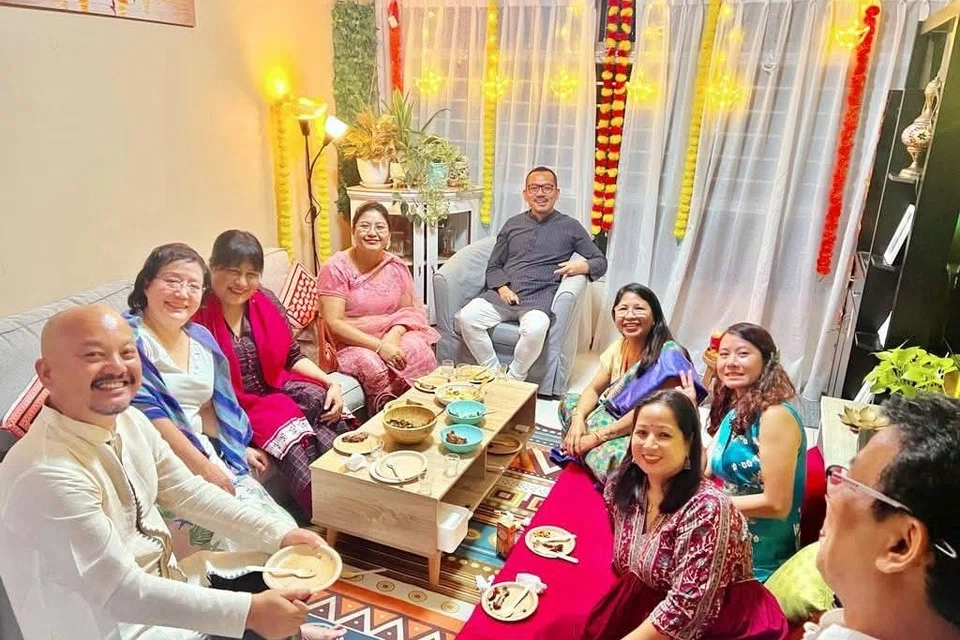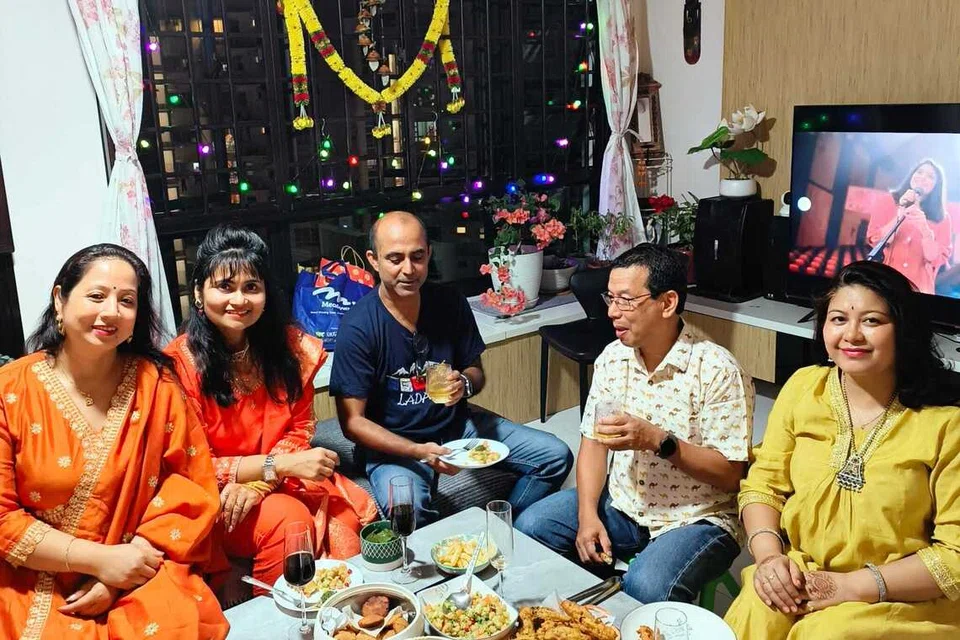
A step into the home of Assamese homemaker Apsara Bodo during Deepavali won’t seem too different to a usual festival of lights get-together, that is, until you look at the dishes prepared.
“This festival being one of the favourite Indian festivals, we look very much forward to meeting friends,” she said.
“For the feast, we prepare chicken, mutton, pork and keep at least two or three Dimasa dishes along with other Indian cuisines,” she added.
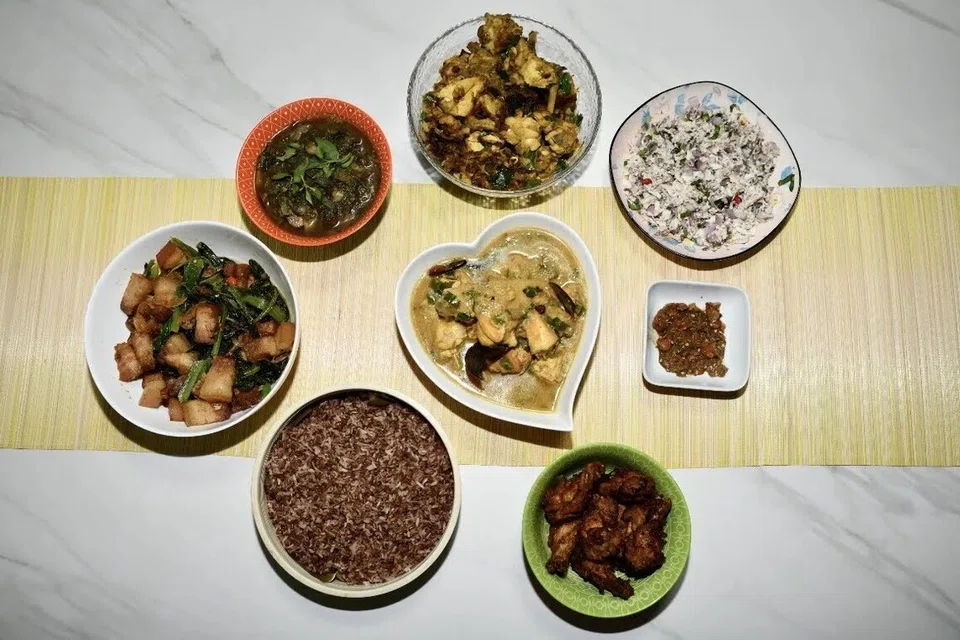
Dimasa is a tribe in Assam to which Ms Apsara belongs. Some of the tribal dishes she makes include spiced pork belly cooked with mustard greens, shredded river fish, fermented fish and bhut jolokia chutney and, most importantly, she says, judima or Dimasa rice beer.
Except for the latter, Ms Apsara is able to find ingredients for her dishes from markets like Tekka.
“I’m not the best at making sweets, so I usually buy mithai (sweets) from Little India,” she said.
Ms Apsara also used to host dinners for members of the Northeast India Association of Singapore during festivals like Deepavali. She enjoyed opening her house to the community and making dishes that reminded them of their homes.
“I think I do feel more connected and also get a feeling of home away from home whenever we meet people from Northeast India,” she said.
While Ms Apsara has taken a step back from hosting these dinners, her close friend, Ms Marina Daulaguphu, hosted her on Oct 31 for this year’s celebrations.
“My favourite part of the festival is lighting and decorating the house and, of course, partying together with friends and family,” said Ms Marina, who has lived in Singapore for over 20 years.
Ms Apsara said she is grateful for community and friends who help keep her Assamese traditions alive: “Fortunately, there are friends and families from Assam who live nearby, so we regularly have gatherings at our place or at their place. Also, there is an association that organises events and meet-ups.”
Assamese Association Singapore, established in 2014, is an organisation that aims to promote the heritage and tradition of Assam in Singapore through cultural events and collaborations.
Mr Debojyoti Hazarika, the general secretary of the association, said: “While Deepavali is not the main festival as compared to Bihu, our groups usually participate by putting on cultural shows in events planned by other Indian organisations.”
Assamese Deepavali celebrations take traditions from both North India, such as deep cleaning of the home and lighting of diyas, as well as East Indian traditions, such as a bigger focus on Kali Puja, the celebration of the Hindu goddess Kali and the triumph of righteousness.
Lakshmi Puja, which is one of the major parts of the festival, is traditionally celebrated much earlier in Assam, during a full moon night between Durga Puja (celebration of the goddess Durga) and Deepavali.