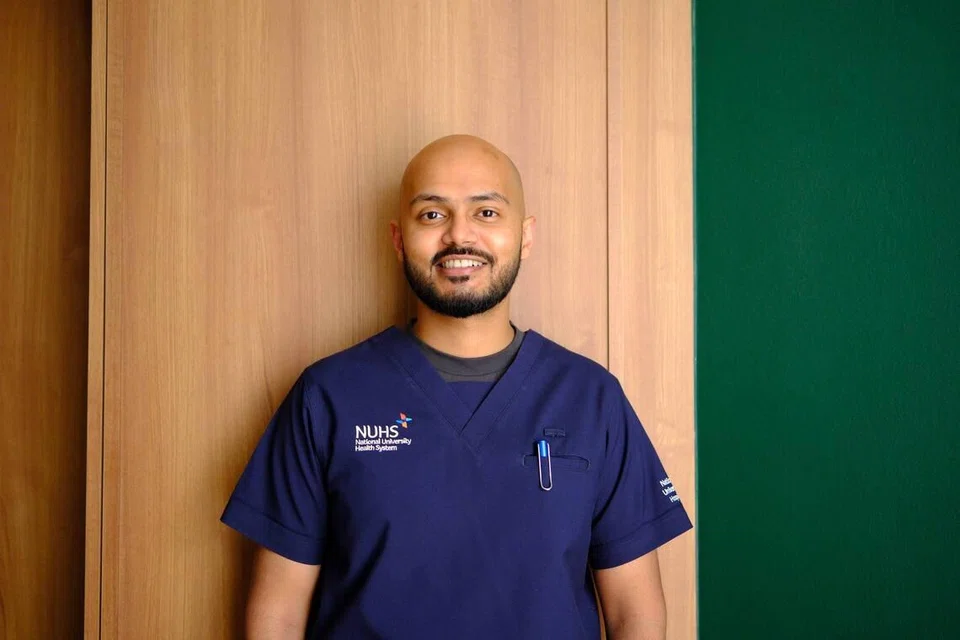

Every weekday morning at National University Hospital in Singapore, Dr Arjun Bolem begins his day early – reviewing patient charts, checking on in-patients and mentally preparing for whatever the theatre and clinic may hold. By 8.30 am, he’s already in the operating theatre or consulting room, ready to confront the demands of neurosurgery.
He jokes that the neurosurgeon on the hit television show Grey’s Anatomy, Derek Shepherd, inspired his decision to spend most of his life studying the brain. 17 years later, he is now a consultant neurosurgeon, whose days shift between scheduled procedures, emergencies, and long stretches of paperwork.
“It’s different every day,” he said. His days vary widely, with clinics and surgeries often running late into the evening and, on rare occasions, through the night.
In Singapore’s tightly staffed neurosurgical community, a field so niche that only about two trainees are accepted each year nationally, the path to Dr Arjun’s position is long and selective. The now 36-year-old completed his medical degree at the NUS Yong Loo Lin School of Medicine and entered the neurosurgical residency program at National University Health System (NUHS) in 2016. Along the way, he also earned a Masters in Clinical Investigation and, in 2023, graduated with a gold medal in his fellowship examinations.
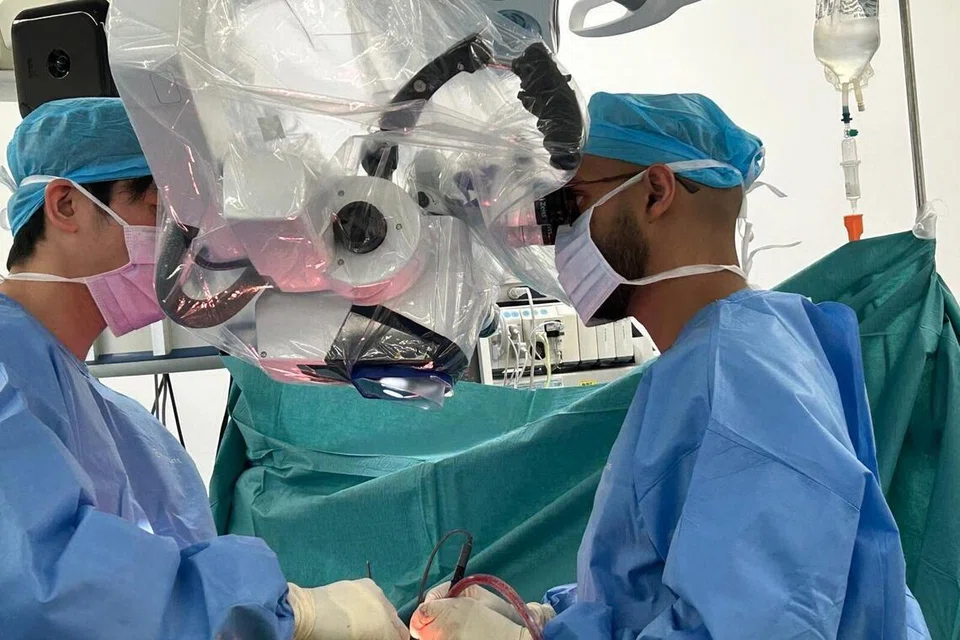
When he recounts the hardest moments of his work, the ones that take centre stage are not the technically demanding procedures but the heartbreaking ones, for instance, giving families bad news.
He invokes the surgical adage stated by French vascular surgeon Rene Leriche, who said that surgeons carry within themselves a small cemetery, where from time to time they go to pray – a place of bitterness and regret, where they must look for an explanation for their failures. It is an idea that lingers long after the operating theatre lights fade. This metaphor was shared during the interview with tabla!.
“When you start off,” said Dr Arjun, “you want to do the most difficult cases, achieve the best numbers. Over time, you recalibrate, and the goal becomes doing the right thing and being able to sleep soundly at night.”
One of Dr Arjun’s favourite procedures is microvascular decompression for trigeminal neuralgia and hemifacial spasm, a minimally invasive surgery for patients crippled by chronic pain. While most of the procedures Dr Arjun performs only yield results in the long-term, the aforementioned surgery is one of the few times he can see his patients experience instant relief. “The patients often have significant impairment in their quality of life and this surgery, which involves fine, delicate work often provides instant relief. That is very gratifying.” This is profoundly rewarding to Dr Arjun.
He recalls his 2022 Cambridge fellowship for the culture of generosity he experienced, which equipped him to polish his skills and learn new procedures. He highlighted his mentor, Richard Mannion, who reorganised surgical schedules to give him rare hands-on experience. This goodwill, along with the steadfast support of prolific surgeons and his family, played a crucial role in his growth.
Outside the operating theatre, Dr Arjun is a husband and a father to a two-year-old daughter; he treasures the simple moments of weekend playgrounds and family outings – “just trying to squeeze that time in.” If not in Singapore, as an avid snowboarder, he relishes the opportunity to escape to the mountains in Japan.
His wife, Kimberly Neo, is a lawyer. When they first began their life together, she knew neurosurgery would be gruelling in theory, but in practice, it was even more consuming. “I barely saw him,” she recalled. “He was on call as many as eleven times a month.”
As his training progressed, he moved from being, as she put it, “at the bottom of the food chain,” to someone entrusted with executive decisions, someone who could truly shape outcomes and “make people’s lives better.” Earlier in his career, he absorbed the emotional toll of difficult cases more deeply, even if he rarely showed it outwardly. “He doesn’t really express it, but he takes it in. He used to carry a lot of that emotionally.” With experience, Ms Kimberly has seen him grow better at compartmentalising and at separating a single bad outcome from the totality of his work.
Their partnership, she said, is built on a clear understanding of roles. “No matter how urgent my work feels, it’s never someone’s life at stake,” she reflected. Being married to a neurosurgeon has given her a sobering perspective on pressure and deadlines in the corporate world. “Not everything is life and death. His work literally is,” Ms Kimberly added.
Fellow neurosurgeon and friend, Nivedh Dinesh reflected on his journey with Dr Arjun and said, “I first met him on the very first day of medical school. We went through neurosurgery residency together, sharing the long hours, steep learning curves, and defining moments that shape a surgeon. He is a technically excellent neurosurgeon, a trusted colleague, and above all, a true friend.”
RELATED STORIES

18 Dec 2025 19:04